"Condemned" protesters?! Who trapped Rama inside the Prime Minis...
/ 2026-10-23 16:02:00Focus


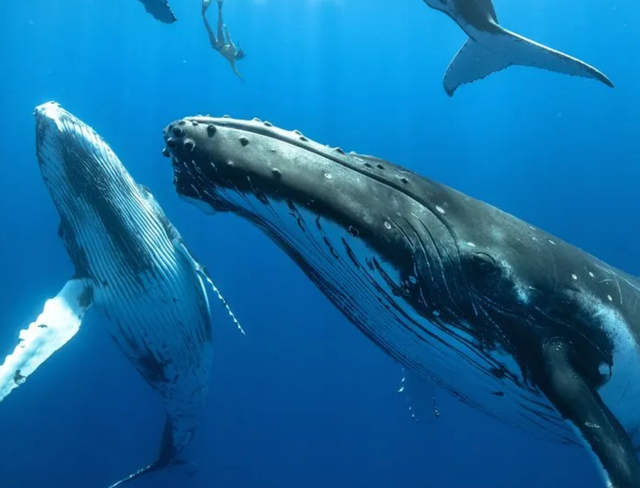
Scientists have come to understand how some of the largest whales in the ocean produce their complex songs.
Whales have evolved a specialized "voice box" that enables them to sing underwater.
The study, published in the journal Nature, has also revealed why the noise humanity makes in the ocean is so devastating to these oceanic giants.
Whale song is limited to a narrow frequency that overlaps with the noise produced by ships.
"Sound is absolutely crucial to their survival because it's the only way they can find each other to mate in the ocean," explained Prof Coen Elemans, from the University of Southern Denmark, who led the study.
"[These are] some of the most enigmatic animals that have ever lived on the planet," he told BBC News. "They are among the largest animals, they are intelligent and very social."
Baleen whales are a group of 14 species, including blue, humpback, minke and gray whales. Instead of teeth, they have plates called "baleen", through which they filter food in the sea.
Exactly how they produce complex, often terrifying songs has been a mystery until now.
He and his colleagues conducted experiments using larynxes, or "voice boxes," that had been carefully removed from the carcasses of three stranded whales—a minke and a sei whale. They then pumped air through the massive structures to produce the sound.
In humans, our voices come from vibrations as air passes over structures called vocal folds in the throat. Whales, instead, have a large U-shaped structure with a fat pad on top of the larynx.
This vocal anatomy allows animals to sing by recycling air and prevents water absorption.
The researchers produced computer models of the sounds and showed that the whale's song is limited to a narrow frequency range that overlaps with the noise produced by shipping ships.
"They can't just choose to, for example, sing louder to avoid the noise we make in the ocean," Prof Elemans explained.
His study showed how our ocean noise could prevent whales from communicating over long distances. This knowledge could be vital to the conservation of blue whales and other endangered giants of the sea.
The discovery also provides insight into questions researchers have asked for decades about these eerie songs, which some sailors used to attribute to ghosts or mythical sea creatures.