"Condemned" protesters?! Who trapped Rama inside the Prime Minis...
/ 2026-10-23 16:02:00Focus


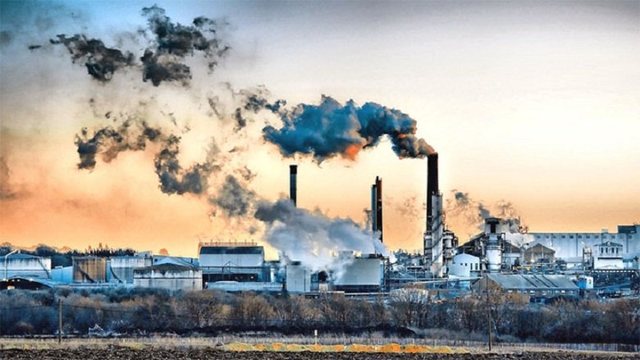
Lawmakers reached an agreement to further reduce air pollution across the EU and harmonize air quality standards with the World Health Organization (WHO) in a bid to reach zero pollution by 2050, during negotiations inter-institutional in Brussels.
The agreement reached on Tuesday evening (February 20th) on the Air Quality Directive followed several rounds of technical meetings between the European Parliament and the council, with the latter demanding more flexibility for EU countries seeking to delay the implementation of air quality standards. air quality.
The council requested a 10-year break in implementation until 2040, compared to the European Commission's proposal, which sets a 2030 deadline for reducing air pollution. The agreement provides exceptions for regions with certain geographic conditions or where reducing air pollution would only be possible with "significant impact on existing domestic heating systems".
But conditions demanded by parliament, such as requiring EU countries to include air quality forecasts in their air quality plans and roadmaps by 2028, will require national governments to keep track of progress and prove that violations of pollution limits have been kept to a minimum. For particulate matter and nitrogen dioxide, the two pollutants most harmful to human health, annual limit values will be halved under the agreement.
The commission will be tasked with reviewing air quality standards by December 2030 and at least every five years thereafter. Under the agreement, citizens and NGOs will be empowered to challenge implementation in member states. Citizens with air pollution-related symptoms will be given better access to justice, co-legislators agreed. Furthermore, they should be entitled to compensation if they can prove that their health has been damaged due to the violation of the new national rules.
MEP rapporteur Javi López (Spain/S&D), who led the parliamentary negotiations, called the agreement a "big step" forward. Alain Maron, the Brussels government minister responsible for the environment and on behalf of the Belgian EU Presidency, said the new rules would "drastically improve" air quality and tackle air pollution.
Anne Stauffer, deputy director at the NGO Health and Environment Alliance (HEAL), said the package had "huge potential" to improve people's lives, prevent disease and achieve economic savings, despite not fully complying with scientific recommendations.
"Having clean air through an ambitious Ambient Air Quality Directive is an essential component of tackling health inequalities across Europe, a piece of legislation that ensures that everyone in Europe, especially those in vulnerable and marginalized, to get fresh air," said Milka Sokolovic, Director General, at the European Public Health Alliance.
The deal still needs to be approved by parliament and the council before it comes into force, when EU countries will have two years to transpose the bill into national law.