Is this police force professional and capable of handling violen...
/ 2026-10-16 18:54:07Focus


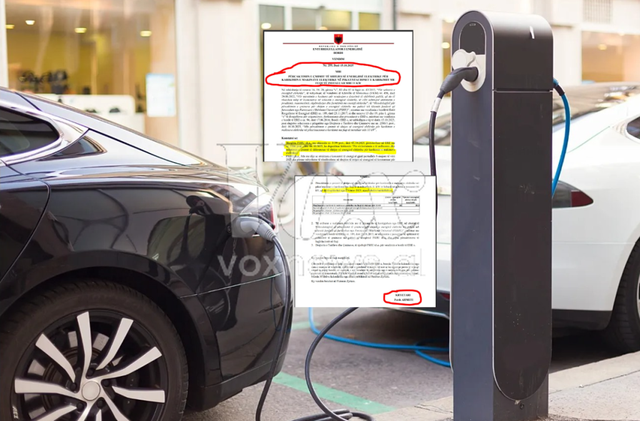
At a time when European countries are making policies to introduce electric cars to the market, to reduce pollution, the exact opposite is happening in our country. With a sudden decision, the Energy Regulatory Authority has also gone “against” the government, increasing the price of energy for electric car charging stations. A huge paradox, since in this way it will significantly reduce the import of these vehicles.
This decision directly affects public transport, where electric taxis are now expected to increase the prices of taxi tickets, but also thousands of businesses that have installed charging stations throughout Albania. A decision to the detriment of thousands of consumers, who were seeing the possibility of replacing vehicles from fuel (diesel, gasoline or gas) with electric cars.
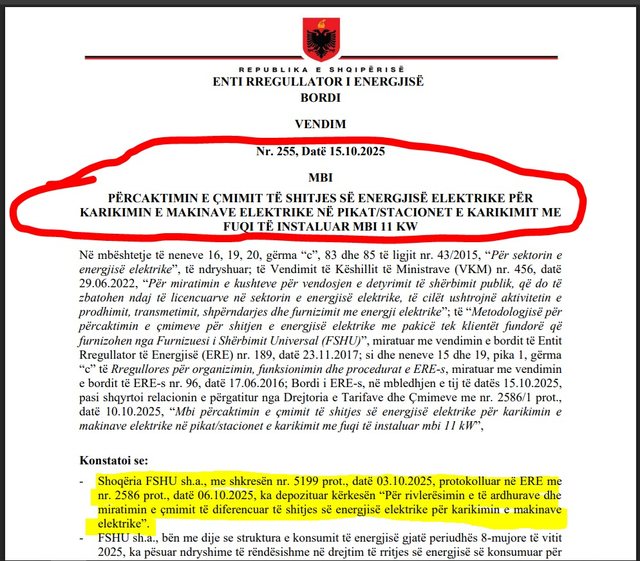
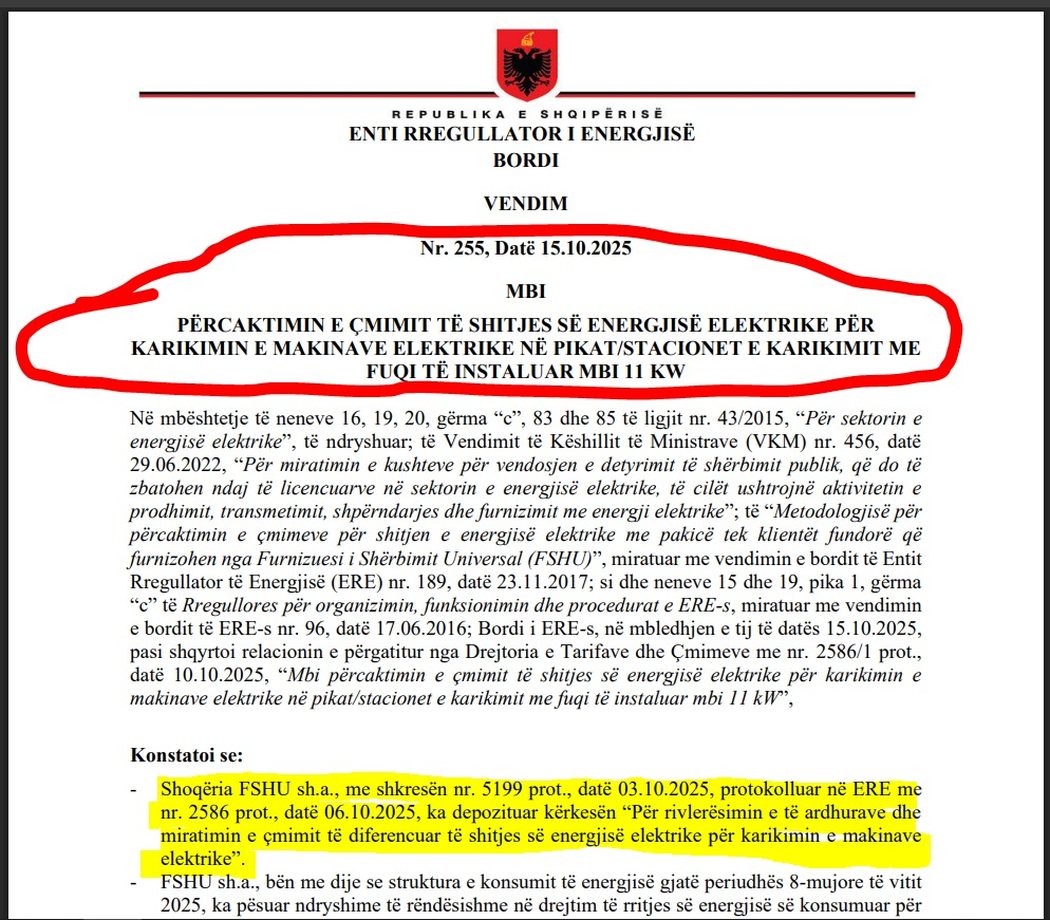
VoxNews reviewed ERE decision number 255, which states that the request for the price increase came from FSHU.
"The Universal Service Provider informs that the structure of energy consumption during the 8-month period of 2025 has undergone significant changes in terms of the increase in energy consumed for charging electric cars, the use of which is growing rapidly, leading to the need to create a new consumer category, given the fact that the number of cars registered according to official publications of the DPSHRT continues to grow rapidly from year to year and is expected to continue to do so for the following periods," FSHU reasons.
A great paradox, as a state body complains about the “policies” of the government itself. Who does the increase in electric cars harm? Normally some interest groups, but not citizens, since in this way they will have less pollution from cars and a low price of maintaining such a vehicle. But also a cheaper price of public transport, since electric cars have cheaper prices than other means of transport using fuel.
The decision states that, from the analysis of revenues and expenses realized for the period January-August 2025, it is concluded that the company has maintained a positive financial performance, while the cost of imbalances has resulted significantly higher than the level predicted in the initial planning.
"FSHU sh.a. argues that the excess of imbalance costs is mainly related to the increase in consumption from electric car charging points/stations, which have an installed power of over 11 kW and to the inability to accurately predict charging profiles (high intensity at the beginning of charging, time variability, parallel use of more than one vehicle, etc.)" continues FSHU's complaint.
It is learned that the number of electric vehicles registered by May 2025 has reflected an increase of approximately 26% in the first 5 months of 2025, while the increase in charging stations with an installed power of 11 kW has also led to an increase in consumption from this typology.
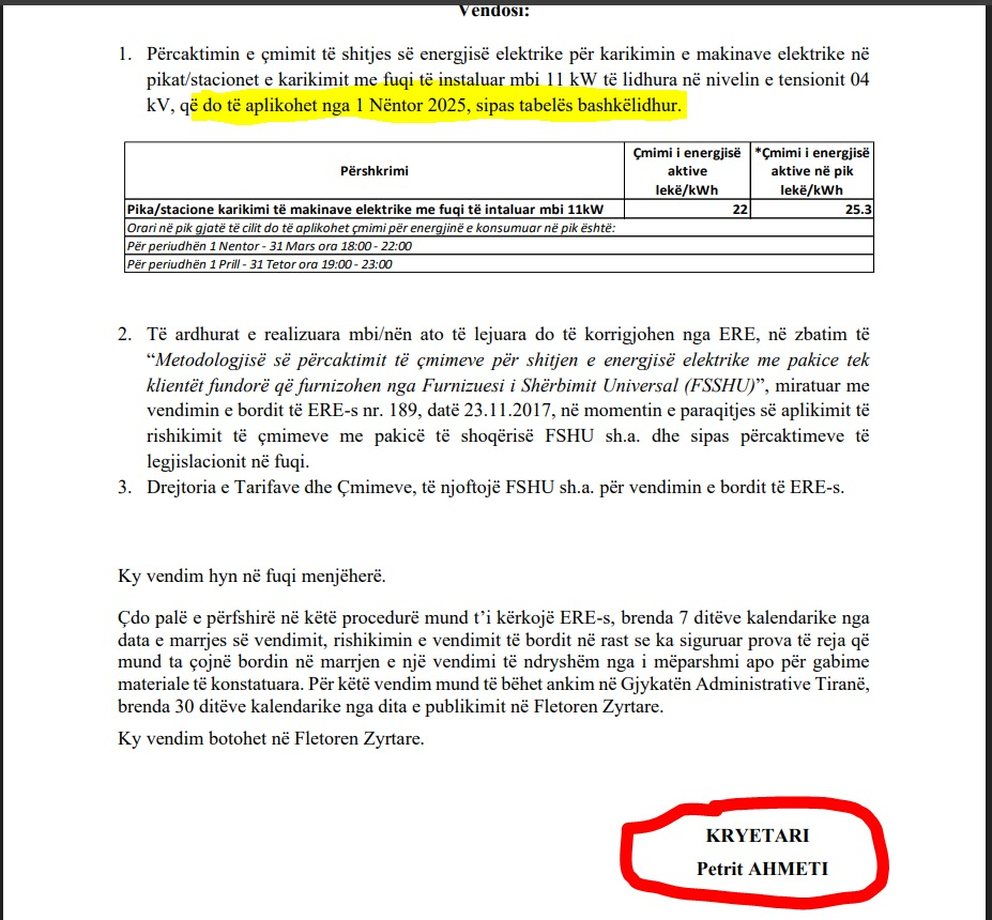
"Under the above conditions and respecting the principles of cost reflection, transparency and non-discrimination, it is estimated that the average additional cost of imbalances attributed to this category reaches around 8 lek/kWh, above the existing average selling price that covers the planned costs (14 lek/kWh); consequently, FSHU sh.a. proposes a price of 22 lek/kWh for the energy consumed at charging stations for electric vehicles with installed power over 11kW", says FSHU.
So, a very large increase for a group of vehicles that are a need and necessity, especially in Tirana, which has alarming pollution from the use of fuel-powered vehicles.
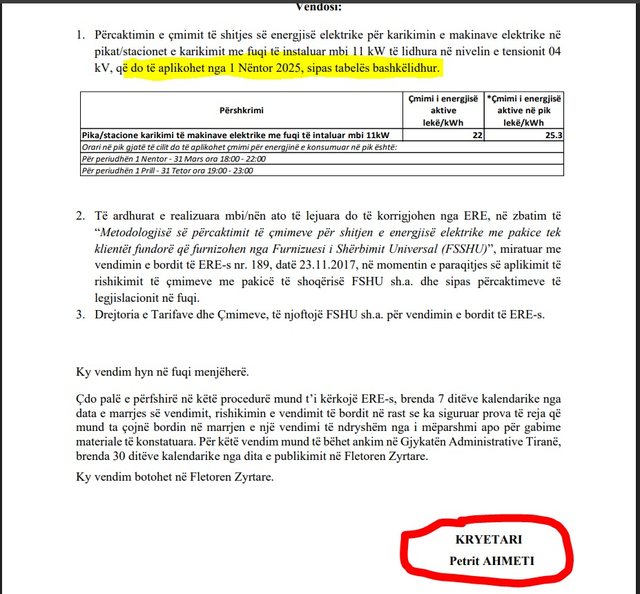
As has happened with all electricity increases, ERE has approved this proposal of the FSHU with "closed eyes". The decision states that at the beginning of 2025, ERE conducted its analyses and assessments on the level of required revenues and electricity sales prices for customers supplied by the Universal Service Provider.
"In conclusion, all sources taken into consideration conclude that the electricity grid is becoming more complex with the addition of renewable sources and charging stations, developments which require sustainable and innovative solutions for balancing," the decision states.
"Taking into account the principles on which prices are determined, such as cost-reflective, transparent and non-discriminatory, we estimate that this cost should be added to the electricity sales price for customers connected at the 0.4 kV voltage level, since the planned imbalance costs based on the values allowed by the ERE are covered by the price of 14 Lek/kWh. The price of 22 Lek/kWh will be applied from November 1, 2025 to all family and non-family subscribers who, for the purposes of charging an electric car for personal use, require an additional power or a new connection point with an installed capacity of over 11 kW that can use the allowed capacity for charging electric vehicles ," the decision states.
At the end, it says that any party involved in this procedure may request the ERE, within 7 calendar days from the date of the decision, to review the board's decision if it has provided new evidence that may lead the board to make a different decision than the previous one or for material errors found. In no line does the ERE write whether or not it has asked the interest groups. But, it has acted to the detriment of hundreds of thousands of consumers.
©Copyright Vox News
This article is exclusive to VoxNews, and is copyrighted under Law No. 35/2016, "On Copyright and Related Rights". The article may be republished by other media only by citing VoxNews and placing the source link at the end, otherwise any violator will be held liable under Article 178 of Law No. 35/2016.