Is this police force professional and capable of handling violen...
/ 2026-10-16 18:54:07Focus


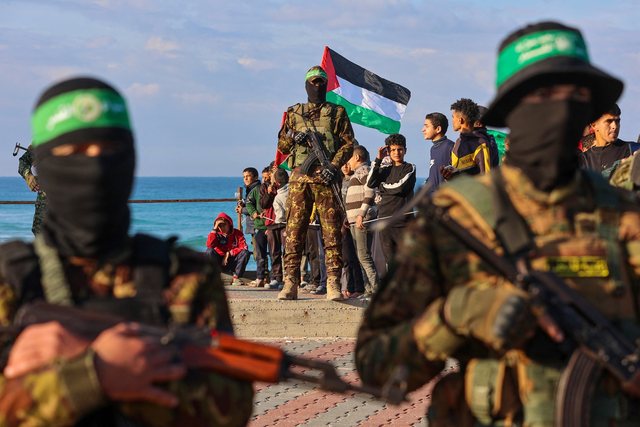
After 22 months of war, Hamas has lost its military capabilities, but it has survived, secured the release of prisoners and brought the Palestinian cause back to center stage.
Chaim Levinson – Haaretz
With a delay of 22 months, the war in Gaza is expected to end.
Although the details of the Israeli military's second-phase withdrawal have not yet been made public, they will not change the overall picture.
Contrary to the “Bibi-ist” clichés, Netanyahu has not changed the face of the Middle East.
People's lives, however, have changed radically.
Many Israelis have mourned the loss of loved ones, have been physically or psychologically injured, and have lost their possessions.
But in the big picture, no state has disintegrated, no new power has emerged, and no ideology has disappeared to be replaced by another.
The chaos in the Middle East remains unresolved.
On October 7, 2023, as a jihadist Islamist, Hamas leader Yahya Sinwar decided to carry out a suicide attack, sacrificing his life to harm the lives of others.
When you fight a suicide bomber, the goal is to prevent him from exploding, because that's exactly what he wants.
Now that the battles are over, it is clear that Hamas has survived two years of war.
It has lost its military capabilities and control over Gaza, but it has remained alive as an organization.
Until the last day of the war, Hamas managed to maintain its organizational structure, political leadership, and command and control in Gaza.
None of its members dared to leave, create a rival organization, negotiate surrender independently, or sell hostages for money.
The threat he faces from pro-Israeli militias in Gaza seems negligible, and members of these militias would be massacred once the Israel Defense Forces no longer protected them.
The people of Hamas will find ways to remain relevant in the future.
Hamas is ending the war with two major achievements in hand.
The first is the return of the Palestinian issue to the top of the world agenda.
Prime Minister Benjamin Netanyahu's lifelong dream was to erase the Palestinian issue, fragment the Palestinians into separate groups, and make deals with Arab countries at their expense.
This may have been why Sinwar undertook his plan – and he succeeded.
Today, the Palestinian issue is the most discussed topic in the world and has attracted millions of new supporters.
Israel has been pushed into a diplomatic corner throughout Western Europe.
While Netanyahu insisted that “a Palestinian state is a reward for terrorism,” Sinwar understood Western sentiment much better than the man who spends his time in luxury hotels.
Sinwar portrayed Gaza as a victim – and public opinion is fully on his side.
The ceasefire is the final seal of the return – and with fanfare – of the Palestinian issue, this time with the prospect of an independent state, dictated by the president of the United States himself.
The second achievement is the emptying of Israeli prisons.
To an outside observer, the sacrifice of tens of thousands of Gazans for 250 life-sentenced prisoners may seem crazy, but there is consensus in Palestinian society on the issue – and it is also the weak point of all Arab countries and the Palestinian Authority.
From the Palestinian perspective, the prisoners are like our hostages – innocent people who have been kidnapped from their beds at night by the “Zionist enemy” and who suffer incessant torture.
Their return is an absolute priority. The Palestinian Authority, which cooperates with Israel, has not succeeded in returning them, while Hamas is close to achieving this.
Beyond the political message, this is also a guarantee to every jihadist: go out and carry out a terrorist attack, even if you are sentenced to 100 life sentences – eventually, we will bring you home.
The main winner of the war is Qatar – a country with fewer inhabitants than Tel Aviv, but with more shopping malls per capita.
Although it is the Arab country with the fewest citizens, it is an important world power.
The Israelis can repeat thousands of times that they are a state that supports terrorism, but in the world of realpolitik, no one cares.
The Katariots devised a strategy 40 years ago for survival in a region that coveted their natural gas resources, transforming themselves into a global power in sports, education, investment and diplomacy.
The war gave this strategy the final stamp of success. Qatar's leaders are among the few who have direct access to the president of the United States at any time – and they will capitalize on their central role in brokering the deal.
Israel is emerging from the war in the way that the then Israeli Air Force commander, Benny Peled, described it 52 years ago: "a shtetl (city) with an air force."
Israel's strategic asset is its control of the skies over the Middle East and the power of its aviation, especially compared to the region's almost negligible air forces.
Where the air force is strong, Israel is strong; where it is not, Israel is not.
The events of October 7th occurred in part because the air force was not aware of and prepared for the possibility of a surprise invasion from Gaza.
The culture of “state” dominated the air force. Sometimes, the air force can do too much – as in the case of sending a missile into a building in the Qatari capital, Doha – one of the most errant acts of war.
Military power is a deceptive power.
It offers intoxicating, short-term victories that must then be translated into diplomacy.
Israel is poor in this translation, because it is hampered by failed politicians, conflicting interests, and an inability to make decisions.
The front of the war that seems most successful is the one against Hezbollah, both because of the good planning of the army and the Mossad intelligence agency, and because it ended with a clear diplomatic agreement that limits Hezbollah's power.
In Syria, Israel is moving toward a diplomatic agreement that will replace the army's fruitless attacks to protect the Druze.
Even the war against Hamas is only ending thanks to a diplomatic agreement that was imposed on Israel and that returned its hostages.
On the other hand, the Iranian issue remains open. Israel has inflicted significant damage on Tehran, but a diplomatic agreement to reinforce this military achievement is lacking.
In the Six-Day War of 1967, Egypt was defeated, and then came Israeli arrogance. But the Egyptians quickly learned from their mistakes.
They built new diplomatic alliances and organized themselves differently. Six years later, Egypt launched a new war that dealt a blow to Israel, led to a peace treaty, and put the country on the world map.
Even in Iran, although the details cannot all be made public, lessons are being learned from this war. There, too, an agreement is being sought.