Is this police force professional and capable of handling violen...
/ 2026-10-16 18:54:07Focus


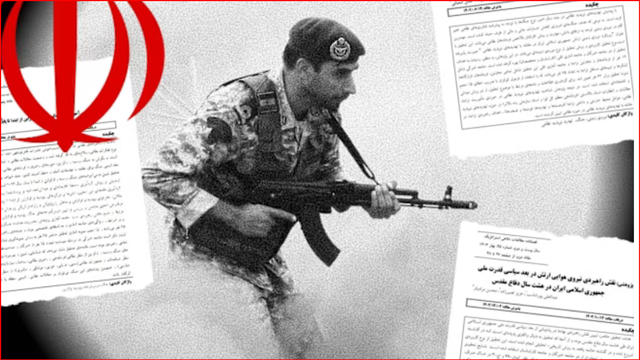
At a military college north of Tehran, Commander Hossein Dadvand trains thousands of Iranian soldiers for the wars of the future. But to understand that future, he – like many others in the Iranian military – has turned his eyes to another conflict: the war in Ukraine.
According to an extensive analysis of hundreds of articles published in Iranian military journals, Tehran has carefully studied the experience of the war between Ukraine and Russia, seeking concrete lessons for modernizing its military.
At the center of this study is a key element: drones. The massive use of unmanned aerial vehicles in Ukraine has convinced Iranian strategists that modern wars are no longer won solely with tanks or heavy aircraft, but with cheap, scalable, and flexible technology.
Dadvand, in one of his analyses, recommends major investments in drone production – even through 3D printers – as well as the integration of Artificial Intelligence into weapons systems. He also suggests the creation of smaller, faster and more mobile units, capable of adapting to complex terrain.
But the study of the war has not only been technical. The articles show that Iran has also carefully analyzed how a weaker state, like Ukraine, managed to withstand a larger power like Russia.
This has sparked debate within the Iranian military elite about its own weaknesses. In some analyses, senior commanders warn of a lack of long-term planning and the need for rapid reforms in training, recruitment and technology.
Another notable priority is cyber warfare. The articles show increasing efforts to strengthen digital capabilities and integrate artificial intelligence into decision-making and operations.
At the same time, several studies shed light on internal debates over the purchase of advanced weapons, such as Su-35 fighter jets from Russia – an issue that has created tension between different branches of the military.
However, perhaps the most important aspect of these publications is what they reveal about the internal mindset of the Iranian Army.
According to experts, these journals serve as a controlled space where ideas are tested and commanders signal their priorities. They offer a “murky but valuable view” of how Iran thinks about war, technology and its rivals, including the United States.
Finally, beyond strategic analysis, some articles also reveal everyday problems: from deficiencies in military hospitals, to social discrimination within academies and concerns about troop morale.
These details, although seemingly peripheral, are part of the same reality: an army that tries to learn quickly from the wars of others while preparing for its own challenges.
In a world where conflicts are becoming increasingly technological and asymmetric, lessons from Ukraine could prove crucial to how Iran will fight – or avoid – future wars.