"Condemned" protesters?! Who trapped Rama inside the Prime Minis...
/ 2026-10-23 16:02:00Focus


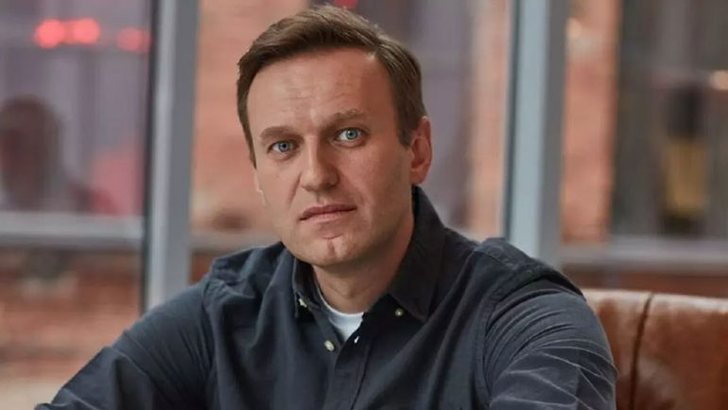
Alexei Navalny , lived and died fighting against Vladimir Putin 's regime and the corruption at its heart.
In 2018 he was banned from running in the elections, thus remaining Putin's most powerful political opponent.

Navalny was the only man capable of bringing tens of thousands of people into the streets calling for a Russia without Putin — and the only man Russia's president refused to mention by name.
He was headstrong, sarcastic and extremely charismatic – a born populist with a sense of humor that particularly appealed to young people.

His YouTube investigations into Putin's cronies, and eventually the president himself, garnered millions of views and exposed corruption at the highest levels. But this caused the sai to create more and more powerful enemies.

For a decade Navalny endured a series of arrests, court appearances and periods in detention, but he survived.
Poisoned during a fact-finding mission
The economic situation was worsening and the discontent aggravated by the pandemic was growing.
Along with this, the Kremlin had an eye on next year's parliamentary elections, which Mr Navalny had vowed to disrupt through an alternative voting system.
In a hotel room in the Siberian city of Tomsk, on a mission to gather facts about one of his investigations, Mr. Navalny was poisoned. Moments later he fell into a coma.
Navalny later said his life was saved by the pilot, who executed an emergency landing despite warnings of a bomb threat at the airport, and by paramedics who immediately administered the antidote on the airport runway.
For three days, Navalny's wife, Julia, fought to have him flown to Berlin and finally appealed directly to Putin, while doctors in Omsk, where he was hospitalized, disputed the diagnosis of nerve agent poisoning. Novice.
In Berlin, a German military laboratory identified the poison in question. It was Novichok, the weapons-grade nerve agent used two years ago against Sergei and Yulia Skripal in Salisbury.
Investigation from his hospital bed
The West imposed sanctions and demanded a full investigation into the incident, but the Kremlin refused, even going so far as to suggest that Navalny may have poisoned himself. Putin rejected the accusations and said Navalny was an agent of the West.
Under the care of doctors at Berlin's Charite Hospital, Navalny improved.
From his hospital bed, he laid the groundwork for his most terrifying investigation yet – in what he called "Putin's Palace", a billion-dollar mansion on Russia's Black Sea coast.
Thanks to the investigative work of Bellingcat and her Russian partners, he was able to determine the identities of the six intelligence officers who had poisoned him – even managing to get one of them to admit that the poison had been placed in his underwear.
After his recovery, Navalny surprised the world by saying he would return to Russia.
"Russia is my country, Moscow is my city, I miss them," he posted on Instagram.
He was arrested at passport control for allegedly breaching his bail and placed in custody.
Two days later, his investigation into Putin's Palace went viral. Within a few weeks, the chronicle had been viewed more than 100 million times.
A lawyer himself, Navalny never faced a proper criminal trial against a series of politically motivated prosecutions – but he never gave up the fight. And he asked the people to never give up.
"I'm fighting the best I can. And I will continue to do so, despite the fact that I am now under the control of people who want to stain everything with chemical weapons. My life is not worth two cents, but I will do everything I can to make the law prevail. And I salute all the honest people across the country who are not afraid and are taking to the streets,” he said in a court appearance.
This prompted the biggest protests in Russia.
More than 10,000 people were arrested. But these would be the last large-scale protests Russia would witness.
When Putin invaded Ukraine, Navalny called on people from his cell to take a stand, but only a small minority were brave enough to heed his call.
Protests against the war were quickly suppressed.
Despite his best efforts to give voice to the people, his message failed to resonate with most Russians, hamstrung by two decades of Putin's rule.
The Kremlin piled new charges against him for extremism and terrorism – one of the charges, absurdly, being the rehabilitation of Nazism.
In August 2023, he was sentenced to another 19 years in prison in a special penal regime, for the worst offenders, in fact this was also a death sentence for him.
As Navalny's health deteriorated as he was soon placed in solitary confinement, his death in prison at the age of 47 is another terrible stain on the conscience of the Russian state.