Is this police force professional and capable of handling violen...
/ 2026-10-16 18:54:07Focus


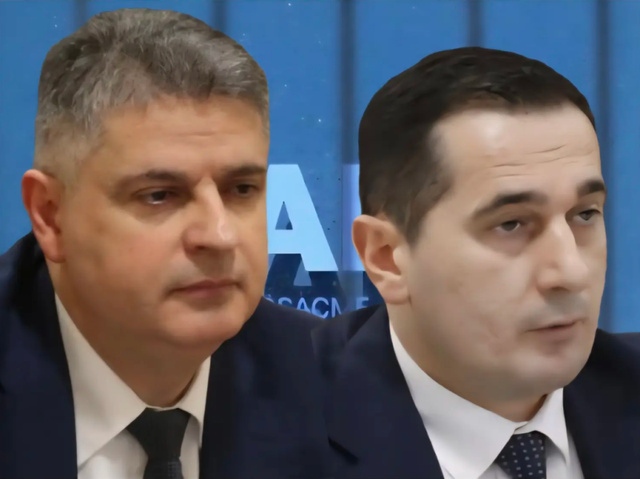
The selection of the new SPAK leader was clearly not between contrasting figures, but between two strong profiles within the system. The process was not perceived as a confrontation. In this context, the final decision was more a matter of priorities than a difference in the qualities of the candidates.
Klodian Braho, now elected, reflects the belief that SPAK wants to continue the "Dumani" spirit of the last two or three years.
But equally important was the candidacy of Adnan Xholi, who deserves to be openly and clearly evaluated. Xholi represents the model of an institutional prosecutor, calm and balanced, with extensive experience and a strong legal culture.
What did he lack to win? Not necessarily merit. Maybe just the brilliance to create public momentum. He is not the prototype of the prosecutor who “makes headlines” every week.
But it is precisely this professional calm that has always been part of his strength. Adnan Xholi is among the prosecutors who have dismantled some of the most untouchable gangs in the country, bringing forward complex investigations and serious files. However, he has chosen to remain out of the spotlight, not capitalizing publicly on his work and maintaining a low and discreet profile.
His professional modesty did not necessarily translate into an advantage in a race where media exposure has become part of public expectation.
However, the choice of Braho is not a revolution, but a passing of the baton within a structure that already has its own rhythm. The choice between Braho and Xholi itself gave a clear message that SPAK seeks continuity. After Dumani, it does not seek to slow down the march.
Meanwhile, every election of a SPAK leader is automatically linked to high public expectations. The new name at the head of SPAK is no longer seen simply as a functionary.
Although SPAK has made significant strides and broken the myth of political impunity, the inability to date to directly deal with Sali Berisha, a figure who continues to be central to the debate on political accountability in the country, remains a visible stain.
For a large part of the public, this gap creates a contrast with other files where SPAK has been determined and effective, raising the question of whether there are still invisible boundaries that have not been fully crossed.
In this context, the new leader, whoever he may be, inherits not only the technical duties of the position, but also the burden of expectations to address this disproportion. For Braho, this is a challenge, while for Xholi it remains a silent merit – (he once called Berisha to account when no one approached him) – that was not used in this race./ Gazeta DITA