Is this police force professional and capable of handling violen...
/ 2026-10-16 18:54:07Focus


Giuseppe Sarcina - Corriere della Sera
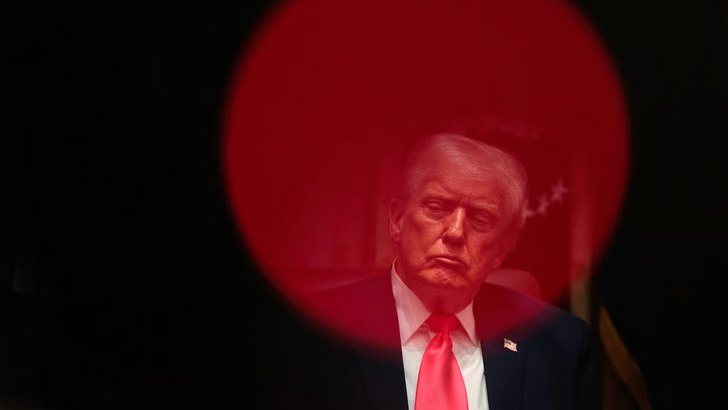
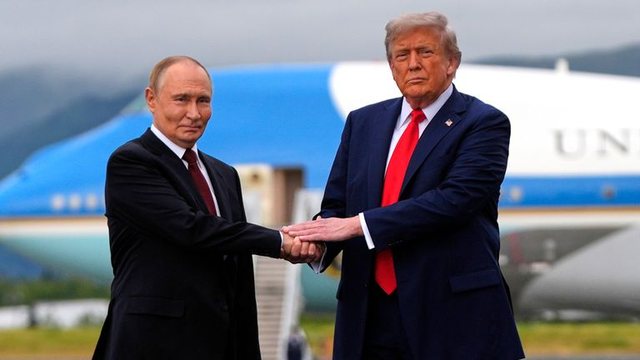
After the latest political blow, the time has come for Europe to think and act. The new national security strategy published on Friday by the White House, with its direct challenge to European institutions, is forcing Brussels and EU capitals to change course. The immediate challenge remains the relationship with Vladimir Putin and support for the Ukrainian resistance. But in the meantime, long-term decisions are also required, to refute the pessimistic prophecies of Donald Trump and his deputy JD Vance, who warned that “Europe risks becoming unrecognizable within 20 years.”
The two reports supported by Mario Draghi and Enrico Letta have set out clear directions for increasing competitiveness in key sectors: energy, defence, digitalisation and artificial intelligence. Draghi has suggested a package of 383 measures in September 2024, but so far only 10% of them have been implemented. America's departure from traditional commitments is pushing Europeans to seek quick and tangible solutions.
An “enlarged Europe”
The idea of a wider European cooperation space is taking shape. Relations between the United Kingdom and EU countries are narrowing significantly. No one is talking about a return of Britain to the EU, the wounds of Brexit still remain open, but London has given up self-isolation for the time being. The Russian threat has pushed Prime Minister Keir Starmer to build a strong strategic alliance with Paris, Berlin, Warsaw and Rome.
Cooperation is extending even further, to the “Nordic-Baltic Eight” group, which includes Denmark, the Baltic countries, Finland, Iceland, Norway and Sweden. There are also positive signals from as far away as Canada, New Zealand, Australia and Japan. The idea of a pro-European “broad camp” is gaining ground.
Funds and agreements
This political perspective risks being overturned by the rise of sovereigntist parties in Germany, France and Britain. For this reason, Starmer and others are expected to accelerate action, supporting political partnerships on economic and industrial grounds.
An important test will be the functioning of the new European fund “SAFE”, Security Action for Europe, worth 150 billion euros. The fund aims to finance defense projects submitted by at least two EU countries, along with Ukraine and the EFTA countries (Norway, Iceland, Liechtenstein, Switzerland).
There is pressure from other countries to get involved, including the UK. EU-UK industrial cooperation is seen as an opportunity to strengthen the continent's defences. A recent example is the assessment that the UK Ministry of Defence is making of the Italian company Leonardo to replace its ageing fleet of Puma helicopters.
The Chinese runway is reopening
Tensions with the US are putting the idea of greater openness towards China back at the centre of the European debate, a line supported by figures such as Romano Prodi and economist Giovanni Tria. It is not just about trade diversification: Europe's dependence on America remains very high. In 2024, EU-US trade exchanges reached 1,700 billion dollars, compared to 845 billion with China.
A more balanced cooperation is under discussion: Europe has a vital need for the rare minerals that China controls, while Beijing seeks space for technological investments on European territory. Until a year ago, this thesis would have been considered unacceptable, as the EU followed Joe Biden's American line of curbing Chinese influence in every region of the world.
But with Trump signaling that he wants a free hand to negotiate directly with Xi Jinping, many European capitals, from Berlin to Madrid, Athens and Rome, are asking: If America can do it, why can't we?
On the tense global stage, Europe seeks to remain neither isolated nor dependent – and time for decisions appears to be running out.