Is this police force professional and capable of handling violen...
/ 2026-10-16 18:54:07Focus


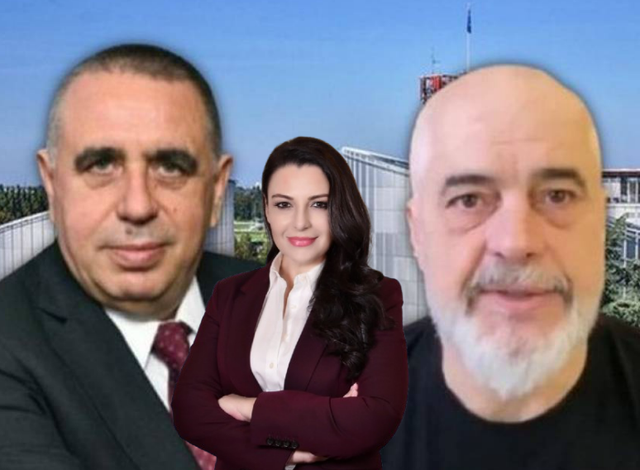
The suspension from office of Deputy Prime Minister and Minister of Infrastructure Belinda Balluku , following accusations leveled against her for violating equality in tenders, has opened a much deeper debate than the criminal case itself.
This is no longer an individual issue, but a symptom of an old disease: the destroyed morality of governance in Albania.
In any country with minimal standards of public ethics, a senior official, once under investigation for issues related to abuse of power, voluntarily steps down from office to pave the way for independent investigations, without political pressure, without procedural alibi, and without hiding behind the immunities of power.
Resignation does not constitute an admission of guilt, but rather respect for the institutions and the public it serves.
In Albania, this culture of responsibility is missing. Instead of reflection, conflict is resolved; instead of morality, a wall of politics is erected.
Prime Minister Edi Rama's reaction after the Special Court's decision, taking the matter to the Constitutional Court and arguing that the suspension of a minister "blocks the entire department", shifts the debate from its core to its periphery.
Why do we have to go to the extent of a judicial suspension to remove a senior official from office?
Why are legal-administrative interpretations needed to replace a simple ethical act?
And above all: how is it possible for an entire ministry to be so personalized that its functioning depends on a single individual?
The argument that a ministry is "blocked" when the minister is suspended is an admission of another major problem: the total capture of the administration by politics, the lack of functional structures, and the frightening centralization of decision-making.
In a normal state, the ministry does not stop because the minister stops.
In a normal state, there are deputies, general secretaries, legal links that guarantee continuity. In a normal state, the crisis of an individual does not turn into a crisis of institutions.
But Albania is experiencing exactly this: personalization of power, weakening of institutions and relativization of responsibility. Above all, it is experiencing the lack of a minimum morality in governance, morality that establishes the line between power and the state, between public interest and private interest, between responsibility and arrogance.
Today it does not matter what one side or the other says, what legal interpretation is given to a court decision, or how long the process will last.
What matters is a clear truth: until when will senior officials in Albania continue to hold onto their positions until the last second, even when this position is under the shadow of investigations?
The answer to this question shows the level of morality of the government, and it is precisely this level that is in ruins today.
Until the culture of responsibility is restored, until resignation is seen as an act of dignity and not weakness, until the administration is strong and institutions are more important than individuals, Albania will continue to live in a paradox: with beautifully written laws and destroyed political morality.
This is the real problem. And this is why any debate about “competences,” “suspensions,” or “constitutional interpretation” is just an attempt to avoid the essence: governance without morality leads to a crisis not just for one ministry, but for the entire state.