"Condemned" protesters?! Who trapped Rama inside the Prime Minis...
/ 2026-10-23 16:02:00Focus


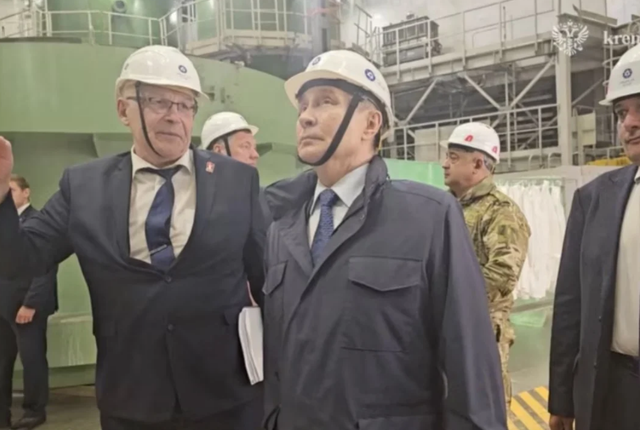
Russian President Vladimir Putin made a surprise visit to Russia's Kursk region on Wednesday, at a time when he is being accused of dragging out peace talks with Ukraine.
This was his first visit to Kursk since Russian troops pushed back Ukrainian forces from occupied parts of the region following a Ukrainian incursion last year.
State television showed Putin meeting with several groups of residents in Kursk, as well as with the region's interim governor, Alexander Khinshtein.
Ukrainian troops launched the incursion in August last year, in a bold attack that caught Russia by surprise. At one point, Kiev said it controlled about 1,400 square kilometers of the region. Last month, Moscow claimed to have pushed back Ukrainian soldiers, ending the incursion.
Putin's visit comes amid accusations that he is dragging out peace talks to end Europe's largest and deadliest conflict since World War II in an effort to gain more territory and strengthen Moscow's position at the negotiating table.
Last week, Russian and Ukrainian negotiators held their first face-to-face meeting in more than three years in an attempt to stop the fighting.
However, there was little progress, prompting US President Donald Trump to hold a two-hour phone call with Putin on May 19, which ended with a promise from Moscow to prepare a memorandum with preconditions for a ceasefire – which many European analysts and diplomats considered a Kremlin tactic to drag out the process.
US Secretary of State Marco Rubio told a Senate Foreign Relations Committee hearing on May 20 that Trump has not imposed new sanctions on Moscow because he "believes that if he starts threatening sanctions now, the Russians will not negotiate, and that it is worth preserving the opportunity to talk to them, to push them to the negotiating table."
The European Union and Britain approved new sanctions packages against Russia on Tuesday, while the European bloc announced that it is already planning another round of "massive" sanctions.
For its part, the Kremlin again denied that it was dragging out the process, with spokesman Dmitry Peskov telling reporters that "everyone is working dynamically" towards a solution to the conflict.
Since taking office four months ago, Trump has made ending the war in Ukraine a foreign policy priority. In March, he demanded that both sides immediately agree to a 30-day ceasefire. He has repeated that demand since then, saying he would impose sanctions on any country that undermines the ceasefire.
While Ukrainian President Volodymyr Zelensky has accepted the White House's proposal, Putin has not, demanding that Kiev accept several preconditions, such as recognizing Russia's annexation of Ukrainian territories, the country's demilitarization and its neutral status./rel