Is this police force professional and capable of handling violen...
/ 2026-10-16 18:54:07Focus


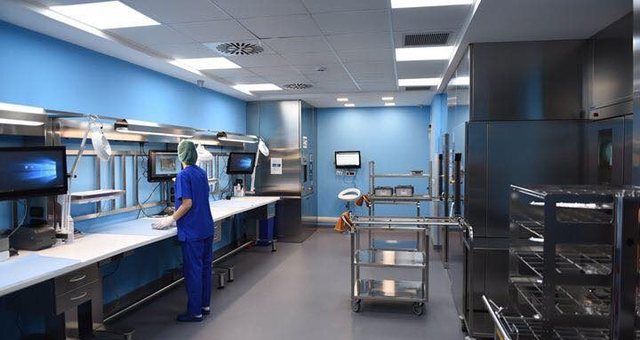
The government has decided to create a joint stock company with 100 percent state capital to provide integrated sterilization services in all public hospitals in the country, at a time when the current sterilization contract with PPP continues to be under accusations of corruption and abuse of public funds.
The decision to establish the "Operator of Integrated Sterilization Services" JSC, published in the Official Gazette, provides for an initial capital of 200 million lek from the state budget for 2026 and the free transfer of assets that pass to the state after the termination of the concession contract signed in 2015.
The creation of a separate joint-stock company for hospital sterilization has raised serious questions about why a service that has historically been part of the basic routine of hospitals is being taken out of them and institutionalized as a separate entity. The sterilization of surgical instruments is considered an essential function of every public hospital, directly related to patient safety and daily medical practice, and for decades has been carried out by internal hospital structures without the need for a separate legal operator.
In most countries with developed healthcare systems, sterilization is an integral part of the hospital function itself, and not an external service with concession contracts or separate legal operators. This process is taken under the responsibility of the Central Sterile Services Department (CSSD), also known as the Sterile Processing Department, within each hospital or health center. The CSSD is a functional unit within the hospital structure that deals with the cleaning, disinfection, inspection, packaging and sterilization of reusable medical and surgical instruments for further use in operating rooms or other clinical units. This model is widely used in countries in Europe, North America and Asia-Pacific, and is considered the international standard for ensuring patient safety and preventing hospital infections.
But our government will apply complicated models for secondary services at a time when hospitals lack innovative drugs and therapies.
According to the latest government decision, the new state-owned company will take over the entire chain of sterilization services, from the supply of sterile surgical instruments and disposable materials, to the management of the Central Sterilization Station at the University Hospital, the treatment of biologically hazardous hospital waste and the digitalization of the process. All fees for these services will be collected by the company itself, which will be financed from its own revenues and other legal sources, while formally maintaining the character of a public service.
It remains unclear whether this step represents a real departure from the criticized concession model or simply an institutional reform that does not address responsibilities for past abuses.
The decision bears the signature of Prime Minister Edi Rama and charges the Ministry of Health and Social Welfare with its implementation, while the injection of initial capital will be carried out immediately after the company's registration at the National Business Center.
The surgical and dialysis instrument sterilization contracts, both signed in 2016 for a ten-year term, have been among the most costly for the health budget. Their terms expire this year.
The sterilization contract, in particular, has been accompanied by accusations of cost inflating, unjustified payments, and questionable procurement procedures that have also included investigations by SPAK.
From 2017 to 2026, the real cost of sterilization has reached over 15.3 billion lek, or about 153 million euros, or about 53% more than was foreseen in the initial contract of 100 million euros./monitor.al