Is this police force professional and capable of handling violen...
/ 2026-10-16 18:54:07Focus


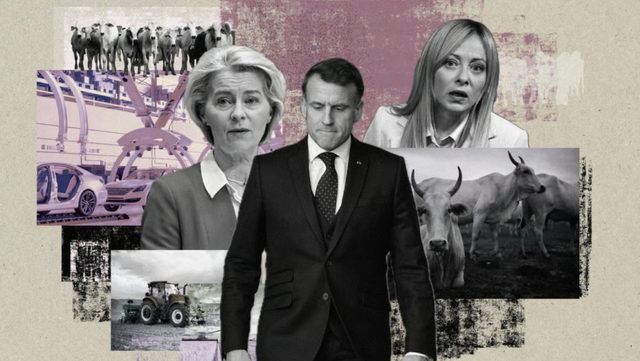
After 25 years of difficult negotiations, European Union member states gave the green light on Friday to an agreement with Mercosur countries, paving the way for the creation of a free trade area covering more than 700 million people in Europe and Latin America.
The deal, which is said to be signed in Paraguay on January 17, will eliminate more than 90% of tariffs on European exports. European consumers will also be able to buy beef from the fields of Argentina, while import tariffs on German cars will be significantly reduced in Brazil. Despite the political noise (and huge backlash) that accompanied it, its purely economic impact is relatively limited: the Commission estimates that it will add around €77.6 billion to the EU economy by 2040, or just 0.05% of GDP.
As in any big deal, there are winners and losers in this one, according to Politico's analysis.
wINNERS
Giorgia Meloni
Italian Prime Minister Giorgia Meloni has once again managed to “read” the political connections correctly. By threatening to support French opposition to the deal, she secured last-minute concessions for Italian farmers. In exchange for Rome’s support for the deal, Italy extracted clauses to protect the agricultural market and commitments to new funds for agriculture from the European Commission, which the government can promote domestically.
German car industry
The German car industry is gaining easier access to Latin American markets. High tariffs, currently at 35%, will gradually be reduced, boosting sales and profits for giants like Volkswagen and BMW. However, the removal of trade barriers will not happen overnight, at the request of Brazil, which has its own car industry, while electric vehicles will receive preferential treatment, in a sector where Europe is lagging behind.
Ursula von der Leyen
For European Commission President Ursula von der Leyen, the deal is a hard-fought but important victory, as it strengthens Brussels’ position internationally at a time when the Union looks like… a slow dinosaur, constantly lagging behind the US and China. After spending more than a year trying to placate skeptics and form the necessary qualified majority, she is expected to sign the agreement next week in Paraguay. However, the price was high: commitments to 45 billion euros in agricultural subsidies, which overturn previous plans to reduce support for the agricultural sector.
European farmers
Despite the strong reactions, mainly to the low selling prices of South American products, which could cause hard-working European farmers to abandon their land, the reality looks a little different. And this is because the agreement includes strict quotas for products such as beef and poultry, Latin American farmers will be limited to exporting a certain number of chicken pieces per person per year, while special protections are also offered for European products with designations of origin, such as Italian parmesan or French wine. Combined with generous subsidies (45 billion euros promised by Von der Leyen), the picture for the agricultural world is ultimately proving to be less bleak.
losers
Emmanuel Macron
French President Emmanuel Macron has been the most persistent opponent of the deal, under pressure from the French agricultural base. His failure to block it, despite a last-minute effort to rally allies (he appeared to be getting Meloni on his side), is seen as another political defeat at a time when his influence on the European stage appears to be waning. After this latest defeat, criticism of the French president in the national media is expected to intensify.
Donald Trump
For US President Donald Trump, days after the operation in Venezuela and the arrest of Maduro, the agreement underlines that Europe still has powerful “soft power” tools to cooperate constructively with like-minded partners. In contrast to the US president’s approach of trade pressure and unilateral moves, the EU-Mercosur agreement strengthens opponents – including Brazilian President and Mercosur leader Inácio Lula – and partnerships that do not favor US strategy.
China
China had significantly strengthened its presence in Latin America (mainly its exports to Brazil), while negotiations with the EU were delayed. The new agreement gives Europe the opportunity to regain market share in sectors such as automobiles, machinery and aerospace, but also to strengthen the region's political ties with the West.
The agreement also strengthens the EU's position in terms of direct investment, an area in which European companies still have an advantage over their Chinese rivals.
Politically, China has managed to pull countries like Brazil away from Western positions to some extent, for example through the BRICS group, which consists of Brazil, Russia, India, China and South Africa, as well as other emerging economies. Since the agreement is not just about trade, but also creates deeper political cooperation, Lula and his Mercosur counterparts will now have a closer relationship with Europe.
Amazon
The dark side of the deal concerns the environment. Increased beef production threatens to accelerate deforestation of the Amazon rainforest. Simply put, more beef for Europe means fewer trees for the world. Although the deal includes clauses against illegal deforestation and commitments to the Paris Climate Agreement, concerns about the environmental impact remain strong.