Is this police force professional and capable of handling violen...
/ 2026-10-16 18:54:07Focus


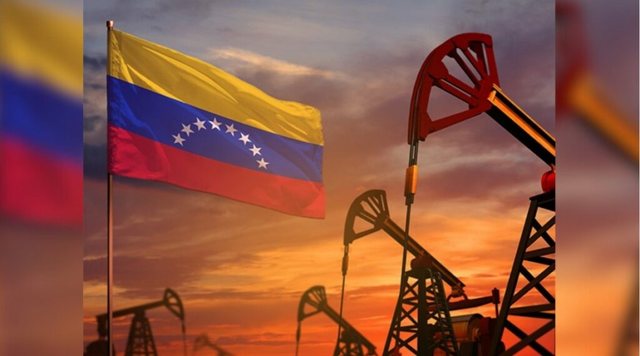
With 303 billion barrels, according to the London Energy Institute, Venezuela is the largest holder of oil reserves in the world (17% of the global total), compared to Saudi Arabia's 240 billion, writes La Repubblica.
Are they enough to justify an intervention that shakes the entire global balance?
History shows that American oil giants have tried to exploit this wealth since 1914 when the first oil well, Mene Grande, was drilled in Lake Maracaibo and fueled the search for black gold that Trump mentioned in a conference on Saturday, saying that "American companies will flock" and explaining that "the United States will lead the country during the transition." Venezuela not only has oil, it also produces gas with Eni for domestic supply and now the Italian group can expand the business in collaboration with the Americans.
Relations between Washington and Caracas have always been turbulent due to conspiracies, dictators, sudden regime changes and some brief moments of democracy in Venezuela. The first oil concessions with Exxon, Chevron, Conoco-Phillips, Texaco and other “sister” companies date back to the 1940s, linked to the increase in demand during World War II. After that, facing competition from Middle Eastern producers, Caracas proposed an alliance with “enemies” such as Iran, Iraq, Saudi Arabia and Kuwait by creating OPEC in 1960 and later expanding to other producers. The aim was to confront the dominance of the American giants, but divisions within the cartel, which were quietly encouraged by the United States, remained an obstacle.
Meanwhile, in 1976, Venezuela nationalized production by establishing a 50-50 profit-sharing arrangement with Western partners that was later changed to a 60-40 one in favor of the government, despite the tensions that followed. The only period of democracy and reform in these decades was in the 1990s when Petroleos de Venezuela was recognized as reliable and efficient. In 1999, the election of Chávez caused the situation to escalate to its current level. Maduro came to power in 2013, and export sanctions date back to the first Trump administration, 2017-2019.
Venezuela is temporarily excluded from OPEC along with Libya and Iran and under a US embargo, does not participate in decisions on quotas and prices. An OPEC meeting is scheduled for Sunday, but experts do not expect significant developments. “Prices,” says Davide Tabarelli, president of Nomisma Energia, “are in a fragile equilibrium, around $60 per barrel: this low level allowed Trump to act and since his concern is oil, which currently costs $2 a gallon, they do not increase. If prices were at the levels of March 2022, after the Russian attack on Ukraine and the peak of $120 per barrel, he would have thought twice.”
Renewable energy sources, electric cars, and energy-saving technologies, all factors that reduce demand for oil, must be taken into consideration.
According to economist Patrice Geoffron, price increases caused by Trump's new "war" "should not exceed 10-20% limited only to the share of crude oil, irreplaceable, produced in Venezuela and processed in specialized refineries in the south of the United States."
Another factor is China: despite being a major customer for the “clandestine” crude oil exported from Caracas, Beijing is helping Venezuela rebuild its dilapidated oil infrastructure, fueling fears that it could gain a significant foothold. According to CNN, it will take $58 billion to restore production to acceptable levels.