


"Condemned" protesters?! Who trapped Rama inside the Prime Minis...
/ 2026-10-23 16:02:00Focus


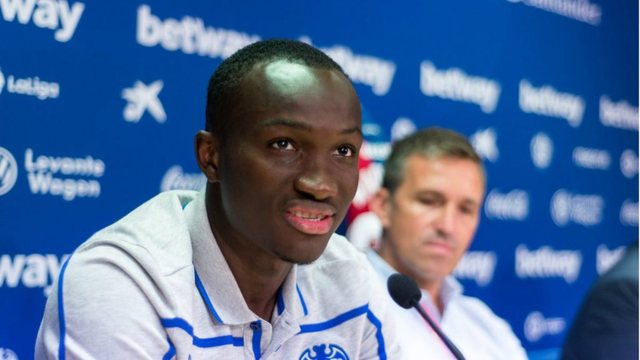
"Top Story" this Monday evening dealt with the case of Rafael Dwamena, the Ghanaian footballer who breathed his last on the green field of Rrogozhina a few days ago.
The media have revealed painful details of his life. The child born without the will of his parents, as an accident of two young people who were not crowned in marriage, was abandoned to be raised by his grandmother with love for school and faith in God.
The journalist of Top Channel, Dorjana Bezat, revealed tragic details from the tragic moment, when she said that the death of the Ghanaian footballer in the 24th minute of the match was seen live by his brother and his fiancee.
Bezat: The moment when the incident happened, Dwamena had his wife and brother in the stadium who had come to watch the match and this would be his last match because the disaster happened in the 24th minute.
Duma: Was he married?
Bezat: Yes. He was married to a foreign citizen who from time to time divided her life between Albania and her country. He didn't live here with her, but he visited her often. The family members did not have any claims about the loss of his life and were aware that it was a self-sacrifice. However, as is the protocol in cases of fatality, the Durrës Police together with the Prosecutor's Office opened an investigation which they started from the first moment, with the ambulance that was in the stadium at that moment. The verifications were made, where according to the minutes kept by the Judicial Police officers, it turned out that the ambulance was equipped with all the necessary equipment.
The protocol was followed at the Kavaja hospital where he goes for help and the answer so far is that he was given the necessary help in time, but it was not enough to save his life.
The investigation has deepened even further by seizing all the documentation that the Ghanaian footballer had in our football federation, from the EKGs of the heart, all his medical records and the records he had in his Egnatia team. From the question of cardiologists and physiotherapists, it turned out that all the analyzes were normal both when he was federated in Albania and when it was the first season, because it was currently the second season that Dwamena played for Superior. At the start of the two seasons, his condition was optimal.
What remains sad about Rafael Dwamena's case is that the young man chose to give his life in the only profession he ever wanted to do. Although he was banned from playing football for a long time because his grandmother had chosen a different profession, that of a doctor, Dwamena often sneaked out to play football in the alleys of a small village in Ghana until the day he was spotted as a talent in the age of 14 years.
He never forgot his first yellow Diadora shoes bought for him by his uncle, who had fought hard with Rafael's grandmother to let him go on the path he wanted as a footballer. He started at the local Red Bull academy to progress quickly and become part of the most important championships in Spain, Britain, Switzerland, etc. It wasn't going to be easy even when he emerged as a standout striker as a heart problem would halt what was thought to be a brilliant career. Most of the European clubs did not allow him to continue the game and he came to Albania to Egnatia where he died. He knew that the road would not be long, and yet he decided to run to the end, aware that the end could come at any moment, as a self-sacrifice.





