Is this police force professional and capable of handling violen...
/ 2026-10-16 18:54:07Focus


Helena Smith - The Guardian
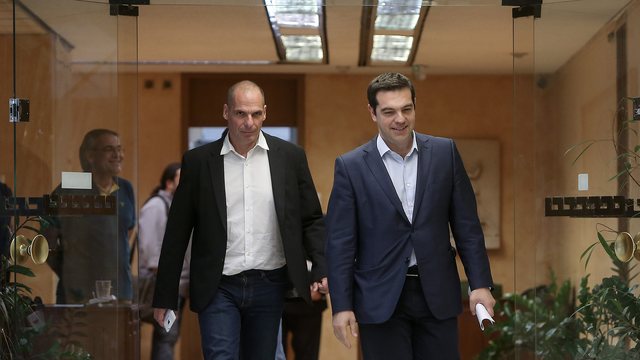
Yanis Varoufakis, the fiery economist who rose to fame at the height of Greece's debt crisis, was not only selfish but ultimately more interested in testing his game theories on the nation than in winning the battle to keep the country alive. So writes former Prime Minister Alexis Tsipras in his newly published memoir, Ithaki, as the former radical left leader, sparing no punches, seeks, 10 years later, to tell the truth.
“The reality was that he was more of a public figure and less of an economist,” recalls the 51-year-old, who described Varoufakis’ choice as finance minister because of his international reputation and “extremely engaging” skills as a public speaker.
"I wanted to send the message of a strong negotiation, but I underestimated the human factor. Very quickly, Varoufakis turned from an asset into a negative protagonist. Not only could our potential allies not stand him, but neither could his colleagues."
In a turn of events that has quickly shaken Greece, Tsipras, who appears determined to make a political comeback two years after resigning as leader of the Syriza party, said it was clear that the Greek-Australian academic had a personal agenda that included promoting his books.
The negotiations to avoid bankruptcy were “not just a way to reach a better deal for the country. They were an experiment, a historic opportunity to test the truth of his economic theories,” Tsipras wrote.
During the turbulent talks that pitted the two men against former German economic czar Wolfgang Schauble and other "fiscal hawks," Greece was very close to exiting the eurozone.
At stake was not only the country's future, but also the harsh austerity policies demanded in exchange for bailout loans from international creditors, which Tsipras and his Syriza government had promised to cancel.
Efforts to find funds elsewhere, including a desperate plea to the Kremlin to buy Greek government bonds, failed, with Putin making it clear that Athens needed to find understanding with its EU partners.
Aid for the debt-ridden country would be tantamount to throwing money in the trash, the Russian leader is reported to have told his Greek counterpart in Moscow.
“I wanted a fair deal within the eurozone,” Tsipras wrote, “but we also did not hide the fact that we wanted a radical change in Europe, that we wanted to stop the imposition of the economic absurdity of neoliberalism not only in Greece, but from one end of the continent to the other.”
In July 2015, to the surprise of German Chancellor Angela Merkel, the devastating terms of the bailout were presented to the people through a referendum, a move that plunged the EU into an even deeper existential crisis.
Although the vote was won convincingly by those opposed to austerity measures, Tsipras had little choice but to reject its outcome and negotiate a bailout with foreign lenders that turned out to be even harsher, although he argued that the vote also served to avoid national humiliation. He insisted that his intention had never been for Greece to exit the eurozone.
Varoufakis, who had clashed sharply with colleagues in Eurogroup meetings before the referendum, subsequently resigned, although the two politicians tried, at least publicly, to maintain friendly relations.
But in the book, named after the island where in 2018 Tsipras announced Greece's exit from the decade-long crisis, it is precisely his former ally, who now leads the left-wing MeRA 25 party, with whom he has the most disagreements.
In what will be remembered as one of the biggest attacks on character in modern Greek memory, the former prime minister claimed that Varoufakis' confrontational style left him increasingly isolated among colleagues, put Greece at risk and helped the "eagles", led by Schäuble, openly push for Grexit.
"Varoufakis had proven himself unsuitable for a deal that required complex and delicate handling," he claimed, adding that he had begun to doubt his finance minister early on.
"He was the face of the negotiation, the man who attracted attention, who appeared on magazine covers around the world... he gave the impression that he was enjoying his new role."
When Varoufakis presented an emergency plan that included creating a parallel currency and distributing vouchers to pensioners as a way to force creditors to meet Greek demands, Tsipras said he realized the game was up and asked Varoufakis: “Are you serious?”
Before the book's long-awaited release, the politician had declared that the time had come for his voice to be heard.
And in a work that recounts the behind-the-scenes meetings that led to his controversial decision to form a coalition with a right-wing populist, as well as the historic deal to end the long-running dispute over Macedonia's then-name, he does not disappoint.
But it is a telling of history that has been met with surprising anger and disbelief. And in the case of Varoufakis, who has since gained international fame as a bestselling author, complete silence.