Is this police force professional and capable of handling violen...
/ 2026-10-16 18:54:07Focus


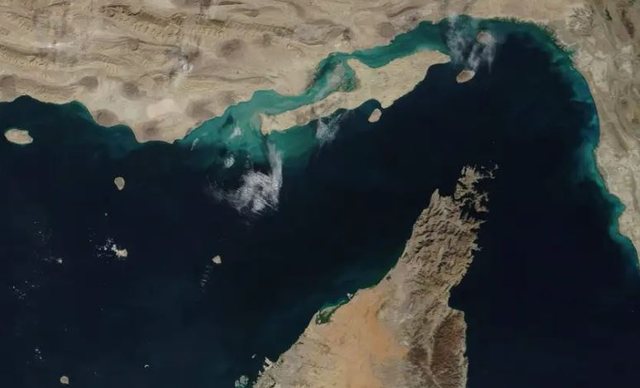
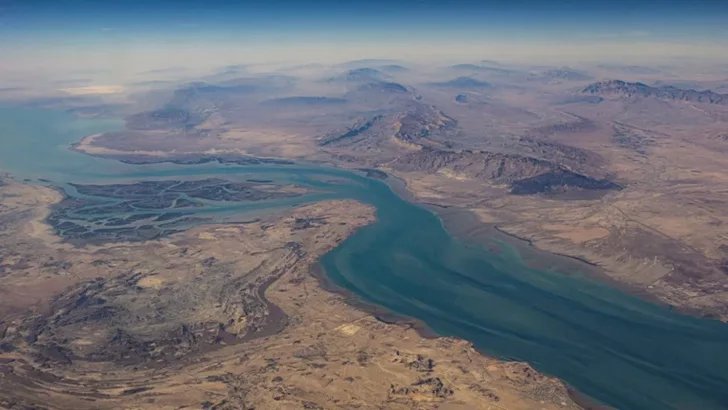
Iran has announced that it will allow free passage of all commercial ships through the Strait of Hormuz for as long as the ceasefire in Lebanon, which was set to last for 10 days, lasts.
The news was announced by Iranian Foreign Minister Abbas Araghchi, who stressed that the decision is directly related to the implementation of the agreement to stop fighting on Lebanese territory.
According to him, passage through this vital maritime corridor for global trade will take place without interruption, while ships will follow a coordinated itinerary determined by Iranian ports and maritime transport authorities.
"Within the framework of the ceasefire in Lebanon, the passage of all commercial vessels through the Strait of Hormuz is declared completely free for the remainder of the duration of the ceasefire, following the coordinated route as already announced by the Ports and Maritime Transport Organization of the Islamic Republic of Iran," Araghchi's statement said.
Meanwhile, the development comes at a time of high tension in the region, following the United States' decision to impose a blockade on Iranian ports, with the aim of stopping oil exports from Tehran.
According to maritime monitoring company Kpler, three Iranian tankers, the Deep Sea, Sonia I and Diona, are the first loaded ships to leave the Persian Gulf through the Strait of Hormuz since the blockade came into effect.
It is learned that these ships were carrying about five million barrels of crude oil and had received the cargo on Kharg Island earlier this month.
Data shows that since April 10, when the tanker "Starla" left, no other had passed through this strategic route, until the most recent developments.
Oil prices fall immediately after news of the opening of the Strait of Hormuz
Oil prices fell sharply and futures contracts rose immediately after the Iranian foreign minister said the Strait of Hormuz would be "fully open" for commercial transit during the remainder of the ceasefire.
Brent crude, the global benchmark, fell 9% to $90 a barrel. WTI, the U.S. benchmark, fell 9.5% to $82.60 a barrel.
U.S. stock futures rose: Dow futures rose 560 points, or 1.16%. S&P 500 futures gained 0.8%, and Nasdaq 100 futures rose 0.9%.
Iran reopened the strategic Strait of Hormuz to all commercial ships until the ceasefire ends next week.
The news was announced by Iranian Foreign Minister Abbas Araghchi, who stressed that the decision is in line with the ceasefire announced in Lebanon.