Is this police force professional and capable of handling violen...
/ 2026-10-16 18:54:07Focus


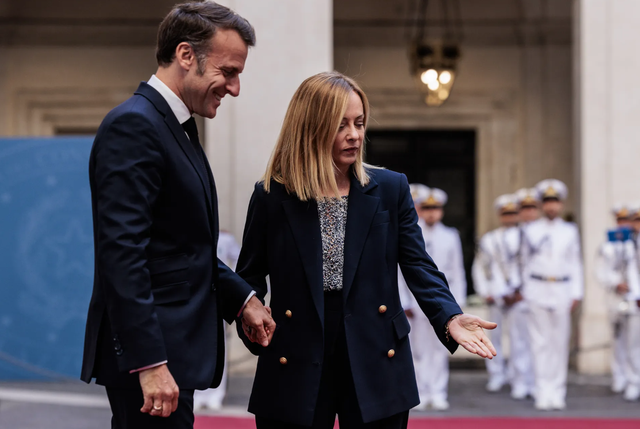
Italian Prime Minister Giorgia Meloni is expected to travel to Paris at the invitation of French President Emmanuel Macron. She will be present at the Élysée Palace on Friday, April 17, along with British Prime Minister Keir Starmer and German Chancellor Friedrich Merz, to discuss the situation in the Strait of Hormuz and the possibility of a European mission in that strategic area.
Although official confirmation is expected to come today, sources from Berlin have announced that German participation is certain, which means the development of a delicate four-party summit in the French capital, where some leaders may even connect remotely.
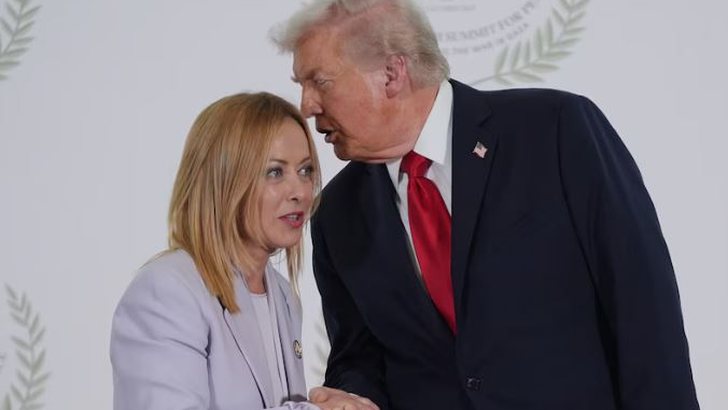
The meeting with Macron comes at a time when relations between him and Meloni have often been tense. On the political front, the Italian prime minister's decision to attend this meeting comes after an open clash with US President Donald Trump.
The issue of Hormuz is considered one of the most sensitive geopolitical files of the moment and a strong point of clash with Washington, as it is directly linked to the energy and economic security of the European Union. Italy's presence at the Élysée is interpreted as a cautious signal to the White House that there is an alternative to the line close to Trump that Rome has followed in recent months.
However, this strategy remains in its early stages and without clear details. A possible European mission in Hormuz is still unclear and preliminary information is expected to be exchanged during the meeting, to better understand the positions of France and the United Kingdom. Meanwhile, the United States is calling for an immediate commitment, while European countries emphasize the need for a lasting ceasefire before any action.
Italy's commitment will be determined in the coming days and could go beyond sending naval assets such as minesweeping ships. France could propose reactivating a previous mission in the region, seeking the support of allies to guarantee security in the Strait of Hormuz, a step that could also help ease US pressure.
Recent developments, including Trump's renewed criticism of Meloni, seem to have made this move almost necessary for the Italian government. In the absence of previous support from Washington, Rome is turning its attention to Paris and Berlin, aiming for close coordination with Chancellor Merz on the Hormuz issue.
Balancing relations with the US remains a complex challenge. Italy cannot easily give up a partnership long considered strategic. This was also reflected in Meloni's participation in the presidential inauguration ceremony in Washington in January 2025. For this reason, signals to the White House are being given cautiously.
Italian Foreign Minister Antonio Tajani described the situation as a "divergence of opinions" and not a crisis, while Deputy Prime Minister Matteo Salvini mocked Trump's statements about ending the war.
For her part, Meloni, during a press conference with Ukrainian President Volodymyr Zelensky, stressed the importance of transatlantic unity, leaving open the possibility of close telephone contact with the American president.