Is this police force professional and capable of handling violen...
/ 2026-10-16 18:54:07Focus


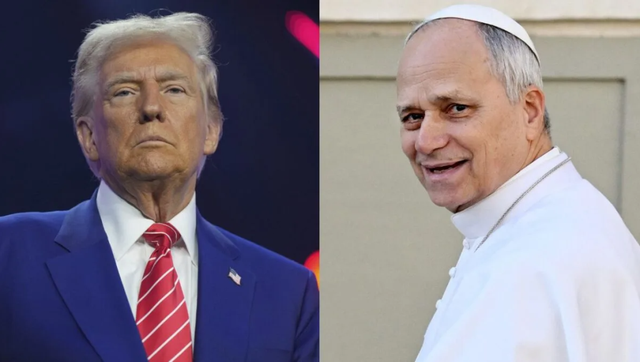
It is not unusual for President Trump to face criticism from Catholic leaders. His tough immigration policies have long drawn criticism from the hierarchy of the Catholic Church in the US, while a large section of conservative Catholics have stood closer to him.
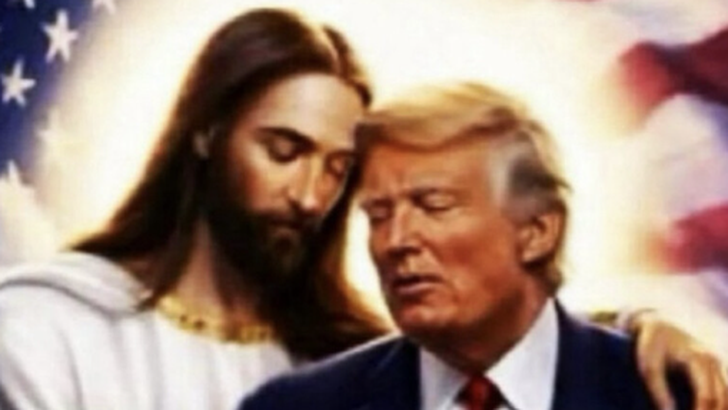
But the reaction of the last 48 hours has been different. This time the anger is not just about Trump's public attack on Pope Leo and the release of an AI-generated image of him as a Christ-like figure. What is more striking is that the criticism is also coming from longtime conservative Catholic allies of Trump, who are deeply concerned about the war with Iran.
According to the BBC , Trump's long attack on social media against the first American Pope, whom he called too liberal and "weak on crime", along with the image of AI, have crystallized a change in the attitude of many conservative Catholics since the start of the war six weeks ago.
A rare rift with the Trump camp
Bishop Joseph Strickland, once one of Trump's staunchest supporters, is now taking an outspoken stance against the administration on the issue. He says the conflict does not meet the criteria for a "just war" and that he stands with Pope Leo and his call for peace.
This is significant because Strickland had not only been very close to Trump, but had become a symbolic figure of pro-Trump conservative Catholicism. Now he is warning that religion is being used to justify immoral behavior and that using religious language to justify bombings goes against the essence of the faith.
He also reacted to Trump's attack on the Pope and the image that many called "AI Jesus", saying that he felt it was his duty to remind the American president of the Gospel according to Matthew, that is, the idea that true power belongs to Christ and not to people.
The war with Iran is uniting Catholics who are usually divided
This shift also poses political risks for Trump, because in the 2024 elections he had strengthened support among Catholics. According to the Pew Research Center, American Catholics remain divided by both racial and political affiliation, but the war with Iran appears to have created a rare rapprochement between the Catholic left and right.
Analysts point out that for many American Catholics, politics often carries more weight than religion itself, and they are usually divided along party lines on issues such as abortion and immigration. That is why their unification around Pope Leo's anti-war message is unusual.
Unlike Pope Francis, who was seen by many conservatives as too progressive, Pope Leo enjoys high support among both Democrats and Catholic Republicans. This makes it even harder for Trump to attack him without consequences.
Even the Catholic right is reacting
Peter Wolfgang, a prominent voice on the American Catholic right who has been a strong supporter of Trump and his mass deportation policies, is now openly critical of the president's behavior toward the Pope. According to him, Trump does not understand how Catholicism works: the Pope is not just a head of state, but the representative of Christ on earth, and attacks on him are perceived as attacks on the Church itself.
Wolfgang says it's natural for conservative Catholics to line up behind Pope Leo when Trump talks about destroying Iranian civilization or when officials like Pete Hegseth use a prayer language filled with cold-blooded, belligerent tones, which he says has nothing in common with Catholicism.
Other important Catholic figures in the US, including bishops who have been close to Trump, have also not publicly supported war with Iran. This makes the disconnect even more apparent.
Vatican: This is not just a clash of personalities
From the Vatican's side, the official narrative remains that this is not a personal confrontation between Pope Leo and Donald Trump. For the Holy See, it is about a Pope speaking from a position of faith against the logic of war.
When Trump said that “an entire civilization” could die in Iran, the Pope responded directly, calling the threat “truly unacceptable.” According to Vatican officials, the Pope has an obligation to mark the moral boundary of what is acceptable, even as diplomacy continues behind the scenes.
From the Vatican's perspective, Pope Leo is not uniting everyone, but he is moving the Catholic debate away from a purely partisan path. And therein lies the significance of the moment: the war with Iran and Trump's attacks on the Pope are creating a rift that is no longer just political, but also moral.
In the end, the BBC comes to a clear conclusion: by trying to attack Pope Leo, Trump is in fact acknowledging the real weight of his voice. Because, as the Vatican says, if the Pope were insignificant, he would not deserve any reaction. The fact that Trump attacks him means that his words carry weight.