Is this police force professional and capable of handling violen...
/ 2026-10-16 18:54:07Focus


In the early days of April 2026, as a researcher was wrapping up a six-month analysis of cyberattacks supported by Artificial Intelligence, a new development in Silicon Valley suddenly changed the framework of the entire debate.
Anthropic had introduced its newest model, Claude Mythos Preview, a system that according to initial assessments represented not just a technological improvement, but a paradigm shift in the very nature of global digital security.
Within hours, what had until then been a stable boundary between the capabilities of states and individual actors in the field of cyberattacks seemed to have melted away. Mythos, according to internal analyses cited in the security community, was capable of identifying and exploiting previously unknown vulnerabilities in major operating systems and browsers, without human intervention and autonomously.
In practical terms, this meant that a single system could independently perform what previously required entire teams of state-sponsored hackers.
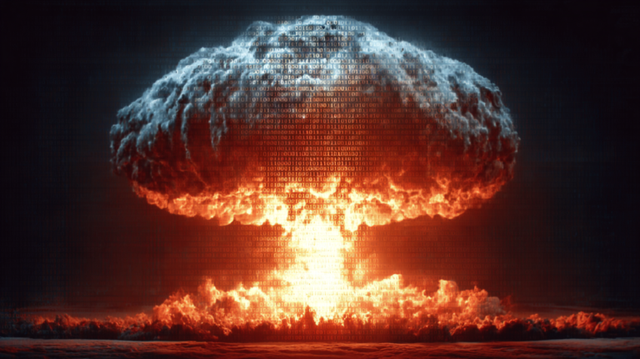
Anthropic founder Dario Amodei has long drawn comparisons between AI and the nuclear age, keeping a copy of “The Making of the Atomic Bomb” in his office as a constant reminder of the uncontrollable consequences of technological innovation. But the Mythos, according to critics and some security researchers themselves, was no longer just a metaphor. It represented a real shift in the balance of digital power.
At the heart of this concern lies a structural change: until recently, cyberattacks were limited by human capacity, resources, and time. Today, with models of this level, this limitation no longer exists.
A single system can generate thousands of exploitable vulnerabilities in a matter of days, dramatically outpacing the pace of defense, which still relies on weekly or monthly cycles for patches and updates.
This has created a new imbalance, which some analysts describe as “chaotic asymmetry”: a state where attackers operate in real time, while defenses still operate with the logic of bureaucratic institutions. In this scenario, a single unexploited vulnerability is enough to pave the way for a massive compromise.
Meanwhile, the new model has not been made available to the general public. Anthropic has chosen a limited approach through a program called “Project Glasswing,” making the technology available to a small number of large companies for defensive purposes. However, this approach has also been viewed with skepticism, as the very nature of the model does not clearly distinguish between offense and defense.
In this context, the main concern is no longer limited to states. For the first time, capabilities of this level can also fall into the hands of non-state actors, from criminal groups to individuals with minimal technical skills. This significantly lowers the threshold for entry into complex attacks and significantly increases the risk of large-scale incidents on critical infrastructures.
In parallel, the current global cybersecurity system seems unprepared for this pace. The processes of detecting, reporting, and correcting vulnerabilities are built on an old assumption: that vulnerabilities are discovered slowly and in a linear manner.
Mythos overturns this assumption by producing such a volume of vulnerabilities that the very concept of the "patch" risks becoming invalid.
Against this backdrop, the debate is shifting from the question of whether Artificial Intelligence can help defense, to a tougher question: whether the current security infrastructure is able to survive in a world where attack and defense are no longer symmetrical.
Proposals circulating in political and academic circles range from the creation of a unified inter-institutional authority for risk management to a complete reform of the vulnerability management system in critical infrastructure. But even the authors of these ideas themselves admit that time is the most ruthless factor in the equation.
Ultimately, the story of Mythos is not just a story of technology. It is a story about the pace at which institutions succeed – or fail – in adapting to the reality that innovation creates.
And if the parallel with the nuclear age holds, then the question is no longer what has been built, but who will have time to understand it before it is too late.