Protests highlight trauma crisis, operating rooms under reconstr...
/ 2026-10-15 18:35:16Focus


A state institution that should have been a vanguard for the sick, the needy, or even the elderly, who need quality medications, has completely turned into a function of the oligarchs, putting expired medicines on the market, creating fraud schemes, or creating pharmaceutical warehouses on paper, just to gobble up tens of millions of euros that were destined to go to the population.
This is about the Compulsory Health Insurance Fund, which has changed three directors within 10 months, while suspicions are that appointments to that institution are not made on merit, but with the assessment of some oligarchs, who have large pharmaceutical warehouses and dictate what medications should be on the reimbursement list. In September of last year, former director Spartak Zekja was arrested by order of the Tirana Prosecutor's Office, which had found a genuine extortion scheme, while the investigations also affected several other officials of the Fund.
However, the scandals in this small country of ours are forgotten for 3 days and not for 10 months, as the investigations against Zekja continue, while his place is initially taken by Arti Papajani, a long-time employee, who within a few months is dismissed again by the Minister of Health, Evis Sala. Papajani's place was taken by Ilir Topi, while suspicions from within the FSDKSH are that Topi is continuing the "legacy" left by Zekja, once again favoring the oligarchs, perhaps those who placed him in that position.
Within the Fund itself, a "witch hunt" has recently begun to target X pharmaceutical warehouse and favor another, while schemes have also begun on how to continue the extortion, not with the names that Zekja used, but with other names and individuals, who continue to enrich themselves at the expense of the poor, the sick and pensioners. No one wants to know what medications a pensioner or sick person takes, but how much money goes into the pockets of the oligarchs, those who have placed them in that position.

Of course, "the fish rots from the head", as the entire responsibility for the failure of the Fund has come from the leaders, starting with the Minister of Health, Evis Sala, who is also the chairwoman of the Administrative Council of the Fund. To everyone's surprise, the vice-chairman of this Council is none other than Kol Nikollaj himself, president of the Federation of Trade Unions of Albania.
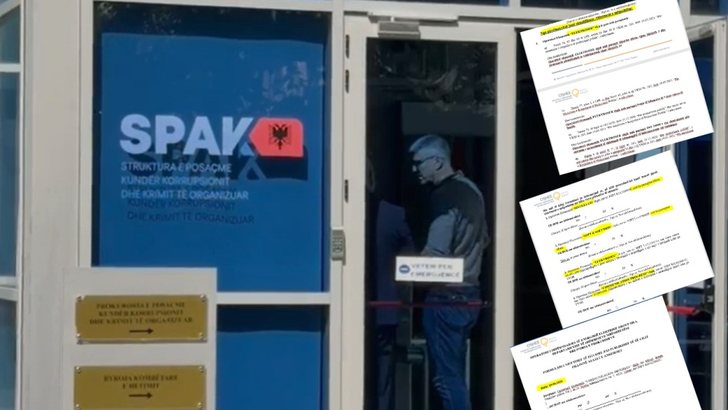
A name that has always been viewed suspiciously, given that he leads the Syndicate, but has mostly been accused of having alienated inherited properties, to the point that there have been several reports in SPAK, some in the district prosecutor's office. It is absurd to put such a name in an institution that should be the vanguard of the health system, to control drugs or pharmacies throughout Albania. Can Colonel Nikolla do it himself?
Since he leads the left-wing unions, again nonsense, since there are no left or right-wing unions in the whole world, but only in the service of workers, his placement in that position, which has many functions, only makes the entire institution dirty. As a reminder, the Administrative Council elects, appoints and dismisses the director of the Fund, appoints the members of the drafting of the service package and the list of reimbursable drugs, etc. etc.

But, FSDKSH itself has been caught up in successive scandals, occurring within a short period of time, from the scandal of the counterfeiting scheme for the reimbursement of medicines over 700 thousand euros, where the former head of FSDKSH Zekja was arrested, to the marketing of counterfeit medicines.
The former director was collaborating with an administrator of a phantom warehouse, as it turned out that the administrator had submitted false data as if he had purchased medications from these two other entities. These medications were "sold" within the e-warehouse system through fictitious invoices to other pharmacies, even though the products did not physically exist.
Meanwhile, in recent weeks, the Tirana Prosecutor's Office has reopened investigations into the Fund and a large pharmaceutical warehouse, on suspicions of abusive benefits through the drug reimbursement scheme and for placing expired medications on the market. A report by the High State Audit on the Mandatory Health Insurance Fund has highlighted violations in the drug reimbursement process.
"From the audit of the 'e-depo' system data for 2024, 102,778 units of medicines were found to have left pharmaceutical warehouses with an expiration date the same as the date of sale/entry into the pharmacy, as well as 143,598 units of medicines with an expiration date 1–5 days after leaving the warehouse," the report states. The report also highlights shortcomings in the monitoring of the supply of medicines, including delays, prolonged absences and non-compliance with contractual obligations. In some cases, distribution of hospital medicines in the open network, contrary to the law, was also found.
©Copyright Vox News
This article is exclusive to Vox News, and is copyrighted under Law No. 35/2016, "On Copyright and Related Rights". The article may be republished by other media only by citing Vox News and including a link to the source at the end, otherwise any violator will be held liable under Article 178 of Law No. 35/2016.