Is this police force professional and capable of handling violen...
/ 2026-10-16 18:54:07Focus


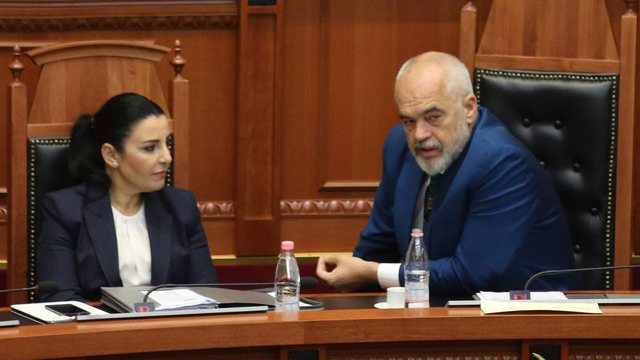
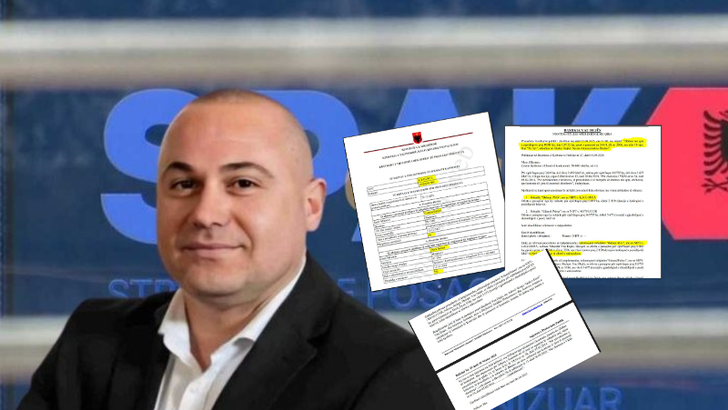
The news that Deputy Prime Minister Belinda Balluku has been indicted by the Special Prosecution Office was initially met with silence, then with evasion, and most recently with the appearance that nothing had happened.
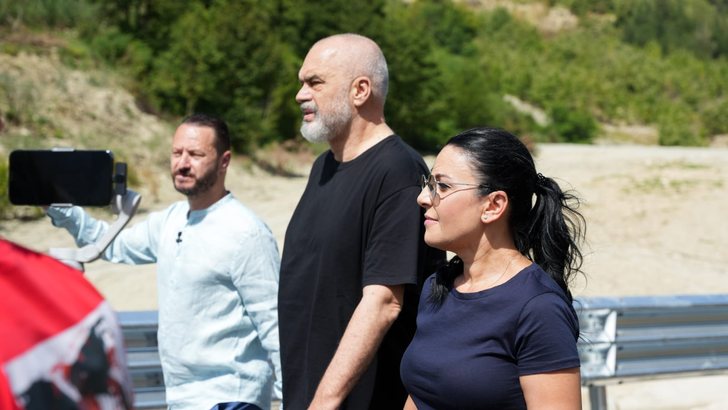
Ten days after the indictment was made official, Prime Minister Edi Rama and Balluku appeared side by side at a routine activity titled "OSHEE Charge" on Monday related to a national network for charging electric cars.
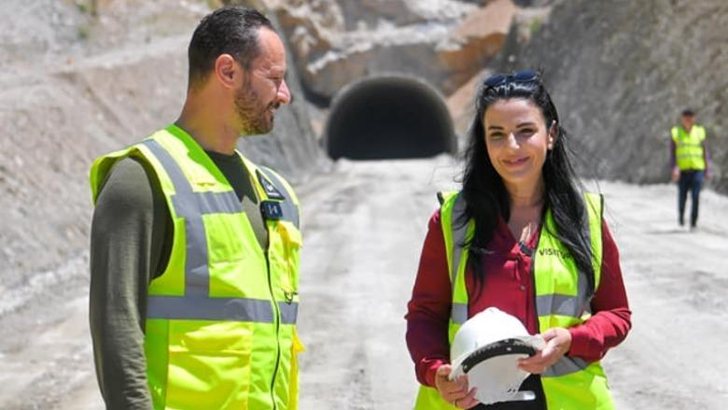
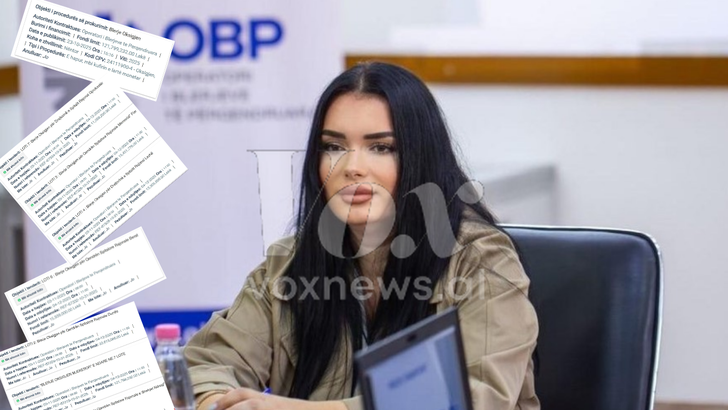
Balluku continues to hold high positions in the government, despite being accused of the criminal offense of violating equality in tenders related to the Llogara tunnel – one of the most expensive infrastructure projects in the last five years. According to SPAK investigations, Balluku is accused of controlling every step of the project worth around 190 million euros and predetermining the winner, in violation of standard tender criteria.
For the opposition, Rama is giving his collaborator an open political defense by challenging justice, in complete contradiction to European standards of political accountability.
"Balluku is holding Rama hostage and threatening to take him with him, since in the tunnel case she is simply the executor of the corrupt affair conceived by Rama," says Democratic MP Belind Këlliçi, alluding that the investigative file provides facts about their direct connection to this "affair."
Këlliçi also stressed that by not asking for his resignation or not dismissing him from office, Rama is creating a "flagrant obstacle" to the European integration process.
"The defense he is making is in complete contradiction to the values of the EU and the demands of the European family, as it is a direct intervention in the justice system..." added Këlliçi.
Even for the leader of the "Mundësia" party, Agron Shehaj, Prime Minister Rama is protecting Belinda Balluku from justice by keeping her in government.
According to him, "this happens because the alleged appointment of Balluku, the second deputy prime minister after Ahmetaj, to this position shows that corruption is in Edi Rama's inner circle."
"It is clearly unacceptable for the European Union that Albania has a deputy prime minister who is under investigation, and very soon Edi Rama will be forced to choose, either to dismiss Balluku or to admit that the government is openly obstructing justice," he stressed.
Lack of political responsibility
Belinda Balluku joined Rama's cabinet as Minister of Infrastructure and Energy in 2019 and has controlled the largest government portfolio for more than five years.
She is also the highest-ranking official currently facing SPAK charges, following a long line of close associates of Rama who lost power due to criminal charges such as Arben Ahmetaj, former deputy prime minister, Erion Veliaj, mayor of Tirana, Ilir Beqaj, former minister of health or earlier Saimir Tahiri, former minister of interior.
Rama himself has generally chosen not to confront the justice system when senior officials of his government are indicted – but he has been careful to distance himself from them.
For the first time with Balluku, Rama is standing by the government's number 2, while avoiding comments on the accusations leveled against her. Political analysts see this behavior as an avoidance of political and moral responsibility, but also an indication that the country is not democratic.
Andi Bushati, publisher of Lapsi.al, told BIRN that remaining in office as the government's number 2 defendant would be unacceptable and immoral for a democratic country, while also being punished electorally.
"But because we are no longer a democratic country, morality has no meaning and elections are just a formality. So Rama neither loses by keeping Balluk, nor gains more by forcing him to resign," he stressed.
For journalist Lutfi Dervishi, although the accusation against Balluk does not imply proven guilt, the case requires a clear separation between legal and political responsibility.
"Beyond the legal aspect, political responsibility is another thing," says Dervishi, adding that "a government that claims to join the country in the EU should be more sensitive to public perception, public opinion and institutional credibility."
According to Dervishi, the prime minister has decided to read the accusation as a "personal process", remaining silent or defiant with his public appearances.
"Even if the prosecution gives up today or the court declares him innocent tomorrow, the process itself that has been initiated should be sufficient for a step back, even if only temporarily, as a sign of respect for the institutions and the public," he assesses.
In the absence of reflection with resignation or dismissal, Bushati believes that it is up to SPAK to resolve this paradox.
"Before we seek a moral approach, that is, something that is in the will of those who have the power to resign or dismiss, we must exert pressure on the institutions that have the duty to resolve this paradox," Bushati said, referring to SPAK.
"Personally, I think that here the institutional responsibility of SPAK is greater than the moral responsibility of the prime minister," he added.
Albania is in negotiations for membership with the European Union, and Prime Minister Edi Rama boasted of what he called an absolute record for opening all chapters in the last year. But analyst Lutfi Dervishi believes that with its stance on Balluk, the government is questioning its commitment to the integration process.
“Regardless of whether or not there is direct pressure on justice, the fact that a deputy prime minister continues to hold office while facing criminal charges over tender issues raises questions about the standards of integrity and the government's determination in the fight against abuse and corruption,” Dervishi stressed.
But Bushati thinks differently, emphasizing that the "Balluku" case neither reinforces nor diminishes the "taint of the image of a corrupt government."
"If for EU bureaucrats the path of rapprochement with Brussels, of this Albania, is considered a success story, this impression will not be spoiled by the stay of a deputy prime minister who is accused of being in her post," he said.
For Bushati, Balluk's fate will depend on internal calculations and accounts and not on the future of the path towards the EU.