Is this police force professional and capable of handling violen...
/ 2026-10-16 18:54:07Focus


Financial Times
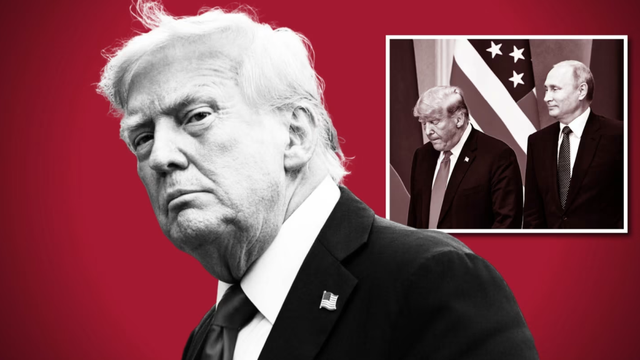
In 2018, when Donald Trump held a joint press conference with his Russian counterpart Vladimir Putin at the Helsinki Summit, things went so badly that his top Russia adviser, Fiona Hill, later said she had considered faking fainting in an attempt to interrupt the whole event.
When Trump meets with Putin in Alaska on Friday, there are not expected to be any Russia experts in the room.
In his second term, Trump has prioritized loyalty over experience among his top aides, while waging an aggressive campaign to weaken and dismiss the federal administration.
Negotiations with Moscow have been led by real estate developer Steve Witkoff, a foreign policy novice, while career experts have been sidelined, maligned, and forced out of their jobs.
“It’s safe to say that Trump doesn’t have a single policymaker who knows Russia or Ukraine to advise him,” said Eric Rubin, a career diplomat who served as U.S. ambassador to Bulgaria during Trump’s first term.
Before a major meeting with Putin, US government officials typically work intensively to prepare the president so that he is ready to discuss any topic the Russian leader may raise.
Putin, who has ruled Russia for a quarter of a century, is known to have a deep knowledge of details and is capable of taking his interlocutors by surprise.
Eric Green, former senior director for Russia at the National Security Council during Joe Biden's presidency, said: "You have to avoid falling into the trap of his ability to debate and not accept something that may sound reasonable in the way Putin presents it, but is actually distorted."
The National Security Council (NSC), which is responsible for coordinating input from all government agencies, typically leads preparations for the summits.
But in Trump's second term, the NSC has been drastically reduced, with dozens of foreign policy and national security experts fired in May.
A senior US official familiar with the matter said: “From what I understand, the traditional foreign policy process in Washington, led by the NSC, has broken down almost completely in this administration.”
More than 1,300 officials left the State Department last month as part of a general campaign to reduce the federal workforce. Among them were analysts who dealt with Russia and Ukraine in the agency's intelligence office.
The US diplomatic service, known as the Foreign Service, has also lost a significant portion of its staff during Trump's second term, due to layoffs, voluntary departures, and resignations.
Although the State Department has not provided official figures, the American Foreign Service Association (AFSA), the union that represents American diplomats, estimates that about 25 percent of foreign service diplomats have been laid off since January. Among those who remain, morale is “as low as it can be,” said Rubin, who is AFSA’s president until 2023.
Rubin noted that key administration positions dealing with Russia and Ukraine are still unfilled. Trump is entering talks with Putin without a Senate-confirmed assistant secretary of state for European affairs, or an ambassador to Russia or Ukraine.
“It is wrong to assume that more staff means better results,” the State Department said. “Reorganizing the department will make us more agile and faster, so we can do the things that matter.”
"On Russia and any other issue, President Trump always gets input from his capable national security team, including leaders from the State Department, the NSC and the intelligence community, and ultimately makes the decision he believes is best for the country," said White House deputy press secretary Anna Kelly.
"Under President Trump's leadership, and thanks to the shared roles of Secretary of State Marco Rubio, the NSC is more important and influential than ever before," Kelly added.
Rubio is serving as interim national security adviser, in addition to other roles.
After meeting with Putin in Helsinki in 2018, the US president questioned the conclusions of his intelligence community and accepted the Russian leader's statement that he had not interfered in the presidential election, without any doubt.
Trump, who runs foreign policy based on instinct and personal relationships, said Monday that the summit with Putin would be "like a ground-testing meeting," adding that he would know in two minutes whether progress could be made.
“I can say 'good luck, keep fighting,' or I can say 'we can reach an agreement,'” he said.
While the White House on Tuesday downplayed expectations for an Alaska deal, the president's approach has caused concern in foreign policy circles.
“You can’t let him and Witkoff improvise, because they just don’t know enough,” said Daniel Fried, the former U.S. ambassador to Poland. “You have to have someone in the room who can just take one look at the president, roll their eyes and shake their head.”
Trump's relationship with Moscow was subject to intense scrutiny during his first term, as multiple investigations sought to uncover ties between his campaign and Russia, as well as the Kremlin's efforts to influence the 2016 presidential election.
Trump also faced a tougher Congress, and his foreign policy team was made up of seasoned experts who became known as “the adults in the room.” After leaving government, many of them revealed their efforts to brief the president and curb his more troubling tendencies.
"He rarely prepares," said John Bolton, who served as Trump's national security adviser during his first term.
Bolton, now a Trump critic, recalls trying to brief the president on nuclear weapons on the way to the Helsinki summit with Putin in 2018, while the president was watching a soccer game.
Trump has ensured that things will be different in his second term. Fried said: “This is not an administration that is going to operate on the basis of an expert-led process.”