Is this police force professional and capable of handling violen...
/ 2026-10-16 18:54:07Focus


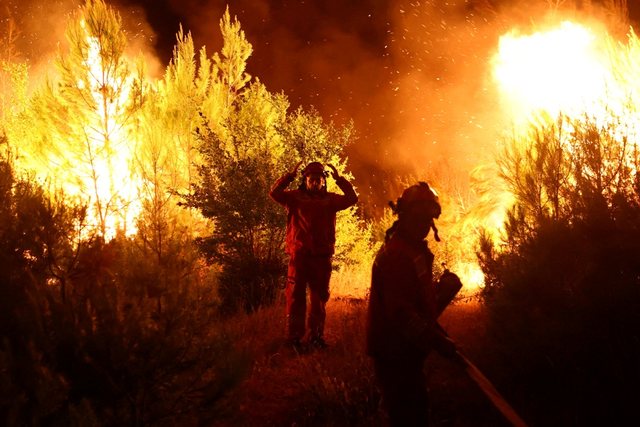
Albania is burning.
In the last 24 hours alone, 50 fires have been registered, 19 of which are still active. From Vlora to Tirana, from Poliçan to Dibër, the flames have endangered homes, burned forests and pastures.
Firefighters, armed forces, and aircraft and helicopters from Greece, Croatia, the Czech Republic, Slovakia, and the United Arab Emirates are battling the fires. Without this help, many of these fires would be out of control today.
This reality reveals a truth we don't want to admit: we enter each wildfire season more hoping and praying for rain than preparing. And, as the old proverb says, "the roof is not mended when it rains," similarly, a fire is not put out by beating the drums of rain.
World Bank reports have been warning for years that the country's firefighting capacities are inadequate: vehicles up to 60 years old, lack of basic equipment, lack of a national training center, and a minimal number of firefighters trained for difficult terrain. These are not luxuries, but minimum conditions for a country like ours, with hot summers and dry forests. Add to this the vagaries of the weather.
Neighbors have a better understanding of what fire is. Croatia has a fleet of Canadair aircraft and a team of trained firefighters who not only protect the country, but also help others.
Greece has invested in forestry troops and preventive infrastructure. We are still waiting for foreign aircraft to put out the fires.
Prevention is not a buzzword. It means clearing dry vegetation in the spring, creating buffer zones in forest areas, constant patrols during periods of high risk, and, yes, drastically increasing penalties for arsonists.
Every year, with words and Facebook posts, we have brought arsonists "to justice." But the data is shocking: from 2008 to today, no convictions for intentional arson and only two cases of arson due to negligence. This is an open invitation for repetition.
Instead of serious work, we have improvisation. Foreign aid is valuable and life-saving in emergencies, but it cannot be the "mainstay of the house."
Every euro saved today on the fire protection budget translates into millions of euros in losses tomorrow, in scorched forests, devastated economies, and devastated villages. And, unlike many other damages, burned forests take decades to recover, if at all.
The question is not whether there will be fires next summer, but whether we will be ready. And the answer cannot rest on luck or the efficiency of the EU's firefighting mechanism.
It's time to plug the holes in the roof before the rain starts and "collect water" before the fire starts. Otherwise, every summer we will see the same scene and read the same headline: "Albania in Flames".