Is this police force professional and capable of handling violen...
/ 2026-10-16 18:54:07Focus


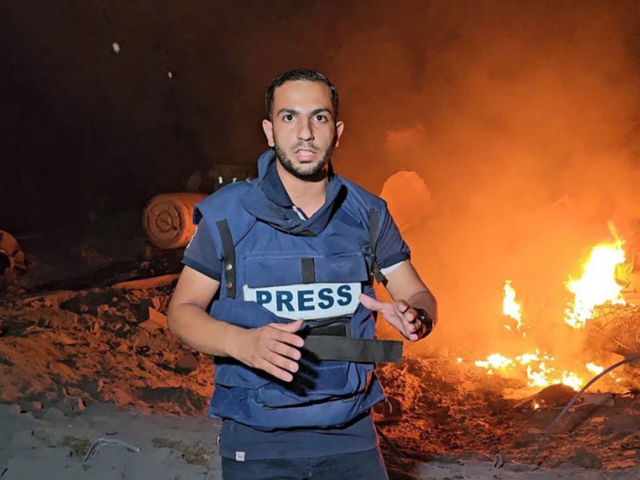
Emma Graham-Harrison – The Guardian
Israel is waging two kinds of wars in Gaza: one for military control of the territory, and another for control of the narrative, that is, the way the world understands what is happening there.
In theory, Palestinian journalists and social media influencers who document the famine, mass killings, and war crimes committed by Israel in Gaza are protected as civilians under international law. But in practice, these protections have been of little use.
According to the Committee to Protect Journalists (CPJ), more than 180 Palestinian journalists have been killed during the 22 months of war, making Gaza the most dangerous place in the world to report as a journalist.
In the same period, CPJ evidenced that 26 of them were killed intentionally, which it qualifies as intentional homicide.
The most recent case was that of Anas al-Sharif, 28, an Al Jazeera correspondent, who was killed on Sunday along with four colleagues in a makeshift newsroom near a hospital.
Press freedom organizations and journalists say these killings are part of an intimidation campaign to shut down reporting from Gaza, justified by Israel with false accusations that the victims were Hamas fighters.
While international journalists are prohibited from reporting independently from Gaza (only a very small number are allowed to enter with Israeli military escort, without the right to free movement or contact with Palestinians), reporting by local journalists is vital.
“I am convinced that preventing international access, killings of journalists, attacks on the media, and punishing Israeli media outlets like Haaretz are part of a deliberate strategy by Israel to hide what is happening in Gaza,” said CPJ director Jodie Ginsberg.
She cited an instance where a BBC crew was allowed to film from a Jordanian military plane dropping aid into Gaza, but Israel prevented them from filming footage of the destruction on the ground. “We saw how they were allowed to film the aid drop, but not the destruction when the doors opened,” she said.
In July, Anas al-Sharif went viral on social media when he was seen breaking down in tears on live TV while reporting on the mass famine. Bystanders urged him to continue because he was the voice of Gaza.
A little later, an Israeli military spokesman returned to previous allegations against him from 2024 that Sharif was a member of Hamas, accusing him of "faking mass starvation" as part of a "false Hamas hunger campaign."
CPJ immediately warned that these baseless allegations posed a direct threat to his life. “These new allegations are an attempt to create a justification to kill Sharif,” said CPJ regional director Sara Qudah.
Sharif himself had announced his death, leaving a message on social media:
"If these words reach you, know that Israel has succeeded in killing me and silencing my voice."
Israel then released a dossier of documents it claimed linked Sharif to Hamas, but the documents stop in 2021, two years before the start of the war, and do not include any reference to his regular public appearances on screen.
The claim that one of Gaza's most prominent, consistently exposed, journalists may have led a Hamas unit during the war is unrealistic, to say the least.
Even in the case of Ismail al-Ghoul, another Al Jazeera journalist killed last year, Israel published documents claiming he had been given a "military rank" at the age of 10.
Although the evidence provided was contradictory and unclear, the very existence of these files indicates Israel's concern with international pressure, and the need to provide, at least in appearance, compliance with international law.
But despite this pressure, Israel has yet to offer any explanation for the killing of Sharif's four colleagues, who were civilians killed in their workplace.
Ginsberg calls this a warning that the risks to journalists have increased to an extreme.
“What amazes me is that they haven’t made the slightest attempt to justify these other killings,” she said. “So they are accepting the killing of these journalists, knowing that they were journalists.”
"In my opinion, this is done to spread fear, to show that Israel can do whatever it wants and no one will react."
"If we're at a point where Israel can openly target an entire news team, what does that mean for the safety of every other journalist working there? Who's next?"
French historian Jean-Pierre Filiu, who had received rare permission to enter Gaza for academic research during the conflict, told the Haaretz newspaper after a month of research:
"Now I understand why Israel refuses to allow international media access to this horrific scene."
He added: "Even though I've been to many war zones, from Ukraine to Afghanistan, Syria, Iraq and Somalia, I've never, ever experienced anything like this."