Is this police force professional and capable of handling violen...
/ 2026-10-16 18:54:07Focus


Luigi Ippolito – Corriere della Sera
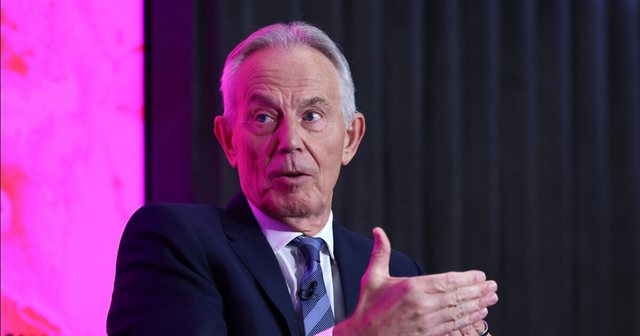
Tony Blair, the man with “seven lives,” will be reincarnated as Donald Trump’s “proconsul” for Gaza in his latest incarnation. The former British prime minister has been included as one of the members of a committee that will lead the post-war transition in the Gaza Strip.
Blair will not exactly be the "governor of Gaza" that was briefly rumored, but his name is the only one explicitly mentioned in the peace proposal, and for this reason, he will undoubtedly play a key role in determining the future of Gaza.
Blair has a long history with the Middle East, and not everything, in fact very little, shines a positive light on him. When he had just left Downing Street in 2007, he announced that he would take up the post of UN special envoy for the Middle East: an understandable choice, given that he did not want to sit idly by. He was only 54 and it was still early to retire.
But even then there was skepticism about this appointment: at home, Blair had been severely discredited for the deceptions that led Britain into the Second Gulf War against Saddam Hussein in 2003. Not exactly a good recommendation for a man who would deal with Middle Eastern affairs.
As special envoy, Blair remained in office until 2015: a fruitless term, which was essentially reduced to stays in luxury hotels in the region. But this experience provided him with important contacts and introductions, which would serve him later when he created the Tony Blair Institute, a consultancy business otherwise known as the “McKinsey of governments”. Among the clients with whom he signed big contracts were Gulf sheiks and countries with dubious reputations, from the Egyptian dictatorship of Al-Sisi to the satraps of Central Asia. These connections brought Blair much criticism, but he never worried about it: pecunia non olet (money has no smell) and the smell of money has always been what attracted him. Through conferences, speeches, books and the activity of his institute, he quickly became a multimillionaire.
That the former prime minister has an obsession with the Middle East was also evident a few months ago, when it emerged that his Institute, together with the US administration and Israeli businessmen, was working on a fantastic project called the Gaza Riviera, which aimed to turn the Strip into a “new Dubai,” with artificial islands off the coast. After the news broke, the Institute tried to awkwardly distance itself, denying that the plan included deporting Palestinians.
However, it seems that Blair's visions have made an impression on Trump, who has decided to place the former British prime minister at the center of the Gaza reconstruction process. And it should come as no surprise that a former Labor leader is on board with a president who represents right-wing populism: Blair has always been a post-ideological politician, who believed that it doesn't matter whether a solution is left or right, as long as it works.
Blair was eager to return to the stage. For a decade, he had become “unspeakable” in Britain, devastated by the failure in Iraq and hated by both the right and the left, a symbol of cynical politics and an outmoded globalism. But for several years, a process of rehabilitation had begun for him, in the desert of ideas that the Labour Party has become. And so he gradually became an invisible advisor to the current government of Keir Starmer, which has invited key figures from the Blair era to its side. But a behind-the-scenes role was not enough for him and now Gaza (and Trump) give him the opportunity to return as a protagonist.