Is this police force professional and capable of handling violen...
/ 2026-10-16 18:54:07Focus


Hugh Schofield - BBC Paris Correspondent
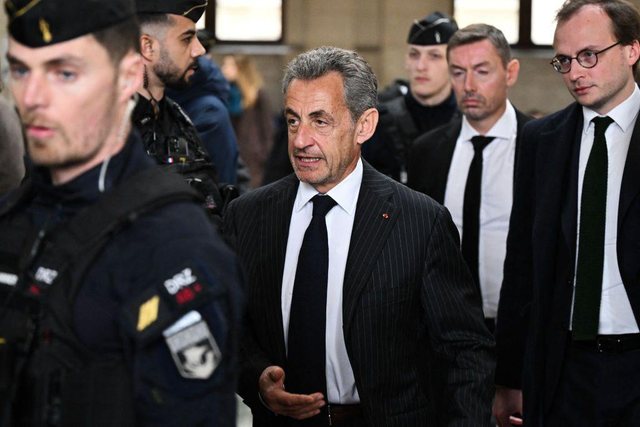
Nicolas Sarkozy is back where he once was – dominating the news and dividing the nation.
Thirteen years after leaving office, he is about to become the first French president to go to prison, after being sentenced to five years for criminal conspiracy.
And the circumstances are full of the same harsh clashes that have accompanied his every action.
After being convicted in the “Libyan money” trial on Thursday, he spoke with fiery anger about the “unbounded hatred” he said was still being meted out to him. Ever since he claimed to represent right-wing ideas, Sarkozy was convinced that he was “the object of a leftist conspiracy within the French judiciary and media.”
Why, his supporters ask, did the court acquit him of three of the four charges: illegal party financing, misuse of Libyan funds, and corruption?
Why did the court convict him only on the last charge – “criminal collaboration” (a charge usually used for drug gangs, when investigators have no other evidence)?
And why – after convicting him on this lesser charge – did the court give him such a humiliating and harsh sentence? Not only did they give a 70-year-old man five years in prison, but also 20 years after the crime was committed.
They also decided that the sentence would not be "suspensive" - meaning he would go to prison even if he appealed, even though under French law, pending an appeal, the individual is theoretically still innocent.
Just when you think the former passions "for" and "against" him are fading, they return stronger than ever.
Many will feel little sympathy for Sarkozy – not necessarily believing that he is entirely innocent of the Libyan campaign money-smuggling scandal. But they will acknowledge that there is some truth to his claims of victimhood: that there are people in the Paris “political-media-judicial establishment” who hate the former president and would rejoice when he falls.
From another perspective, Sarkozy is not a damaged former head of state, but "an egocentric political operator" who has consistently broken the law to achieve his goals.
Why, really, are there so many charges against him? Why is Sarkozy already convicted of two other corruption cases – once for trying to influence a judge and once for illegal campaign financing?
And if the court has now decided to strongly condemn him for the Libyan affair, perhaps it is because the charge of seeking election funds from a foreign dictator is truly serious.
This is relevant today because, even though Sarkozy is no longer the political figure he once was,
The right and the far right champion his cause, denouncing the “excesses of the leftist judiciary.” Marine Le Pen – herself barred from running for president by a “non-suspension” clause in her conviction this year – was the first to say that Sarkozy’s conviction has no legal basis.
The left sees what is happening with Nicolas Sarkozy as further evidence of the privilege of the rich – of the powerful becoming even more powerful, ignoring the law.
Nicolas Sarkozy has long since left politics and has no prospect of returning. He is a figure of the past. But his case unravels the divisions in a deeply divided country.