Protests, violence, curfews: From France to Albania, why Europe'...
/ 2026-10-20 23:47:20Focus


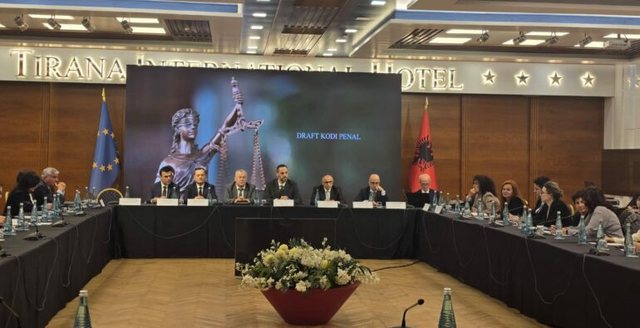
"Justice is not measured by the speed of laws, but by the quality of thought that protects freedom." This was stated by the President of the Supreme Court, Sokol Sadushi, during the presentation of the Supreme Court's institutional position on the new draft of the Criminal Code, at a roundtable with the Minister of Justice and the working group on penal reform.
Sadushi underlined that the Court's stance should not be seen as an opposition to the reform, but as a professional and moral obligation to make it fairer, clearer and more reliable. He stressed that the Criminal Code, as the most important act after the Constitution, affects the lives, freedoms and dignity of citizens and requires a strong methodological and philosophical basis.
According to him, the current process of drafting the Code is not based on a clear methodology and a document defining the new philosophy of criminal justice is missing. He added that the institutional consultation has been partial, while the project, despite the innovations, remains unclear and unbalanced in philosophy. The Supreme Court, through a detailed 50-page analysis, has presented concrete remarks and proposals for improving the project, approved by the General Assembly of Judges and officially sent to the Ministry of Justice.
FULL SPEECH
I am here today, on behalf of the Supreme Court, to present our institutional position on the new draft of the Criminal Code, an act that affects the very foundation on which justice is built. This position, however critical, should not be seen as a rejection of criminal reform, but as a professional and moral obligation of the entire judiciary, as a call to make it fairer, clearer and more reliable, because justice is not measured by the speed of the adoption of laws, but by the quality of intellectual thought, which accompanies every provision that affects human rights and freedoms.The Criminal Code, as the most important act after the Constitution, affects the lives, dignity and freedoms of citizens, the work of judges and prosecutors, security policies and the legal culture of the country. Its drafting is not a technical exercise, but a test of the legal and moral maturity of the state.
In the best European practice, the drafting of a new Code does not begin with the writing of articles, but with the construction of a clear methodology, which defines the philosophy of criminal justice. This preparatory phase, built on transparency and inclusiveness, brings together judges, prosecutors, academics, lawyers, representatives of institutions for the execution of decisions, criminologists, psychologists, sociologists, statisticians, and representatives of civil society.
Contrary to best practices, the current drafting process does not seem to have been based on such a methodology. The explanatory report mentions the need for reform, but does not explain the way it will be constructed. There is no guiding document defining the new philosophy of criminal justice and no analysis of the criminological, economic and social impact of the proposed changes. Institutional consultation has been limited and partial. As a result, the draft, although voluminous and innovative, remains unclear in some parts and unbalanced in philosophy, risking that instead of simplifying the penal system, it will make it more difficult to implement.
When the project was presented in July, I raised several questions that remain essential even today: Is this Code clear and functional? Is it humane and proportionate? Does it speak to the citizen or to professionals? Does it help consolidate judicial practice or create more dilemmas? These are not rhetorical questions, but the essence of reflection on a reform that will determine the face of our criminal justice for the coming decades.
Following the publication of the draft Criminal Code and the opening of public consultations, the High Court has been actively involved in the process, through a detailed analysis carried out by the judges and legal advisors of the Criminal College. This analysis, based on judicial practice and the need for an enforceable and fair criminal law, has been summarized in a comprehensive document of approximately 50 pages, with observations, comments and concrete proposals. Drafted with professional seriousness and approved by the General Meeting of Judges of the High Court, it has been officially forwarded to the Ministry of Justice and the Working Group, and is presented today at this roundtable as an expression of the institutional responsibility and professional reflection of the High Court.
Through this material, but also similar ones, surely presented by other institutions participating in this roundtable, the reform process takes on the seriousness and credibility that an intervention of this importance requires. The document highlights the fundamental issues that deserve careful reflection and review, with the aim of making the new Criminal Code an instrument of modern justice, clear in philosophy, applicable in practice and in the service of citizens' trust in the law.