Protests, violence, curfews: From France to Albania, why Europe'...
/ 2026-10-20 23:47:20Focus


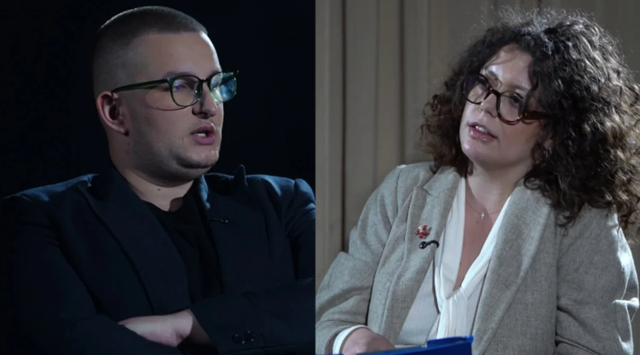
The case of Ermes Hoxhalti has shocked public opinion not only for the extent of manipulation, including the name of the American Embassy to gain credibility with the scholarship project in Albanian schools, but also for the way in which state institutions were deceived through a false identity, only to think they were working with the prime minister's niece.
In this exclusive story for the first time on Top Channel with journalist Kristi Gongo, after serving his prison sentence, we have the young man who has gone through a rare psychological and social process: the creation of a parallel world.
The purpose of this conversation in the first part is to understand who you are, Ermes. We'll start with you as a child. How do you remember yourself as a child?
Ermes Hoxhalli: I was an extroverted child, I was tempted to do things that were somewhat out of character for my age. I always wanted to be big, because that way you can do things that you are not allowed to do when you are a child, because they do not put you in the right positions or with responsibility. They simply said: you are a child, wait until you grow up.
Did this irritate you?
Ermes Hoxhalli: It was irritating me, because age is not what determines the level of knowledge or ignorance.
Did you have company?
Ermes Hoxhalli: I had an extremely hard time. I was somewhat of a troublemaker. I ran away from home, I even ran away from the village with my friends. And today I remember them with great nostalgia and I say to myself: How good it was when you were little.
Did you like leading the group, being a leader in the class?
Ermes Hoxhalli: I've always liked the idea of leadership. I've been the first in everything.
Even for problems?
Ermes Hoxhalli: Now, when some things bring problems, maybe.
How was life in the village? Did you want to leave the village?
Ermes Hoxhalli: Never. The village is a form of education for the child.
Friendlier than the city?
Ermes Hoxhalli: Definitely, if I were to compare it, I would say the village is a family, while the city is a tribe.
How close were you to your parents?
Ermes Hoxhalli: I've been there a lot. My mom is a seamstress, while my dad mainly works in agriculture, even in emigration with my mom. Since there is not enough income, they are forced to leave.
How long were they away from you?
Ermes Hoxhall : About three months.
Who were you staying with?
Ermes Hoxhalli : With my grandmother, my brother, and one of my parents, because they didn't both leave at the same time. My brother and I had a very close relationship, as children we were more open with each other.
What changes when you grow up?
Ermes Hoxhalli : First, life changes. When you're young, you don't think, you just live in the moment. But when you grow up, interest begins.
When you were little, how did you imagine yourself growing up?
Ermes Hoxhalli: My first desire was to be part of the world of spectacle. But then I realized in high school that my hidden talent was theater. Theater is a magical world for me. It is a reflection of reality.
...And you even say that I am the theater itself!
Ermes Hoxhalli: Yes, when I'm in the theater, it's as if I was made to live there. As if I was made to wear characters and speak to the audience, to reality, and to give slaps to social phenomena. Life itself is a theater.