Details of the storm in the administration, here's who will resi...
/ 2026-10-22 22:25:00Focus


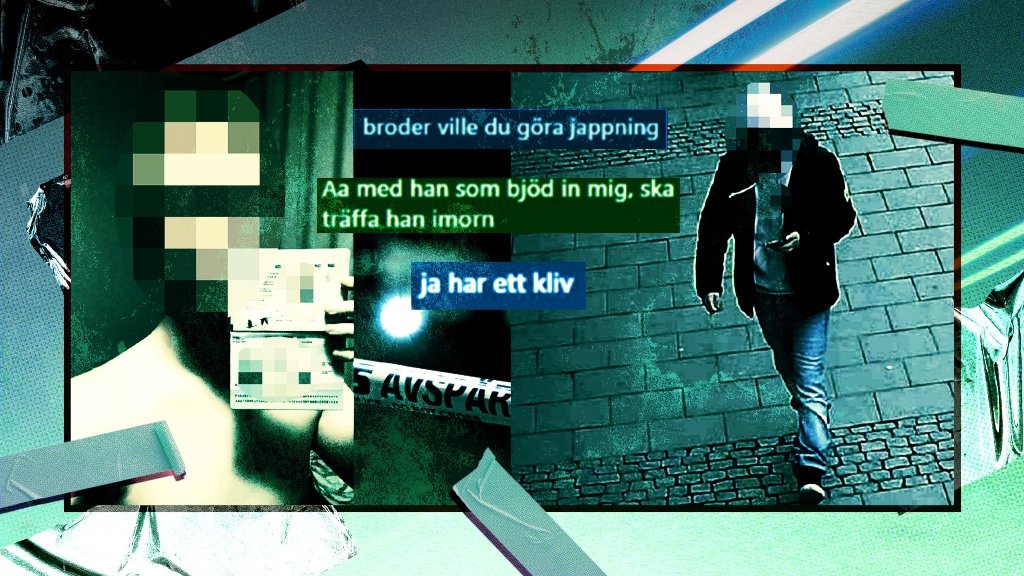
Europol dismantles a network that used minors as paid weapons for crimes, including murder. Two hundred people were arrested and dozens of murders were prevented.
“I can’t wait to see my first corpse,” writes an 11-year-old Swedish boy on Instagram. On the other side of the screen, his 19-year-old contact assures him: “Stay motivated, (the moment) will come.” Then he offers him $14,000 to commit a murder, arranges transportation, provides him with clothes and tools. The boy is ready. The police intervene in time.
This is not an isolated case. This is the face of a phenomenon that is spreading in Europe: “Violence-as-a-Service”, or violence as a service for hire. A criminal model that exploits minors as an invisible workforce to carry out contract killings, recruiting them through social networks, messaging apps and gaming platforms.
Last April, Europol launched Operation Grimm, which culminated in the arrest of nearly 200 people in nine European countries. The figures show the scale of the phenomenon: 63 perpetrators detained, 40 coordinators arrested, 84 recruiters discovered and 6 instigators caught, five of whom were considered “high value”. Above all: dozens of murders prevented, lives saved, teenagers saved from a violent fate.
The crime machine: four roles, one perfect system
The criminal organization operates like a real company, with defined roles and a division of labor designed to make it almost impossible to identify the perpetrators.
The instigator: orders and finances the crime. Lives abroad, far and safe from the scene of the crime he has planned. Gets paid a lot, up to 20 thousand euros for a murder, and never gets his hands dirty.
Recruiter : the key intermediary. Operates on Telegram, Instagram, Discord, in game chats. Is connected 24 hours a day, ready to contact potential aggressors. Uses marketing techniques: gamification, storytelling, promises of easy money and social status. Turns crime into a “game mission” like in Fortnite or Counter-Strike.
Coordinator: Prepares the ground. Provides weapons, organizes logistics, manages contacts, takes care of financial arrangements. Makes sure everything is ready when the executioner arrives at the scene.
The perpetrator : almost always a minor with no criminal record. This is precisely why he is considered "invisible" to law enforcement. He is the sacrificial figure of the system, the one who takes all the risks while others benefit from safe positions.
As Europol explains: “The orderlies pay, the recruiters provide the manpower, the coordinators prepare the ground and the perpetrators take the risk.” An externalized, efficient criminal model, difficult to dismantle.
From Fortnite to hitman: online recruitment
The methods of seduction are sophisticated and studied to hit the weaknesses of teenagers. Recruiters do not present themselves as criminals, but as charismatic figures who offer opportunities for profit, adventure, belonging.
Stefan Sinteus, the chief of police in Malmö, describes the dynamic this way: “11- or 12-year-old boys are recruited while playing Fortnite or Counter-Strike. They agree to carry a bag in exchange for 10,000 in-game points.” The girls, meanwhile, “deal with the logistics: they book hotel rooms, they call taxis.”
Crime is glamorized as a path to wealth and power. Young people are gradually exposed to violent content to "normalize" violence. Then come the first "missions": simple, well-paid. An escalation that leads from intimidation to murder.
On Telegram, before it was shut down, a channel dedicated to recruiting juvenile killers had 11,000 members, many of whom were willing to travel to other countries to carry out criminal activities. The operational capacity was impressive: detailed planning, weapons secured, organized escape routes, guaranteed payments.
The Swedish epicenter of a European crisis
The phenomenon originated in Sweden, before spreading across Europe, including Belgium, Denmark, Finland, France, Iceland, Germany, Spain, Norway and the Netherlands.
The Swedish figures are alarming. Police estimate that in 2024, around 1,700 minors under the age of 18 were active members of criminal networks. Murder cases involving suspects under the age of 15 rose from 31 in the first eight months of 2023 to 102 in the same period of 2024. In 2023, there were 53 shooting victims in Sweden, some of whom were killed in public places unrelated to organized crime.
Many of the young people involved belong to the second generation of immigrants, living in family homes (from which 3,000 minors escape every year), often controlled by criminal networks. They are boys with academic difficulties, addiction problems, attention disorders, sometimes with minor criminal records. Perfect victims for unscrupulous recruiters.
The situation is so dire that last September, the Swedish legislature considered lowering the age of criminal responsibility from 15 to 13. From next July, prisons will be able to accept young people between 15 and 17 years old, with capacity expected to triple by 2033. Other Scandinavian countries are considering similar measures.
Crimes prevented: investigation averts tragedy
Operation Grimm has prevented many violent crimes across Europe. On 12 May, following an attempted murder in Tamm, Germany, two suspects aged 26 and 27 were arrested in the Netherlands on 1 October. A triple murder in Oosterhout, the Netherlands, led to the arrest of three people between Sweden and Germany.
In Spain, in July, six people were arrested (including a minor) for planning a murder. The operation led to the seizure of firearms and ammunition. In Alicante, in May 2024, Spanish police arrested members of a Swedish gang, including a couple with a minor child. They organized contract killings, explosives attacks, arms trafficking and money laundering via Telegram.
In Spain, six people were arrested in connection with the planning of a murder, including a minor. The operation included the seizure of weapons and ammunition.
In Denmark, two Swedish minors were arrested after being recruited to commit murder. They were armed with two pistols seized by law enforcement.
The call to Big Tech: You have the technology to stop them!
Last June, Teodoro Smedius, supervisor of the Swedish Police National Operations Department, made a direct appeal to the technology giants known as “Big tech”: “Emphasize once again the urgent need for platform owners to increase their internal controls and remove violent content. You have the technology to do this. When it comes to the safety of our children, both public authorities and private companies must be on the same team.”
Signals indicating danger
Europol has published warning signs of minors being involved in criminal networks:
Behavioral changes: use of encrypted messaging apps, lying, change in values and interests, new friends that include unfamiliar adults.
Existing problems: difficulties in school, addictions, attention disorders, minor criminal records.
Material signs: expensive new clothes, suddenly acquired expensive technology, large amounts of money without justification.
This alarming phenomenon shows the great risk of the use of children in organized crime and the urgent need for surveillance and rapid intervention./ Corriere della Sera