Details of the storm in the administration, here's who will resi...
/ 2026-10-22 22:25:00Focus


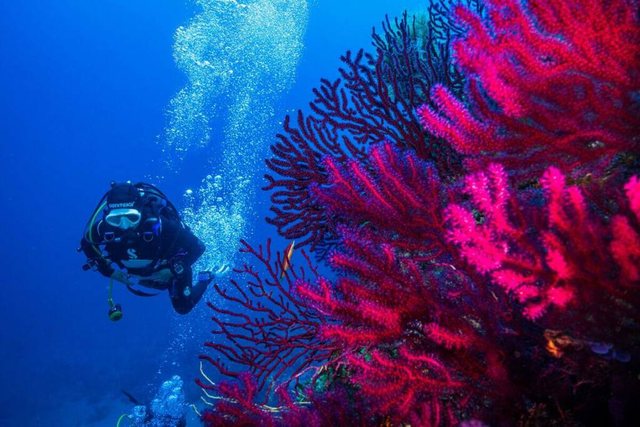
Our seas are getting warmer and in 2024, record temperatures were reached both globally and in the Mediterranean basin. And yet, gorgonians (a type of soft coral) are showing signs of mortality, while thermophilic and alien species that prefer increasingly warmer waters are spreading.
This is confirmed by data collected in 2024 as part of the “Mare Caldo” project by Greenpeace Italy, carried out in collaboration with the Department of Earth, Environmental and Life Sciences of the University of Genoa and the National Institute of Oceanography and Experimental Geophysics in the neighboring country.
"Our sea is rich in biodiversity, but we risk losing this extraordinary natural heritage if we do not expand the protected area of the sea and reduce greenhouse gas emissions," says Valentina Di Miccoli, marine activist for Greenpeace Italy.
As Corriere della Sera writes , 2024 was the warmest year ever recorded on Earth, both for average global air temperatures, which exceeded pre-industrial levels by 1.5 degrees, and for sea surface temperatures.
According to data published by the Copernicus program and integrated with those collected by Mare Caldo, last year also marked the highest average annual temperature ever observed in the Mediterranean basin, with an average value of 21.16 degrees, while the seasonal values detected by satellites were the highest in the last 43 years.
In the 12 Italian areas studied, 11 of which are in marine protected areas, the data is consistent: all have been affected by multiple heat waves in both summer and winter, reaching maximum peaks of over 2.5 degrees above the climate average in some cases. In particular, in the protected areas of Asinara Island, in Sardinia, 14 heat waves were recorded on the sea surface, while in those of Portofino and Cinque Terre, in Liguria, there were six waves each.
In 2024, Greenpeace carried out biological monitoring as part of the Mare Caldo project, in the marine protected areas of Tavolara Punta Coda Cavallo, Portofino and Ventotene-Santo Stefano. The organisms most affected by climate change are the gorgonians, which often show signs of necrosis and mortality in their colonies.
In Portofino, a severe impact was recorded in 94% of the coral colonies of Paramuricea clavata at 25 meters depth. In Tavolara and Ventotene, the Mediterranean coral Cladocora caespitosa has shown a high level of bleaching. The most abundant thermophilic alien species in the monitored areas was the green algae Caulerpa cylindracea, while among the thermophilic fishes, parrotfish (Sparisoma cretense), Mediterranean barracuda (Sphyraena viridensis) and Thalassoma pavo were frequently observed.
The comparison with the data collected in the last five years of the Mare Caldo project highlights how the protected area of Capo Carbonara (Sardinia) has the best ecological status, while the Island of Elba, the only unprotected area in the monitoring network, has a poor ecological status, confirming the positive effect that protected areas have on marine biodiversity.
The five emergencies identified by the Marevivo Foundation
"The summer of 2025 has begun with temperatures much higher than the worst predictions, which will put further pressure on already compromised ecosystems and vulnerable economies and societies," comments Rosalba Giugni, president of Marevivo. All this will have consequences in various aspects, the Foundation adds, indicating the most critical ones:
1- Freshwater cycle: The mass of glaciers in the Mediterranean region is expected to continue to decline throughout the 21st century until most of the mountain glaciers disappear completely by the end of the century. In addition, there has been a decrease in winter precipitation in the central and southern parts of the basin since the second half of the 20th century.
2- Marine currents: changes in temperature and salinity are altering thermohaline currents, which are fundamental to the Mediterranean's climatic balance. Warmer surface waters prevent mixing with deeper nutrient-rich layers.
3- Rising average sea levels, which have increased by 1.4 millimeters per year during the 21st century and have accelerated to 2.8 millimeters per year in recent years. By 2100, according to the scenario, average sea level in the Mediterranean is likely to be 40 to 100 centimeters higher than at the end of the 20th century, causing an increase in the frequency and intensity of floods and coastal erosion.
4- Tropicalization, the introduction of invasive alien species, migrations. Almost 1,000 species have migrated to the Mediterranean. Rising sea temperatures mean that newcomers can survive in ever-larger areas of the Mediterranean where a few decades ago the waters would have been too cold for them. And many species are thriving at the expense of native species. Furthermore, red mullets, sardines and cod are migrating north or to deeper waters in search of more suitable temperatures. This is altering reproductive cycles and undermining the sustainability of traditional fisheries, with economic and cultural consequences.
5- Economy, health and society . Over the last 20 years, the share of gross domestic product attributable to tourism has increased by 60% in Mediterranean countries. Climate change is likely to affect the thermal comfort of tourists during the peak season with repeated heat waves and severe weather events. Sea level rise is likely to affect beaches and historical sites located near the coast. The effect of sea level rise, with a change in storm characteristics, is likely to significantly affect port operations, slowing down trade and productivity. By 2100, the risk of flooding could increase by 50% and the risk of erosion by 13% across the Mediterranean region.
In conclusion, Marevivo insists on an essential point: life in the depths of the sea is possible thanks to the cold and if the Mediterranean, one of the main points of the global climate, continues to warm up more and more, contributing to the modification of the thermal balance, not only marine species will suffer the consequences, but all life on Earth.