


"Condemned" protesters?! Who trapped Rama inside the Prime Minis...
/ 2026-10-23 16:02:00Focus


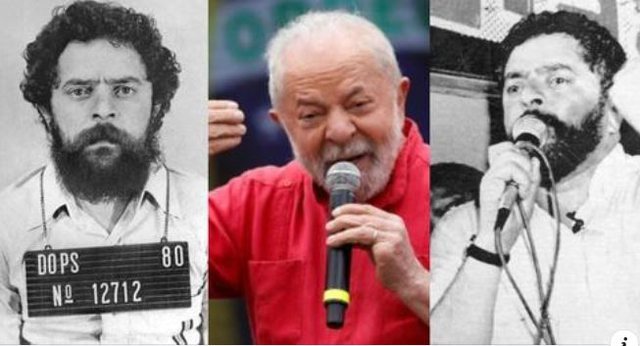
Brazil has elected a new president: Lula defeats Bolsonaro and retakes the country for the third time, 11 years after his last term.
In the voting for the presidential elections, with 100% of the votes counted, the leader of the Labor Party received 50.88% against the 49.12% of the right-wing candidate of the Liberal Party.
The result came at the end of a thrilling head-to-head race that had initially seen Bolsonaro at the top and at the end of a heated election campaign. "The only winner is the Brazilian people," said Lula. Polling stations closed at 17:00 local time, 21:00 in Europe.
More than 120 million Brazilians voted, with about 20% abstaining in the first round. It has been 20 years since Lula first won the presidency and he returns with a new record.
He significantly improved the result of 2006 during which he received 58.2 million votes, bringing it to 60 million votes.
Lula and Albania
But there are few who know that Lula has a special connection with Albania, since the time of the communist period, when he lived in Tirana as a student at the former Party School. On the day of his inauguration as President of Brazil (January 1, 2003 – December 31, 2010), during the meeting with the Speaker of the Parliament of Albania, Sërvet Pëllumbi, he expressed his desire to make his first official visit abroad to Albania.
A beautiful coincidence full of surprises can be considered the meeting of the former Speaker of the Parliament of Albania, Sërvet Pëllumbi with the President of Brazil, Luiz Inácio Lula da Silva on the first day of his mandate. It was the last day of 2002, when the Albanian delegation arrived in Brazil.
"We also celebrated the New Year there", recalls the former Speaker of the Parliament.
The head of the Albanian delegation was enjoying the organization of the ceremony, which had a nice surprise in store for him. Of course, Professor Pëllumbi had forgotten the Brazilian trade union boy, whom he had once had as a student at the Party School. And the unionist, mixed with the communist ideas of the party led by Zhoao Amazonas, had not forgotten the Albanian pedagogue of Marxist philosophy. Pigeon remembers the exciting meeting like this:
"Before the inauguration speech of the president of Brazil, the presentation of the delegations took place in an improvised lobby under a large tent. As soon as he heard the name of Albania, Lula's face lit up and very pleased that he was meeting us after many years, he said: Ah, Albania! I love that place so much. I was there once, so I will make my first visit to Europe as president in Albania..."
The President of the Assembly welcomed this privilege that made him, on the spot, a small country like Albania, the president of a big country like Brazil. But the protocol time was too short. However, Lula took a quick look at the portrait of prof. To the pigeon and added: "I seem to remember you, you gave me lectures..."
"At that moment I remembered the courses we used to hold with trade unionists from different countries of the world at the former Workers' Camp in Durrës. "Lectures for Brazilians and others coming from Spanish-speaking countries were translated from Albanian by a former Albanian immigrant, who spoke that language very well," continues Pëllumbi's story.
The friendly ties between the ALP and the Communist Party of Brazil started in the early 1960s. The first document preserved in the State Archives is the greeting message of Luis Carlos Prestes addressed to the Fourth Congress of the ALP on behalf of the Brazilian communists.
According to an important document from 1967, the leaders of the ALP have approved, among others, the arrival in Albania of a group from the Communist Party of Brazil. It was the time when military training and ideological courses for dozens of representatives from different countries of the world had started intensively in Albania.
The history of the Marxist-Leninist movement that was led from Tirana
The foreigners who came for training in Albania are divided into three categories: the first are those who came as part of short-term delegations, one to two days. Theoretical lessons and shooting with pistols, grenades, etc. were usually held with these groups. Among them were the chairman of the Communist Party of Brazil, Zhoao Amazonas, that of the KP of Belgium, Jacques Griba, of Portugal, Eduard Pires, etc.
The second category were those who came for a longer time, from a week to ten days. With these, the program became more complete. At their request, infantry tactics, snipers and shooting with various weapons were developed.
While the third category were foreigners who stayed in Albania from one month to several years. Here the Indonesians are singled out, who arrived around 1967. Initially, they completed a nine-month program at the United School, where they learned the basic rules of combat.
While the political preparation of individuals and groups of the Marxist movement was carried out by the most important institution of ideological formation, the High School of the Party. VIP names well-known to the Albanian public have sat in its auditoriums, from Laurent Kabila (President of the Republic of Congo for several years), Luiz Inacio Lula da Silva (President of Brazil for two terms in a row) and Omar Bongo (President of Gabon for nearly 42 years). Their professors have been equally well-known and important names of the Albanian political, philosophical and legal school of yesterday and today, such as Sërvet Pëllumbi, Luan Omari, Agim Popa, Selaudin Kucaj, Omer Hashorva, etc.
The breakdown of relations with the Soviet Union and the support of the Communist Party of China in the early 1960s marks the beginning of a specific role for Albania in the international arena. For ideological reasons, a part of the Marxist-Leninist parties, who did not agree with the positions of Nikita Khrushchev, supported the super-state of Asia and the small country on the shores of the Mediterranean.
The number of parties that supported the ALP after the break with the Communist Party of the Soviet Union was small. Even these were not all determined to remain loyal to the Stalinist line of Albania. Somewhat clearer in this ideological alignment were the communist parties in geographical proximity to China; those of Burma, Indonesia, Malaysia, Korea, Vietnam, Cambodia and Laos.
The created situation served as an incentive for the KP of China to announce the strategy to snatch the banner of the leadership of the revolutionary movement against imperialism from the KP to the BS and become the actual center of the leadership of the "Third World".
The clearest example of this commitment was the direct financing of Marxist-Leninist groups and movements, which had emerged as separate factions from the ranks of the old communist parties, or were newly created. After the Communist Party of Brazil, which was reorganized in 1962, in 1963 revolutionary communists organized in Belgium, Italy, USA, Australia, Austria, England, Spain, Portugal, France, Peru, Chile, Iran, India began to appear publicly; in 1965 in Colombia, Bolivia, Lebanon, Sudan, Gabon, etc.
The new political line was formalized at the Fourth Congress of the ALP (November 1961), where Hoxha gave the first signals to appear as the "European counterpart" of Mao Zedong. With special invitations, a significant number of political forces from Western countries appeared on the podium of this congress, such as: the Communist Party of Australia, the Communist Party of Finland, the Communist Party of Great Britain, the Communist Party of Canada, the Communist Party of of Belgium, the Communist Party of Germany, the Swiss Labor Party, the Communist Party of the Netherlands, the Communist Party of New Zealand and the Communist Party of Greece.
Albania's support for the Marxist-Leninist movement in Latin American countries was a sign of solidarity and friendship for the common good. These movements have played their role in this region for the mobilization of measures for the protection of rights, for social emancipation.


