Is this police force professional and capable of handling violen...
/ 2026-10-16 18:54:07Focus


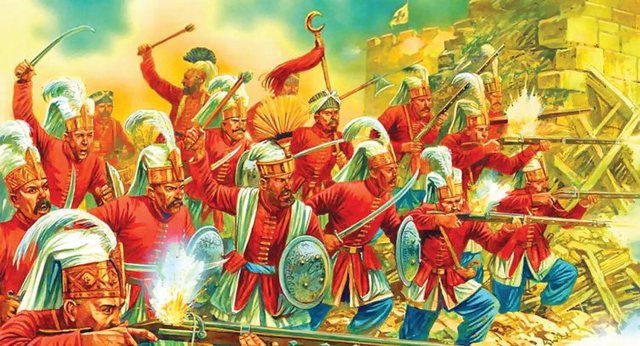
The slave-soldiers who formed the first modern army and who for five centuries decided the fate of the Ottoman Empire
Think of an army as we have it today, with uniforms, regular pay and guilds. Now, put it in a historical background. Did you do it? If you've gone back in time to at most the Eight Hundred Napoleonic Wars, prepare for a surprise: the pioneers of the modern art of war came at the height of the Middle Ages.
And looking at them from the point of view of the crusades, they were also "infidels", or rather, Muslims. In the beginnings of modern armies, the janissaries, the elite infantry of the Sultan, were for a long time "gogol" but also a model of efficiency for the armies of Europe.
The date of birth of this army is thought to be somewhere in the middle of the third century: the Ottomans - who a century later would become an empire, rising on the ruins of ancient Byzantium - were then a small power, at war with other emirates of Anatolia, as well as involved in many border wars with nomadic clans. Things changed with the arrival of an ambitious and visionary sultan, Murat I, who started a policy of expansion towards Europe, starting from the Balkans. And the armed wing of this strategy were precisely the jeni chers, in Turkish the "new troops".

Forcefully recruited
To increase the organic of the newly created militia, he thought of the institute of devshirme, or "levy of children-tribute", a tax to be paid in people, which had to be paid by all the Christian populations of the subjugated territories. The Ottoman recruiting teams took a fifth of the children from 6-7 years old: the smallest went to serve in the court, while the fuller ones went to continue years of military training in the Ottoman barracks. "In general," explains Michele Bernardini, associate professor of Ottoman imperial history at the Oriental University of Naples, "recruiters tried to avoid recruiting future janissaries from social classes that were considered genetically less suitable for war: the sons of peasants, for example ,
From the formative period, very difficult to the limits of humanity, the best - or rather the survivors - were transformed into janissaries: brave and resistant, the leading branch of the army, but above all the sultan's personal guards who for to all he was "the shadow of God on earth," and to them he was a father-father for whom, if necessary, even life could be given.
Very loyal
No less absolute had to be loyalty to Islam, a religion to which more or less all future janissaries were more or less forcibly converted. "The most represented ethnic group among the janissaries was the Slavic one: Bosnians, Serbs, Bulgarians mainly", specifies Bernardini. "But there were also Albanians and, to a lesser extent, Greeks. In the beginning, there were few, about 2000, and they were mostly viewed with a bad eye, above all by the Ottoman cavalry, which occupied them.
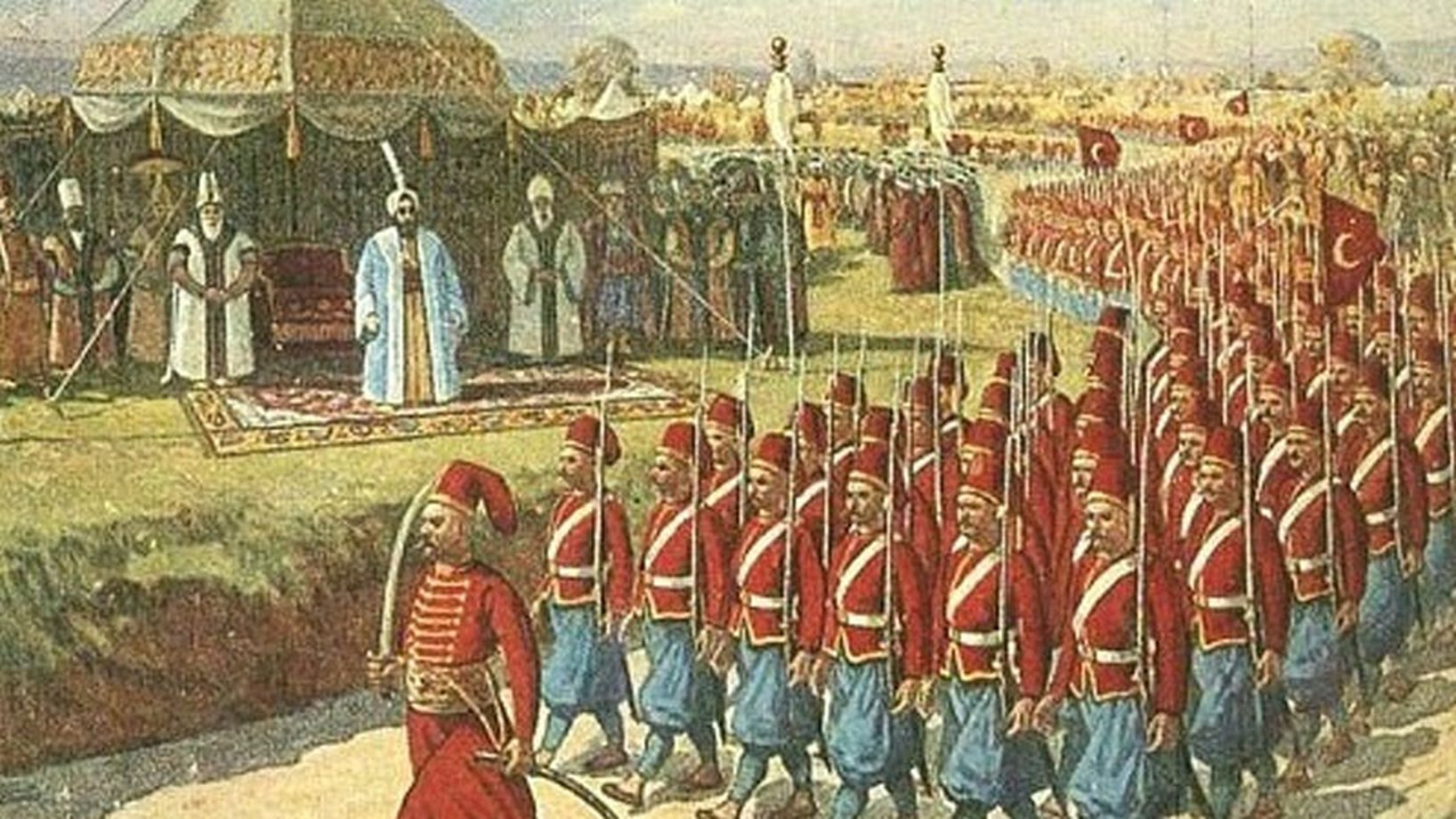
But such an opinion would change very quickly thanks to the warlike curriculum of the "new troops": the battle of Nikopol in 1396, a very heavy loss for the French cavalry, allies of the king of Hungary; the capture of Constantinople, which in 1453 dealt the final blow to the Eastern Roman Empire; the great battle and clash of 1514 at Chaldiran, where the Persian opponents paid dearly for their aristocratic disdain for firearms. These are just some of the military ventures in which, over the next two centuries, the janissaries contributed.
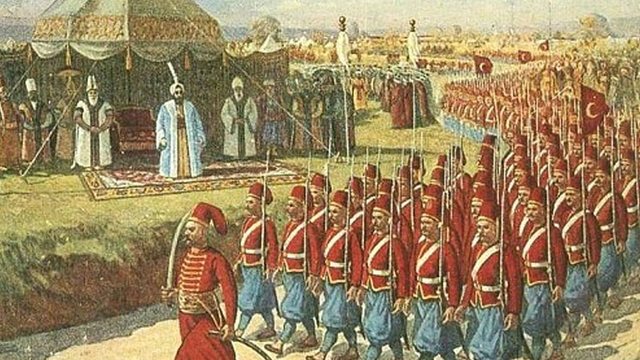
Vanguard
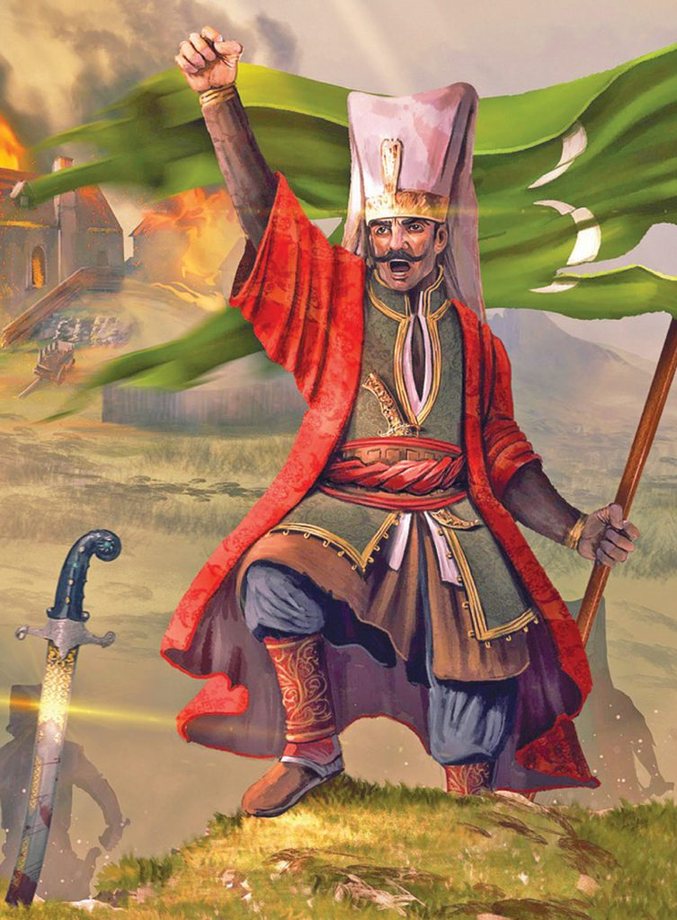
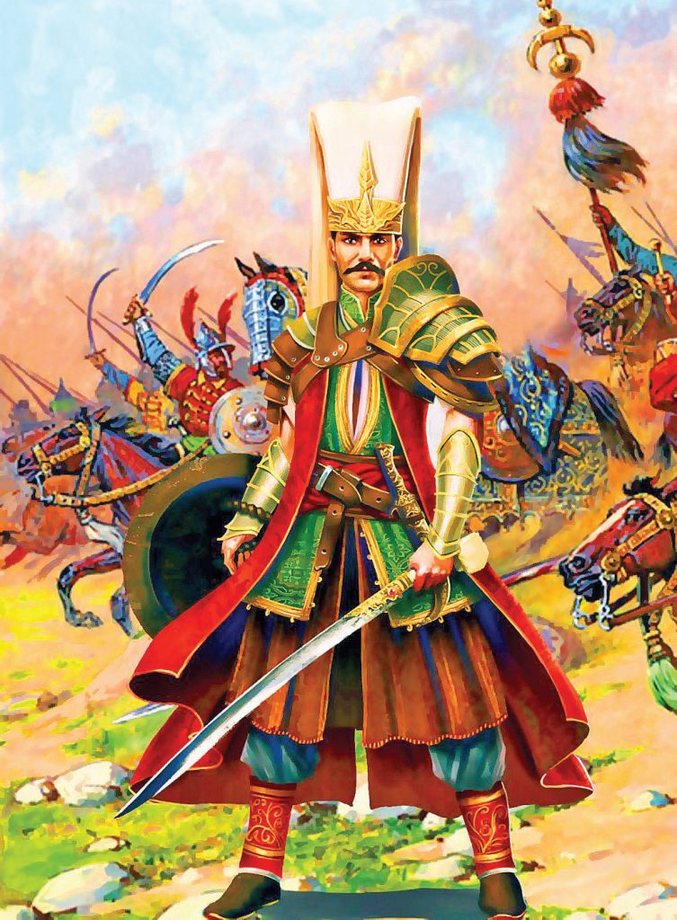
Experts in hand-to-hand combat with swords and daggers, they quickly discovered a talent as archers, but above all they specialized in firearms: Ottoman artists often depicted them with their favorite weapon, the jatagan. Mastery with gunpowder and firearms was not the only advance of the modern soldier. "Above all the janissaries wore a uniform, which remained unchanged for centuries, the most characteristic element of which was a high white turban, decorated with heron feathers," explains Bernardini. "Then they had their own military march, the mehter, which survives in Turkey to this day, as music for military bands. Their chief was the agai, that is, a general. Their battalions, which were called orta, they were often distinguished by the standards and symbols that the janissaries tattooed on their bodies, and they were divided into specialized guilds: from the tufekci, that is, the musketeers, to the geniers who were engaged in undermining the fortifications. However, the main innovation was represented by futuristic military tactics: they were not placed in compact rows like the opponents, but jumped into the attack forming a kind of human snake, which continued forward with a zig zag, provoking bewilderment and confusion to the enemy. Another element of modernity was their pay: janissaries were regularly paid even in times of peace, when they were only custodians of order in the cities. Over time, there were also territorial concessions for them, exemption from taxes and even the opportunity to retire with a pension, when they became old or disabled". and they were divided into specialized divisions: from the tufekchii, that is, the musketeers, to the geniers who dealt with the mining of the fortifications. However, the main innovation was represented by futuristic military tactics: they were not placed in compact rows like the opponents, but jumped into the attack forming a kind of human snake, which continued forward with a zig zag, provoking bewilderment and confusion to the enemy. Another element of modernity was their pay: janissaries were regularly paid even in times of peace, when they were only custodians of order in the cities. Over time, there were also territorial concessions for them, exemption from taxes and even the opportunity to retire with a pension, when they became old or disabled". and they were divided into specialized divisions: from the tufekchii, that is, the musketeers, to the geniers who dealt with the mining of the fortifications. However, the main innovation was represented by futuristic military tactics: they were not placed in compact rows like the opponents, but jumped into the attack forming a kind of human snake, which continued forward with a zig zag, provoking bewilderment and confusion to the enemy. Another element of modernity was their pay: janissaries were regularly paid even in times of peace, when they were only custodians of order in the cities. Over time, there were also territorial concessions for them, exemption from taxes and even the opportunity to retire with a pension, when they became old or disabled". to the engineers who dealt with the mining of the fortifications. However, the main innovation was represented by futuristic military tactics: they were not placed in compact rows like the opponents, but jumped into the attack forming a kind of human snake, which continued forward with a zig zag, provoking bewilderment and confusion to the enemy. Another element of modernity was their pay: janissaries were regularly paid even in times of peace, when they were only custodians of order in the cities. Over time, there were also territorial concessions for them, exemption from taxes and even the opportunity to retire with a pension, when they became old or disabled". to the engineers who dealt with the mining of the fortifications. However, the main innovation was represented by futuristic military tactics: they were not placed in compact rows like the opponents, but jumped into the attack forming a kind of human snake, which continued forward with a zig zag, provoking bewilderment and confusion to the enemy. Another element of modernity was their pay: janissaries were regularly paid even in times of peace, when they were only custodians of order in the cities. Over time, there were also territorial concessions for them, exemption from taxes and even the opportunity to retire with a pension, when they became old or disabled". but they attacked, forming a kind of human snake, which continued forward in a zig zag, provoking bewilderment and confusion to the enemy. Another element of modernity was their pay: janissaries were regularly paid even in times of peace, when they were only custodians of order in the cities. Over time, there were also territorial concessions for them, exemption from taxes and even the opportunity to retire with a pension, when they became old or disabled". but they attacked, forming a kind of human snake, which continued forward in a zig zag, provoking bewilderment and confusion to the enemy. Another element of modernity was their pay: janissaries were regularly paid even in times of peace, when they were only custodians of order in the cities. Over time, there were also territorial concessions for them, exemption from taxes and even the opportunity to retire with a pension, when they became old or disabled".
retainer
These peculiarities of conduct fostered among the janissaries a spirit of corps almost of monks; if we add to this the initial obligation of sexual chastity, that of leaving their possessions in inheritance to the regiment, as well as the common devotion to a patron, or the Iranian mystic Hajji Bektash, the combination between the janissaries and the military orders of the Christian West such as the Templars it may ring true. But the similarities end there.
Although in the midst of luxury, they were in servant's conditions, at least at first. This is highlighted by many details: from the obligation to grow only the mustache and not the entire beard, to the many quotes that connect the tradition and hierarchy of the janissaries with the culinary world. The commander of each orte was called čiorbak (one who serves soup), and the officers were called aga bas (chief cooks). The vessel itself was an important element: a ritual game of janissary skill was a kind of "flag", where the troop had to let fall and catch in the shortest time possible its own vessel in the middle of others. Above all, the overturned pans and bowls in the canteen gave the military a clear signal, and with the passage of time more and more frequent: that of revolt.
In fact, starting from the sixteenth century, the golden times began to fade away. Flush with money and privileges, the janissaries became a touchstone in power struggles. "During the constant internal conflicts, which were incited by the anticipated heir to the throne, to unbalance potential antagonists, the janissaries played an irreplaceable role," says Bernardini. "Their support more and more often decided the fate of a sovereign. An example for all: in the Six Hundred, the brother of Sultan Murad IV, Ibrahim, spent twenty years of imprisonment in the imperial harem, locked among beautiful women and extraordinary food, to avoid being killed by the ruler. It was precisely the janissaries who freed him after overthrowing Murat, as well as freeing him after declaring him mentally incompetent."
Meanwhile, the weakening of this militia continued: at the end of the six hundred janissaries were allowed to marry, have second and third jobs (many of them were merchants), but above all to make a career through nepotism and recommendations. The end of the courtship and the setting aside of the devshirma practically turned it into a craft that was passed down from father to son and sometimes, a safe parking lot for the descendants of Turkish families.
The result: janissaries ended up being a resource and became a problem, if not a threat. And in all respects they became a caste, as annoying as it was costly and useless, for along with inflexible discipline and hard training, military efficiency had gone.

Liquidation
This was demonstrated by a series of burning losses such as the one in 1683 at the gates of Vienna, which in addition to ending the Ottoman expansion in Europe once and for all, also openly showed all the weakness of the Turks in front of the European armies, which in the meantime had recovered tactical and technological advantage. "The Ottoman Empire, which at its peak reached as far as Poland, had already stagnated and the janissaries were just a military anachronism," says Bernardini. "It was no coincidence that their dissolution came from Mahmud II, the first sultan of the eight hundred and a great modernizer: his priority was to reform the army and he understood that the main obstacle came precisely from his "guardians".
The end, since the chronicles have been presented as a happy event, came in 1826 with a real massacre: as a reaction to the revolt of some, at least 4 thousand janissaries were killed in the barracks of Istanbul, destroyed by cannons. Then continued the executions, the exile and the distribution of the survivors to guilds without fame, and above all without pretensions. The saga of the Sultan's former "watchdogs" ended in bloodshed; now, the crescent empire would capture them in the history books, just less than a century later.
The Albanian who overthrew the Sultan
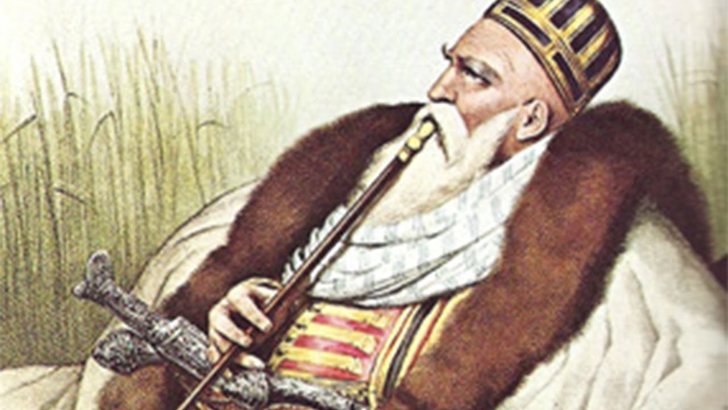
The fame of the most rebellious janissary among the rebels belongs to an Albanian, Patrona Khalil, who lived in the 700s. Inducted into the janissary group at an advanced age, after serving on an Ottoman warship, he deserted and took refuge in Istanbul, where met Musu Bese, a former janissary turned bean merchant. With him and other rebel soldiers, he started a popular uprising in 1730 that overthrew Sultan Ahmed III. For a few weeks, the insurgents became masters of the Ottoman empire, so much so that the investiture of the new Sultan Mahmud I took place under Khalil's supervision, responsible for a series of purges and new appointments to important posts. But they suffered: a Greek butcher who had financed the revolt was even appointed governor of Moldova. A series of delusional elections that followed forced the government to react, and the past came knocking at Khalil's door: against him came the agai, the number one of the janissaries. Invited to the court with a pretext, the Albanian was killed in the presence of the sultan: it was the prelude to a purge that in a few days saw 7 thousand of his supporters killed.