Is this police force professional and capable of handling violen...
/ 2026-10-16 18:54:07Focus


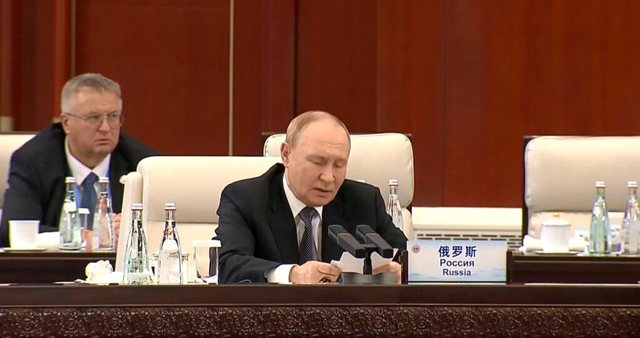
Russian President Vladimir Putin has reiterated his unwavering conditions for ending the war in Ukraine, saying Russian military operations will only stop if Kiev withdraws its forces from Donbas and recognizes Russian control over occupied territories, including Crimea and eastern Ukraine. The comments came during a visit to Kyrgyzstan as Washington and Kiev work on a new version of a possible peace plan.
Putin stressed that Moscow's demands remain unchanged: the complete withdrawal of the Ukrainian army from the Luhansk and Donetsk regions, which he considers part of Donbas. "If they do not withdraw, we will achieve this by force of arms," he declared, claiming that Russia "has the initiative" on the ground.
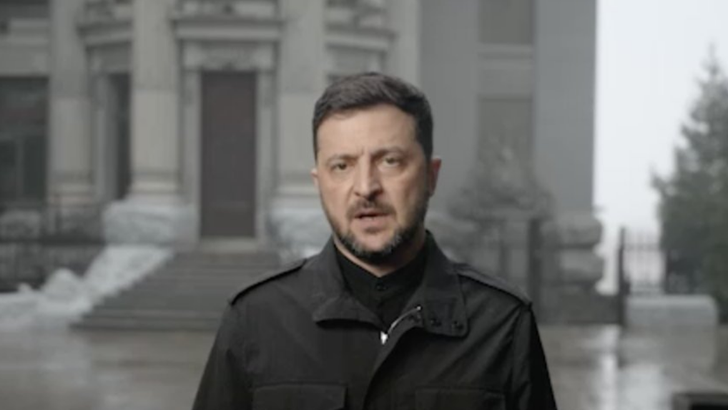
He also reiterated that a peace agreement is impossible without legal recognition of Russian control over territories annexed or occupied since 2014, including Crimea. Ukraine has categorically rejected these demands, calling them “reward for aggression.” Ukrainian President Volodymyr Zelensky declared that Russia “despises efforts to end the war.”
The Russian president confirmed that Russia has received a new peace plan from the US, which he described as a “possible basis” for negotiations, although he stressed that some points require “clearer diplomatic formulation”. The plan, originally drafted in October by US and Russian officials, was recently revised in Geneva during talks between the US and Ukraine, with the participation of European representatives. Putin announced that a US delegation led by special envoy Steve Witkoff is expected to arrive in Moscow early next week. He also confirmed that the delegation may be accompanied by Jared Kushner, the son-in-law of US President Donald Trump. Trump has stated that “few points of disagreement remain” between the parties and has hinted that a possible meeting with Zelensky depends on progress towards a peace agreement.
Meanwhile, Ukrainian President Volodymyr Zelensky said that the delegations of Ukraine and the United States will continue talks to translate the agreements reached in Geneva into a format that guarantees “durable peace and long-term security.” According to him, the recent meetings have created the basis for concrete steps in the negotiation process. The head of the presidential office, Andriy Yermak, announced that US Army Secretary Dan Driscoll will visit Kiev this week. The visit is seen as a signal of support for Ukraine at a time when new peace talks are taking shape and when Washington is playing a critical role in drafting a new plan.
On the Russian side, President Vladimir Putin intensified political rhetoric, declaring that the current leadership of Ukraine is “illegitimate,” referring to the suspension of elections since 2022 due to martial law. He said that there is “no point” in signing any documents with the current authorities in Kiev. Ukraine has been under martial law since the start of the Russian invasion, and the country’s parliament has unanimously confirmed Zelensky’s legitimacy, despite the formal end of his term in the spring.
Clash with EU: von der Leyen reacts
Putin dismissed warnings from European leaders that Russia could pose a threat to other countries on the continent in the future, calling such claims “ridiculous.” Meanwhile, European Commission President Ursula von der Leyen accused Moscow of treating Europe as a “zone of influence” that could be “disintegrated” according to its interests. She warned that Russian behavior remains a direct threat to European security and stability.