"Condemned" protesters?! Who trapped Rama inside the Prime Minis...
/ 2026-10-23 16:02:00Focus


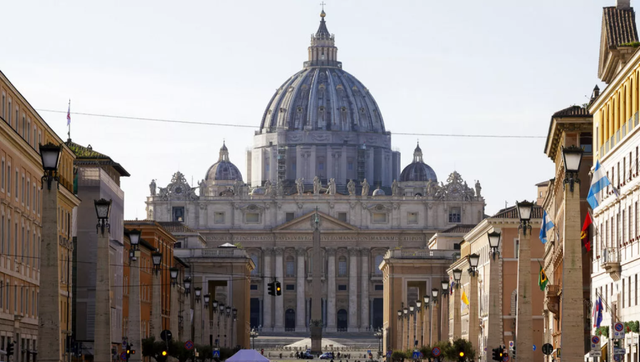
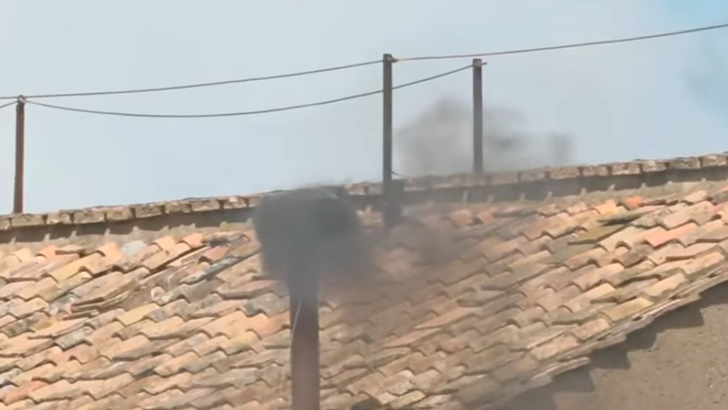
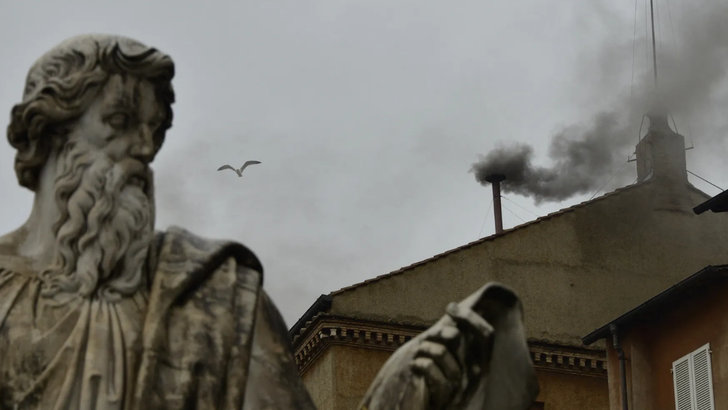
Cardinals began the secret ritual on Wednesday to appoint a new leader for the world's 1.4 billion Catholics.
A record 133 cardinals from 70 countries entered the Sistine Chapel, a significant increase compared to the 115 cardinals from 48 countries who participated in the 2013 conclave, reflecting Pope Francis' efforts to expand the Church's influence in remote regions, often with a small Catholic presence.
Although there is still no clear favorite, among the names often mentioned as possible candidates are the Vatican Secretary of State, Italian Cardinal Pietro Parolin, and Filipino Cardinal Luis Antonio Tagle.
As in medieval times, the cardinals' communication with the outside world is prohibited during the conclave.
The Vatican has implemented strict security measures with advanced technology to guarantee secrecy, including devices that block signals to prevent eavesdropping.
But beyond the wall of silence of the Sistine Chapel, global tensions, wars and geopolitical rivalries have created a complex backdrop for this papal election. The next pope will inherit a divided world and a Church searching for its role in the international order.
Several world leaders, including US President Donald Trump, have shown unusual interest in the conclave process. On social media, Trump has posted an image of himself in papal robes, accompanied by implicit statements about the Vatican's importance on the world political stage.
Meanwhile, various diplomatic sources say that both French President Emmanuel Macron and Italian Prime Minister Giorgia Meloni are moving more discreetly to influence the selection of a pope who would align with their vision and priorities.
At a time of high international tension, rising religious radicalism and fears of apocalyptic conflict, efforts to influence the conclave have intensified. The cracks in the Western political order also coincide with divisions within the Church itself, pushing it to look beyond Europe, both geographically and in terms of faith and representation.
According to Francesco Clementi, professor of comparative public law at La Sapienza University of Rome, "in this conclave there will be a clash between two visions of the Church: an approach that aims for a return to a central government and another that favors further decentralization in the face of the crisis in the West."
The reforms initiated by the late Pope Francis clearly moved in the direction of the latter: the internationalization of the Vatican's executive and decision-making structures. This has led to a much more diverse composition of the college of cardinals, with increased representation from developing countries.
Pasquale Ferrara, Director General for Political Affairs and International Security at the Italian Foreign Ministry, explains: “Pope Francis has appointed cardinals from all corners of the world. This diversity of sensibilities brings the periphery to the center, directly influencing the spirit of the conclave.”
In 2013, many analysts dubbed Pope Francis the “Pope of the Americas,” believing that with his election the axis of power had shifted from Eurocentrism to the American continent. However, his strong positions on issues such as migration, the environment, war, and his critical approach to capitalism and big technology did not always align with the expectations of the American political establishment, including Trump.
According to Ferrara, “Pope Francis’s encyclical Laudato Si’ contradicts a socio-economic model that he sees as unjust: turbo-capitalism, environmental destruction, and a kind of big-tech private neo-imperialism.”
This is not simply a pro- or anti-US issue, but a challenge to global structures that affect the lives of believers around the world.
The Church's international role, especially in armed conflicts such as Ukraine and Gaza, has expanded significantly. Pope Francis has often taken mediation initiatives, going beyond the traditional call for peace. However, some of his statements - such as the one about NATO "barking at Russia's border" - have been viewed with concern and later clarified by Vatican diplomacy.
Professor Stefano Ceccanti emphasizes that Pope Francis' stance represents a continuation of the Church's openness to the modern world, which began with the Second Vatican Council in 1965. However, attempts to dialogue with undemocratic regimes such as China and Russia have been seen by some as dangerous compromises for the Church's moral mission.
At Pope Francis' funeral, attended by world leaders including Donald Trump and Volodymyr Zelenskyy, there was a reported brief encounter between them near an ancient part of St. Peter's Basilica, a symbol of the clash between Church history and modern diplomacy. Other leaders including Macron and British Prime Minister Keir Starmer also held brief talks in the same setting, where an empty chair was also spotted, which some humorously suggested belonged to the Holy Spirit.
Vatican Secretary of State Cardinal Pietro Parolin, who also leads the pack of potential papal candidates, has played a key role in aligning the Vatican's positions with the European Union and democratic countries on the Russian invasion of Ukraine. He and British Archbishop Richard Gallagher have been clear in supporting Kiev's right to self-defense and condemning Russian aggression.
But while the Vatican attempts to balance diplomatic approach and universal morality, the importance of the growing role of the Church's "peripheries" remains essential to its spiritual and institutional renaissance.
“In the future,” Ceccanti concludes, “the Church must learn to accept more local and decentralized solutions to issues that do not violate the essence of doctrine.”
While the white smoke has not yet risen, the biggest question hangs in the balance: will the next Pope continue with Pope Francis' reformist and internationalizing approach, or will he return to traditional relations with Western powers?
The answer will determine not only the future of the Catholic Church, but also its influence in an increasingly polarized and turbulent world.