"Condemned" protesters?! Who trapped Rama inside the Prime Minis...
/ 2026-10-23 16:02:00Focus


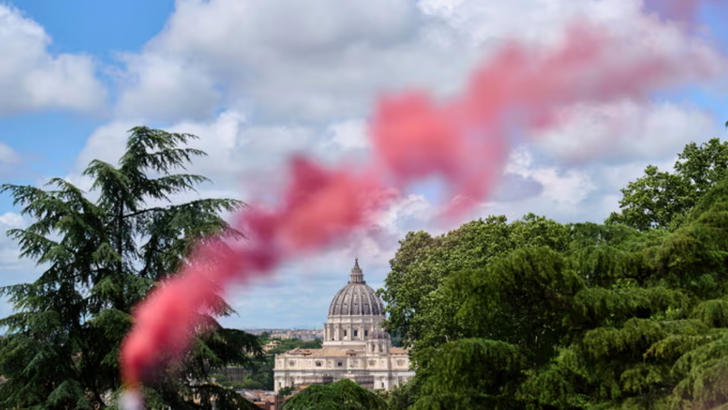
Black smoke rose over the Vatican on Wednesday evening to signal that no candidate received the required two-thirds majority of cardinals to become the next pope.
Thousands of believers from around the world have stood for hours in the central square of the Vatican, awaiting the signal from the conclave that had gathered to vote for the 133 cardinals.
While only a single vote will be held on the opening day of the conclave, four rounds are expected on the following days (two in the morning, two in the afternoon).
If no candidate is elected after the third day, voting is suspended for a day of prayer before resuming.
The field narrows to two candidates if no pope is elected after 21 rounds of voting, but every conclave in more than a century has ended long ago.
Historically, some conclaves have lasted a long time; in the 13th century, they took three years, over 1,000 days, to elect Gregory X.
There was also one that ended on the same day, although it began earlier in the morning: Julius II in 1503 was elected after just 10 hours.
But in the last 150 years, it has usually been a much shorter process, the longest, for Pius XI in 1922, lasted 5 days.
Francis was elected on the second day in 2013, after five rounds of voting; similarly, Benedict XVI needed only four rounds to be confirmed as the new pope in 2005, as did John Paul I in 1978.
It took a little longer to confirm John Paul II — three days, eight rounds — in 1978, and John XXIII in 1958, by 11 votes over four days. But then his immediate predecessor, Pius XII, was elected after just three rounds.
But, since the process is so secret and there are so many moving elements with a record number of cardinals involved in the process this year, there is no way to predict what happens behind closed doors.