"We are drowning..." - From Lisbon, Milan to Tirana, "The Guardi...
/ 2026-10-18 23:13:32Focus


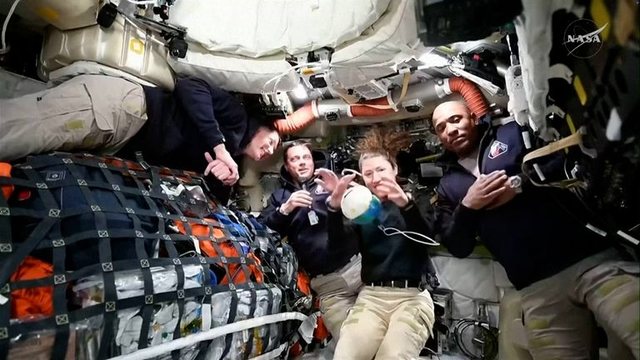
Astronauts on NASA's Artemis II mission have described the incredible excitement they felt as they flew around the Moon, photographing its craters and ridges during their long flight.
The crew captured stunning views from the windows of the Orion capsule, including the Earth rising from behind the Moon, a solar eclipse, and parts of the 950-kilometer-wide Orientale region, an area never before seen by human eyes. The astronauts also reported unusual shades of brown, green, and orange in the gray landscape, as well as thin layers of lunar dust.
After orbiting the far side of the Moon, the 4 astronauts are now speeding back toward Earth.
The return journey is expected to end with a crash near the coast of San Diego at 8:07 p.m. Friday, U.S. Eastern Time.
This moment is the most critical point of the mission, as the Orion capsule will enter the atmosphere at a speed of about 30 thousand kilometers per hour, enduring temperatures reaching up to 2,800 degrees Celsius, and the module needs a highly advanced heat spreader to protect the crew inside. The heat shield plays a vital role, because it protects the astronauts from the extreme heat created by friction with the atmosphere, and any small defect could have catastrophic consequences.
The module separates from the main body of Orion before the final descent phase begins. After that, the parachutes begin to deploy in series; one or two smaller parachutes for orientation control, and then the main parachute for a slow and safe descent to Earth, where rescue teams are on standby to recover the astronauts.
The Artemis II mission marks humanity's return to lunar orbit after more than five decades and tests systems that will be used in future landings. The success of this return is crucial to NASA's plans to establish a permanent base on the Moon and use it as a launch pad for missions to Mars.
If all goes according to plan, humanity will be one step closer to a sustainable return to the Moon and deep space exploration.