Protests, violence, curfews: From France to Albania, why Europe'...
/ 2026-10-20 23:47:20Focus


Anais Ginori – La Repubblica
A European shield is being created for Cyprus in the face of the war between the United States, Israel and Iran, which has been rapidly spreading to other countries since the offensive began just six days ago. A war that the EU did not choose, was not consulted or informed about, but the attacks on the island, an EU member state, have already imposed a response in the fields of air defense, base protection and sea route security.
As a sign of acceleration, Emmanuel Macron has directly called Giorgia Meloni and Kyriakos Mitsotakis, the two European leaders most geographically exposed to Nicosia. The initiative presented by the Elysee Palace was described as a gesture of “European solidarity”, leaving behind the recent tensions between Rome and Paris. The aim is to unite France, Italy and Greece and coordinate “the dispatch of military assets to Cyprus and the eastern Mediterranean”.
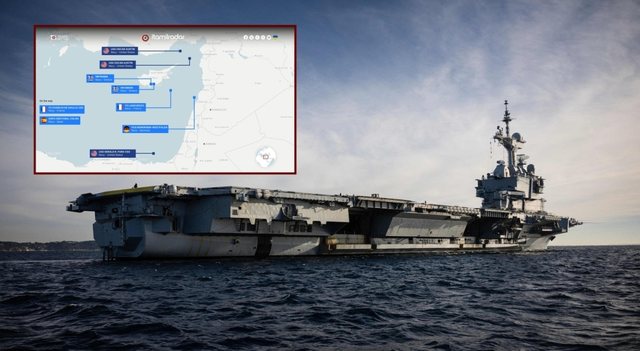
“The war is widening,” warned Macron, announcing the deployment of the Charles-de-Gaulle aircraft carrier in the eastern Mediterranean, with twenty Rafale fighter jets and two Hawkeye radar aircraft. Paris intends to lead the shield around the island together with the United Kingdom, the first to be hit in the attack on the Akrotiri base. Macron mentioned the deployment of Rafales, air defense systems and radars deployed in the region. The French frigate Languedoc is already near Cyprus. In December 2023, it had intervened to shoot down a drone launched by the Houthis in Yemen against maritime traffic in the Red Sea. Not coincidentally, Macron reiterated to Meloni and Mitsotakis the need to “guarantee freedom of navigation in the Red Sea”, another vital node put under pressure by the expansion of the conflict.
Macron criticized the US and Israeli offensive, but France is bound by defense agreements with several Gulf countries, pacts that can be activated at varying intensities up to the risk of involvement in the conflict. To avoid this "horizontal escalation", the Elysee Palace insists that any decision is defensive in nature.
Greece has also sent two frigates and four F-16 jets to Cyprus, while also authorizing the US to use the Souda military base in Crete. According to recent investigations, the drone that attacked the British base in Akrotiri was launched from Lebanon and not directly from Iran. After the decision to send the destroyer HMS Dragon, equipped with the Sea Viper missile system, and Wildcat helicopters with Martlet missiles to shoot down drones, Keir Starmer added an element to the Persian Gulf by sending four Typhoon jets to Qatar. The Labour leader accepted the US request to use two British bases for “specific and limited defensive purposes”.
Another political debate has erupted in France after Paris confirmed that it had authorized several US military “support” aircraft to stay and refuel at the Istres base in the southeast of the country. The general staff assured that the aircraft were not taking part in US operations in Iran and were intended solely to support the defense of partners in the region. According to Flightradar data analyzed by AFP, five KC-135 tanker aircraft arrived in Istres between Monday and Wednesday from the US base in Rota, Spain.
Pedro Sánchez expressed opposition to the war to the point of verbal clashes with Donald Trump, but on the Cyprus front he decided to send the most modern frigate, Cristobal Colon, with a declared mission of air defense and capabilities for evacuating civilians.
NATO is also treading a delicate balance to avoid direct involvement. Mark Rutte, who chaired a meeting of the North Atlantic Council yesterday, reiterated that the interception of an Iranian missile headed for Turkey should not trigger Article 5, the mutual defense clause. Rutte nevertheless called the episode “serious and absolutely reprehensible.”