Protests, violence, curfews: From France to Albania, why Europe'...
/ 2026-10-20 23:47:20Focus


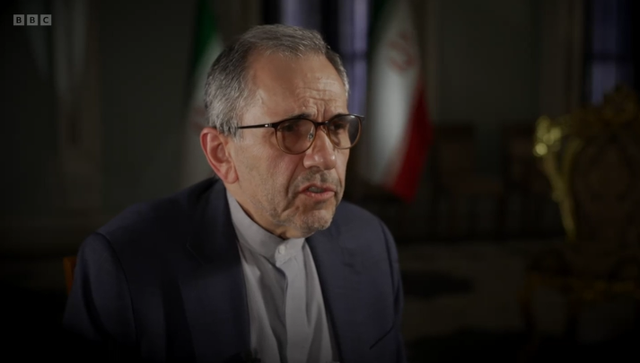
The United States must rule out any further attacks on Iran if it wants to return to the diplomatic negotiating table, Iranian Deputy Foreign Minister Majid Takht-Ravanchi has told the BBC.
He said the Trump administration has conveyed to Tehran through mediators its desire to resume negotiations this week, but has not yet given a clear position on the "very important issue" of stopping attacks during the talks.
Relations between the two countries have been strained again this month, following a wave of military escalation. Israel launched attacks on Iran's nuclear facilities and military infrastructure on June 13, and Tehran responded with missile strikes. The conflict lasted 12 days. The US became directly involved on June 21, bombing three Iranian nuclear facilities: Fordow, Natanz and Isfahan.
The exact extent of the damage is not yet known, although the director of the International Atomic Energy Agency (IAEA), Rafael Grossi, stated that the attacks caused significant but not total damage. On the other hand, US President Donald Trump called the facilities “totally destroyed.”
Takht-Ravanchi stressed that Iran will insist on its right to enrich uranium for peaceful purposes and rejected accusations that it is trying to produce nuclear weapons. “We have been deprived of access to nuclear materials for research, so we are forced to rely on our own resources,” he said.
The Iranian official added that while the level of enrichment could be discussed, demanding that Iran have no enrichment at all is unacceptable. “Saying that you should have no enrichment, and if you don’t agree, we will bomb you, that’s the law of the jungle,” he declared.
Iran's relations with the IAEA have deteriorated recently. On Wednesday, the Iranian parliament voted to suspend cooperation with the agency, accusing it of taking a biased stance in favor of the US and Israel.
In an interview with the BBC, Takht-Ravanchi also said that no date has yet been set for a possible resumption of talks, despite President Trump suggesting they could take place this week. “Currently, we are looking for an answer to the question: will we see a recurrence of aggression while we are in talks?” he said.
He stressed that the US must be clear on this point and clearly express what it is willing to offer to build the trust necessary for a genuine dialogue.
Asked if Iran would review its nuclear program in exchange for the lifting of sanctions and foreign investment, Takht-Ravanchi replied:
"Why should we accept such a proposal?" He reiterated that enriching uranium to 60% is for peaceful purposes.
Under the 2015 nuclear deal, Iran was not allowed to enrich uranium above 3.67% and was banned from any enrichment activity at the Fordow plant for 15 years. However, the US withdrew from the deal in 2018 during Trump's first term, deeming it insufficient to prevent the development of a nuclear weapon, and reimposed sanctions. In response, Iran began to gradually violate the agreement's restrictions.
The IAEA reported that Iran resumed enrichment at Fordow in 2021 and reached the 60% level, which is considered only a technical step away from the weapons-grade level (90%). The agency noted that with current capacities, Iran could produce enough enriched uranium for up to nine nuclear bombs, if it chose to do so.
Asked about Western countries' lack of trust in Iran, Takht-Ravanchi accused some European leaders of a "ridiculous stance" in supporting the US and Israeli attacks. "Those who criticize our nuclear program should criticize the way we have been treated and condemn the US and Israel. If they do not have the courage to do so, then it is better for them to remain silent," he said.
He also added that Iran had received messages through intermediaries that the US “does not seek regime change” by striking Supreme Leader Ayatollah Ali Khamenei. Meanwhile, Israeli Prime Minister Benjamin Netanyahu has called on Iranians to “rise up for freedom” and overthrow the clerical regime, but Trump has stated after the ceasefire was reached that he does not intend to follow the same path.
Takht-Ravanchi called the idea of overthrowing the regime "a futile effort" and said that although some citizens may have criticism of the government, "when faced with foreign aggression, they will unite to oppose it."
Asked about the ceasefire with Israel, he said it was not clear whether it would last, but Tehran would respect it "as long as there are no new military attacks on us."
He added that Iran's Arab allies in the Persian Gulf are trying to create a climate suitable for dialogue. Qatar has played a key role in brokering the current ceasefire.
"We don't want war. We want dialogue and diplomacy. But we must be prepared, careful, so that we are not caught by surprise again," Takht-Ravanchi concluded.