Is this police force professional and capable of handling violen...
/ 2026-10-16 18:54:07Focus


The United States appears to be ready to strike Iran within days.
While the potential objectives are largely predictable, the outcome is not.
So, if a last-minute deal is not reached with Tehran and President Donald Trump decides to order US forces to attack, then what are the possible outcomes?
1- Surgical strikes, minimal civilian casualties, a transition to democracy
US air and naval forces carry out limited, precision strikes targeting military bases of Iran's Islamic Revolutionary Guard Corps (IRGC) and the Basij unit – a paramilitary force under IRGC control – ballistic missile launch and storage sites, as well as Iran's nuclear program.
An already weakened regime falls, eventually transitioning into a true democracy where Iran can join the rest of the world.
This is a very optimistic scenario. Western military intervention in both Iraq and Libya did not bring a smooth transition to democracy. Although it ended brutal dictatorships in both cases, it brought years of chaos and bloodshed.
Syria, which carried out its own revolution, overthrowing President Bashar Al-Assad without Western military support in 2024, has so far fared better.
2- The regime survives, but moderates its policies
This could be broadly called the "Venezuelan model," where swift and forceful American action leaves the regime standing, but with its moderate policies.
In Iran's case, this would mean that the Islamic Republic survives, which would not please many Iranians, but is forced to limit its support for violent militias in the Middle East, halt or limit its nuclear and ballistic missile programs, and ease its repression of protests at home.
Again, this is at the least likely end of the scale.
The Islamic Republic's leadership has remained defiant and resistant to change for 47 years. It seems incapable of changing course now.
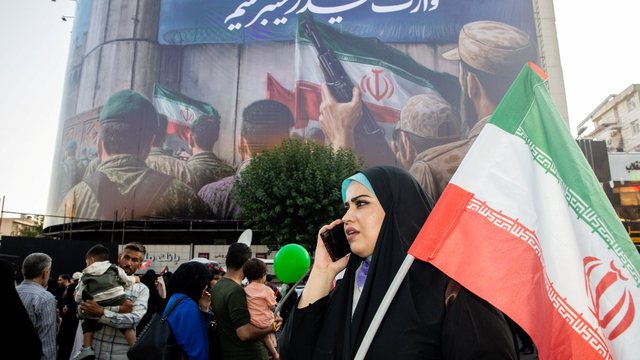
3- The regime collapses, replaced by military rule
Many think this is the most likely outcome.
While the regime is clearly unpopular with many, and each wave of protests over the years further weakens it, it remains a large and pervasive deep security state with a vested interest in maintaining the status quo.
The main reasons why the protests have so far failed to overthrow the regime are that there have been no significant defections on their side, while those in control are willing to use unlimited force and brutality to stay in power.
In the confusion following any American strike, it is conceivable that Iran could end up ruled by a strong military government composed primarily of IRGC figures.
4- Irani hakmerret duke sulmuar forcat amerikane dhe fqinjët
Irani ka premtuar të hakmerret ndaj çdo sulmi amerikan, duke thënë se “gishti i tij është në këmbëz”.
Ai nuk është aspak i barabartë me fuqinë e Marinës dhe Forcave Ajrore të SHBA-së, por mund të godasë me arsenalin e tij të raketave balistike dhe dronëve, shumë prej të cilëve të fshehur në shpella, nën tokë ose në male të largëta.
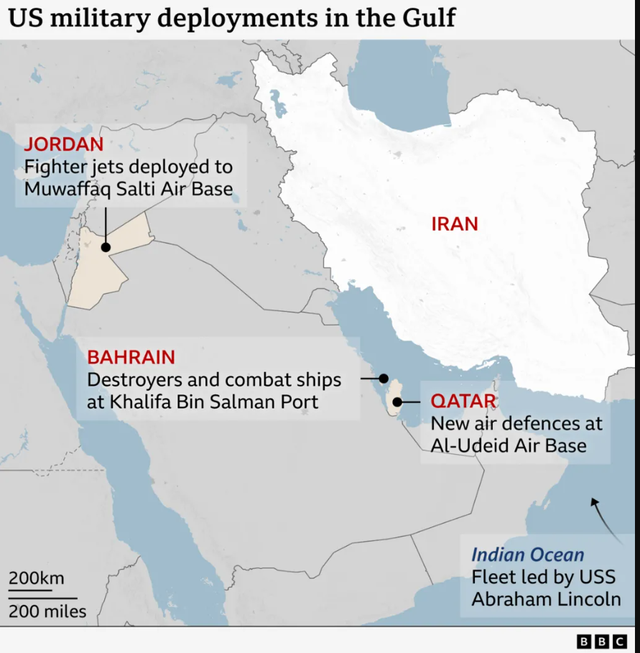
Ka baza dhe objekte amerikane të shpërndara përgjatë anës arabe të Gjirit, veçanërisht në Bahrein dhe Katar, por Irani gjithashtu mund të synojë infrastrukturën kritike të çdo vendi që e konsideron bashkëpunëtor në një sulm amerikan, si Jordania.
Sulmi shkatërrues me raketa dhe dronë ndaj objekteve petrokimike të Saudi Aramco në 2019, i atribuar një milicie të mbështetur nga Irani në Irak, tregoi sa të prekshëm ishin sauditët ndaj raketave iraniane.
Fqinjët arabë të Gjirit të Iranit, të gjithë aleatë të SHBA-së, janë kuptueshëm shumë të shqetësuar tani se çdo veprim ushtarak amerikan do të përfundojë duke u kthyer kundër tyre.
5- Irani hakmerret duke vendosur mina në Gjirin Persik
Kjo ka qenë prej kohësh një kërcënim i mundshëm për transportin global dhe furnizimet me naftë që nga lufta Iran-Irak e viteve 1980-88, kur Irani vërtet minoi rrugët detare dhe anijet britanike për pastrimin e minave ndihmuan në pastrimin e tyre.
Ngushtica e Hormuzit midis Iranit dhe Omanit është një pikë kritike bllokimi. Rreth 20% e eksporteve botërore të gazit natyror të lëngshëm (LNG) dhe midis 20-25% e naftës dhe nënprodukteve të saj kalojnë përmes kësaj ngushtice çdo vit.
Irani ka kryer stërvitje në vendosjen e shpejtë të minave detare. Nëse do ta bënte këtë, kjo do të ndikonte në mënyrë të pashmangshme tregtinë botërore dhe çmimet e naftës.
6- Irani hakmerret duke fundosur një anije luftarake amerikane
Një kapiten i Marinës Amerikane në bordin e një anijeje luftarake në Gjirin Persik më tha njëherë se një nga kërcënimet nga Irani që e shqetëson më shumë është një “sulm me tufë”.
Kjo është kur Irani lëshon kaq shumë dronë me eksploziv të lartë dhe varka torpedoje të shpejta ndaj një ose disa objektivave, saqë edhe mbrojtjet e frikshme afër-sipërfaqësore të Marinës Amerikane nuk janë në gjendje t’i eliminojnë të gjitha në kohë.
Marina e IRGC-së ka zëvendësuar prej kohësh marinën konvencionale iraniane në Gjirin Persik, disa nga komandantët e së cilës madje ishin trajnuar në Dartmouth gjatë kohës së Shahut.
Ekuipazhet detare iraniane kanë përqendruar shumë nga trajnimi i tyre në luftën jokonvencionale ose “asimetrike”, duke kërkuar mënyra për të kapërcyer ose shmangur avantazhet teknike të armikut të tyre kryesor, Flotës së Pestë të Marinës Amerikane.
Fundosja e një anijeje luftarake amerikane, e shoqëruar me kapjen e mundshme të të mbijetuarve nga ekuipazhi, do të ishte një poshtërim masiv për SHBA-në.
While this scenario is considered unlikely, the billion-dollar destroyer USS Cole was severely damaged by an Al-Qaeda suicide attack in the port of Aden in 2000, killing 17 American sailors.
Previously, in 1987, an Iraqi pilot mistakenly fired two Exocet missiles at a US warship, the USS Stark, killing 37 sailors.
7- The regime collapses, replaced by chaos
This is a very real danger and is one of the main concerns of neighbors like Qatar and Saudi Arabia.
In addition to the possibility of a civil war, as experienced in Syria, Yemen and Libya, there is also the risk that in the chaos and confusion, ethnic tensions will erupt into armed conflict, as Kurds, Baloch and other minorities try to protect their people amid a national power vacuum.
Much of the Middle East would certainly be happy to see the end of the Islamic Republic, none more so than Israel, which has already dealt severe blows to Iran's proxies in the region and which fears an existential threat from Iran's suspected nuclear program.
But no one wants to see the Middle East's largest country by population - some 93 million - plunge into chaos, causing a humanitarian and refugee crisis.
The biggest risk now is that President Trump, having amassed this powerful force near Iran's borders, decides he must act or lose face, and a war begins without a clear end state and with unpredictable and potentially damaging consequences./ BBC