"Condemned" protesters?! Who trapped Rama inside the Prime Minis...
/ 2026-10-23 16:02:00Focus


Iran has been suffering from high inflation for years, the weakening of the currency and the consequences of international sanctions. New Western measures and a long-running military conflict would put the country in a very serious crisis.
At a time when the US and EU want new sanctions against Tehran, the country itself will be eyed with news of success, such as the ones. Iran has managed to sell more oil than ever before in the last six years. This is despite the US sanctions imposed in 2018 by President Trump. Iranian Oil Minister Javad Ovji said in March that oil exports had brought more than "$35 billion" into the Iranian state coffers. "The enemies of Iran want to stop our oil exports, but today we can export oil wherever we want, and this with very good offers," the Financial Times quoted the Iranian minister as quoted by the Times.
Billions of revenues are very important for the country to ensure internal social peace. A large part of the population suffers directly from international sanctions, which have brought the country's currency, the rial, down sharply and increased inflation by up to 40%.
Professor of Economics at Virgina Tech University, Djavad Salehi-Isfahani, told DW that the escalation of geopolitical conflicts is putting new pressure on the Iranian currency by devaluing it against the US dollar. In recent months the rial lost 25% of its value against the dollar. "This exchange rate devaluation is quickly reflected in much higher prices because Iran imports a lot of goods." According to Salehi-Isfahani, Iran should prepare for a long period of high inflation.
Living standards as in 2005
Because Iran cannot provide food on its own, falling currency value and high inflation cause food prices to rise sharply. "This has a strong effect on the wellbeing of the poorest part of the population, because food provision accounts for half of their spending," says the Middle East economic expert.
But the situation has also worsened for the middle class in the past two decades. "The standard of living is back at the level of 20 years ago because of the sanctions," Isfahani said. Even economic volume has this level probably only a few percentage points higher, the expert says.
Iran's economic growth depends heavily on oil exports. Since more than 90% of oil goes to China, western sanctions are increasingly losing effect. So the tehran-led are very concerned about whether the oil sector, which is the main source of the currency, could become the target of an attack in response to Israel. Isfahani formulates the situation in Tehran. "I'm pretty sure they are very upset because a war that could damage infrastructure for oil exports would be a serious blow to the economy." After the shock of U.S. sanctions imposed in 2018, Iran has already reached 80 percent of its export volume. But this has not led to improved livelihoods for the population, as most financial resources go towards the country's military strengthening and other measures of the mullahs' regime.
Corruption and lack of transparency
Much money also disappears in the non-transparent structures of Shiite rulers in Tehran. In Transparency International's corruption perception index, Iran ranks 149th out of 180 countries. The role of the Revolutionary Guard, a parallel army, and that of religious foundations that control significant parts of Iran's economy is unclear. They do not pay taxes, do not have to present economic balance sheets and are directly dependent on the political and religious leader of the Islamic Republic, Ayatollah Ali Khamenei.
For Middle East expert Martin Beck of the University of Southern Denmark (SDU) Iran's economy consists of a "mix of political and economic spheres that promote a clientelist and distribution policy that is closely linked to corruption."
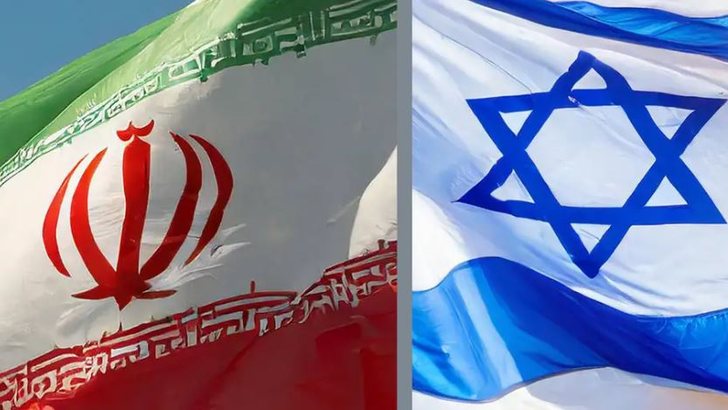
Although revenues from oil sales have stabilized in recent years, Iran is anything but not an economic powerhouse. Although its population of 88 million is nearly 10 times that of its old enemy, Israel at 9 million, Iran's economic volume of $413 billion is significantly lower than Israel's at $525 billion. How the country's economy will develop depends heavily on the effect of new Western sanctions if they succeed in curbing oil exports significantly.
Crucial oil exports
Tehran has managed to sell an average of 1.56 million barrels of oil a day in the first three months of this year, and nearly all to China. That's been the highest value of sales since 2018. "Iranians are well mastered by the art of circumventing sanctions," Fernando Ferreira of the Rapidan Energy Group was quoted by the Financial Times. "If the Biden government is really going to achieve something here, it needs to focus on China."
The US itself is meanwhile far more independent of oil exports from the Middle East. However, tightening sanctions against Iran would lead to a rise in oil prices on world markets and would have consequences for rising inflation. For Biden this election year, that meant opening the door to his rival, Donald Trump.
But regardless, whether the sanctions escalate or not - Would Iran's economy be ready to weather an escalation of the conflict with Israel? Economics professor Djavad Salehi-Isfahani's response is clear: "On the whole it is not ready for a long-running war conflict. They have therefore been very careful not to get too involved in the Gaza war. And the attack on Israel was more of a symbolic thing than an attack that really wanted to do damage." / DW