Is this police force professional and capable of handling violen...
/ 2026-10-16 18:54:07Focus


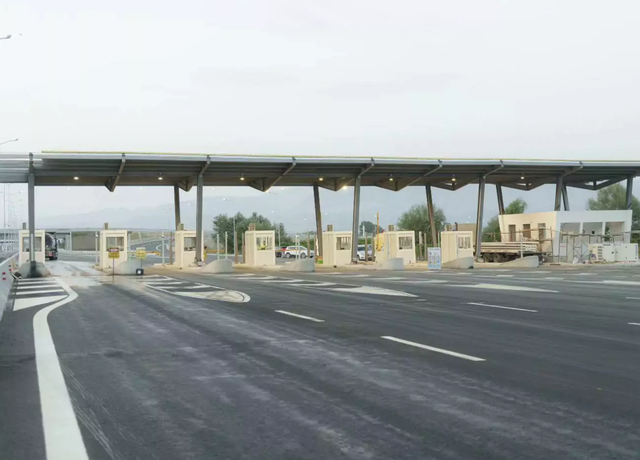
"Toll-free roads" is one of the Democratic Party's strongest campaign promises, but its implementation faces legal and financial barriers. Concession contracts are protected by law, and any unilateral termination could cost the state millions of euros in damages.
Esmeralda Topi
"In the first week of government, toll roads will be free" This is one of the most sensational promises that former Prime Minister Sali Berisha articulated at the height of the campaign for the May 11 elections.
"The toll will be removed the first week, you won't pay a single penny," Berisha said during an electoral meeting in Kukës, describing the charging of the "National Road" as an injustice to the citizens of the North.
Fact
Currently in Albania there are two road axes that operate with a toll for users:
Milot-Morinë (National Road) – with a toll of 5 euros since 2018, granted with a 30-year concession to the "Albkalaj" company.
Thumanë-Kashar – a highway with a toll of 2.1 euros from January 3 of this year, granted with a 35-year concession to the company "Gener2".
In both cases, the payments are sanctioned in legally protected agreements, where the state has obligations towards private companies if it unilaterally stops the implementation of the contract.
Is a toll-free road possible? In theory, yes. In practice, at a high cost. If a government decides to compensate the concessionaire to cover the lack of revenue from tolls, then the payment goes from the citizen's pocket to the state budget, and therefore back out of the citizen's pocket. Instead of presenting a concrete plan to negotiate or improve contracts, a drastic measure is announced that raises more questions than it offers solutions.
"This promise is more of a message to voters than a feasible policy without consequences," experts argue.
"More than an obvious possibility, I see the promise in question if the opposition bloc wins the elections as a simplification of a complicated problem in a strong electoral context. However, it is positive that sensitive issues for both the state budget and the family budget are being publicly debated," says Zef Preçi, executive director of the Albanian Center for Economic Research.
"A unilateral decision to remove tariffs would end up in arbitration and the state would be forced to pay millions of euros in damages," warns economic expert Ilir Brasha.
In the same vein is the expert on economics and finance Elvin Meka.
"One option is for the government to pay the cost of terminating the contract; the other is arbitration, which is certainly no less costly," Meka emphasizes.
Arbitration invoice
Albania has been involved in international arbitration courts several times for unilateral termination of concession contracts. From the lost cases alone, the bill for the budget has reached 181 million euros by the end of 2023, according to data from the Ministry of Finance. Each new case risks increasing the burden on the state budget. The Ministry of Finance has consistently recommended strengthening the negotiating role of budgetary institutions and the State Attorney's Office in matters of this nature.
"This, with the final goal of easing, reducing and/or avoiding the financial burden on the state budget," argues the Ministry of Finance.
Experts explain that the fairest way to handle such contracts is:
Reviewing tariffs, not canceling them
Negotiations for reduction, not unilateral termination
Development of alternative public roads, so as not to leave citizens without choices
“Only in this way can a fair and sustainable charging system be guaranteed,” argues Eduard Gjokutaj from the ALTAX center.
Experts also emphasize the importance of auditing the costs of concession contracts.
"Rather than terminating these contracts, it would be better to audit the extreme costs of concessions, which translate into usage fees outside of any economic logic," Meka further emphasizes.
cONcluSiON
The DP's promise to immediately remove all tolls on concession roads is unsupported by the legal and financial reality of existing contracts . Finance and infrastructure experts warn that such an action would bring very high costs to the state budget and could lead to confrontation with international arbitration. Therefore, the promise is considered electoral rhetoric without a concrete implementation plan. Instead of toll roads, Albania needs more honest contracts , transparency and sustainable policies . Because the "free road" is never free. Someone always pays. / Faktoje.al