Is this police force professional and capable of handling violen...
/ 2026-10-16 18:54:07Focus


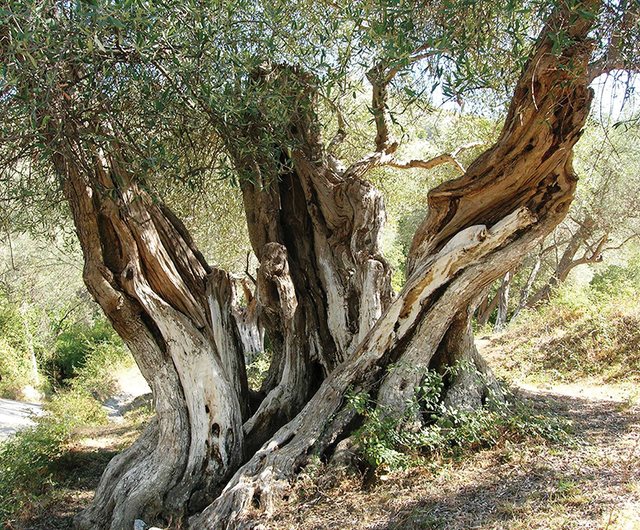
Hike among the ancient olive trees of our country. How old is an olive tree and where are the oldest ones found in Albania?
George Kota*
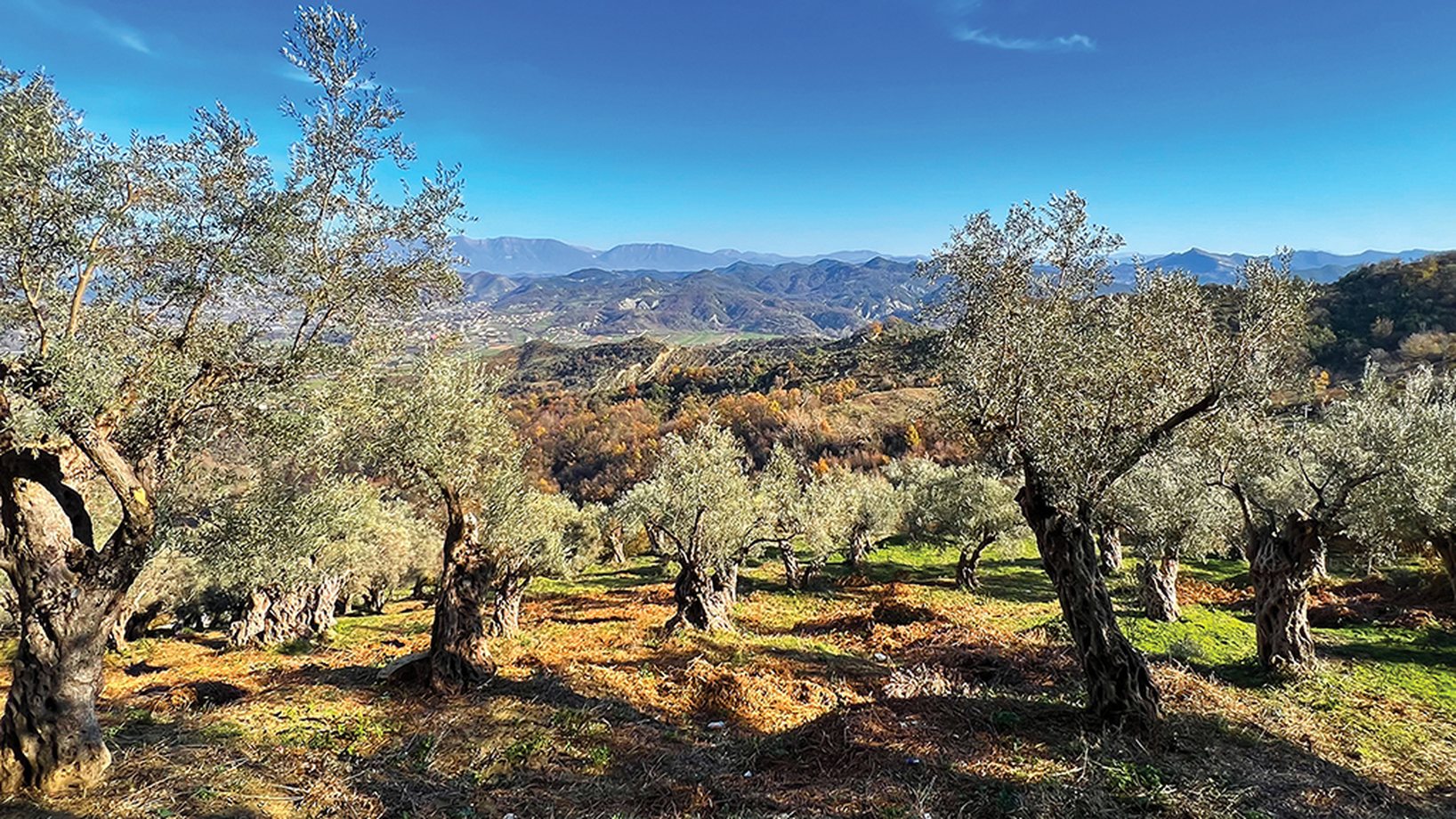
Not far from Tirana, in Ndroq, a village where traditions stretch back to medieval times, we break away for a different day, away from the city, on hiking trails, among ancient olive trees, centuries old and perhaps millennia old.
The hillsides with stone terraces, the scent of olives and the shadows of majestic trunks create a typical Mediterranean landscape. Here, in the kingdom of ancient olive trees, you clearly see that time is measured by trunks and roots.
But how old can an olive tree really be and where are the oldest olive trees found in Albania? Legends speak of millennia, while science seeks proof. How is the age of a tree that often no longer has a "wooden heart" measured, and what do modern methods tell us about these "green elders"?
Mediterranean olives: between legend and science
The olive tree is an emblem of the Mediterranean region and has symbolized peace, wisdom, and harmony since ancient times. The origin of the cultivated olive tree is linked to the Near East; from the east it spread along the shores of the Mediterranean.
In many Mediterranean countries, there are thousand-year-old olive trees that continue to produce fruit, but accurately dating their age remains challenging.
Why is olive tree dating difficult? Unlike other trees, olive trees grow irregularly. They often lack complete annual rings and old trunks become hollow inside.
This means that common methods such as counting tree rings do not provide reliable results.
Alternative methods such as carbon-14 dating are used for the remaining pieces of wood.
Scientists estimate that with a combination of methods, the maximum confirmed age of olive trees usually reaches 300–500 years (some studies extend it to around 700 years). However, local traditions and lore and indirect analysis often claim that some olive trees are thousands of years old.
For example, the Vouves Olive in Crete is estimated to be 2,000–4,000 years old; in Portugal, the Mouchão olive is thought to be ~3,350 years old; while the “Stara Maslina” near the town of Tivar in Montenegro has been dated to somewhere between 2,014 and 2,480 years old.
Also, Lebanon once claimed 4,000-year-old trees, but a 2024 study showed that the oldest of them was about 1,100 years old, with most ~500 years old. These examples highlight that age legends often outpace scientific evidence.
Despite this, ancient olive trees over 1,000 years old exist and are living monuments: for example, the Bidni olive trees in Malta have been confirmed by carbon-14 to be around 2,000 years old and have been protected since 1933.
UNESCO has declared November 26th "World Olive Tree Day", aiming to preserve olive groves and biodiversity, cultural dialogue and the socio-economic role of the olive tree; a reminder that the olive tree is part of the Mediterranean identity and heritage.
Albania: wealth and emptiness
Albania, a Mediterranean country with a thousand-year-old tradition in olive growing, boasts an extraordinary wealth of old olive trees, but at the same time suffers from gaps in their documentation and protection.
According to an agronomic study by experts H. Ismaili and B. Gixhari, there were about 136 thousand old (centuries-old) olive trees in 53 villages in Albania.
On the one hand, we have an impressive natural heritage. Olive trees that constitute not only valuable indigenous cultivars, but also potential tourist destinations. On the other hand, a scientific tree-by-tree registration and a public digital registry with ID, coordinates and laboratory dating are needed to certify these olive trees.
Where do legends grow?
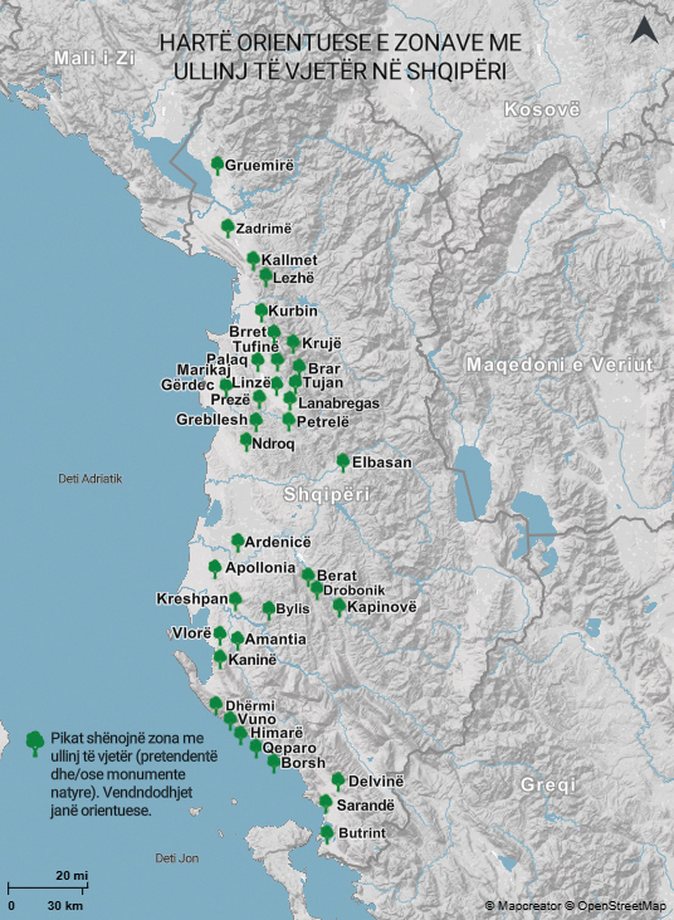
Where are the oldest olive trees in Albania? Local studies and observations show that the two main foci are the Tirana region and the Vlora region, without excluding Berat, Lezha and Kruja.
In the areas of Tirana (Petrelë, Lanabregas, Tufinë, Ndroq, Prezë, Brar, Tujan) there are olive trees that are thought to be around 2,000 – 3,000 years old.
“Olives can never die.” This local hyperbole relates to the olive tree’s ability to regenerate. Even when centuries-old trunks dry up or burn, new shoots burst forth from the underground roots, continuing the tree’s life potentially indefinitely. Hence the locals say that the olive tree “lives forever.”
The “Castle Trail – Ndroq” passes through old olive groves, as well as the medieval castle of Varosh. During the hike, with Fisnik Muça, an important voice in the mountain guide community (President of Albanian Mountain Leaders), we find ourselves among hundreds of olive trees bent over by centuries.
Fisnik tells us that some of the olive trees around Ndroq may be 2,000–2,500 years old, while even older ones are found near Dajti Mountain and the village of Tujan. These green giants have withstood numerous climate changes over the centuries.
But it should be noted that there is still no proper project for these trees to have their own dating and certification.
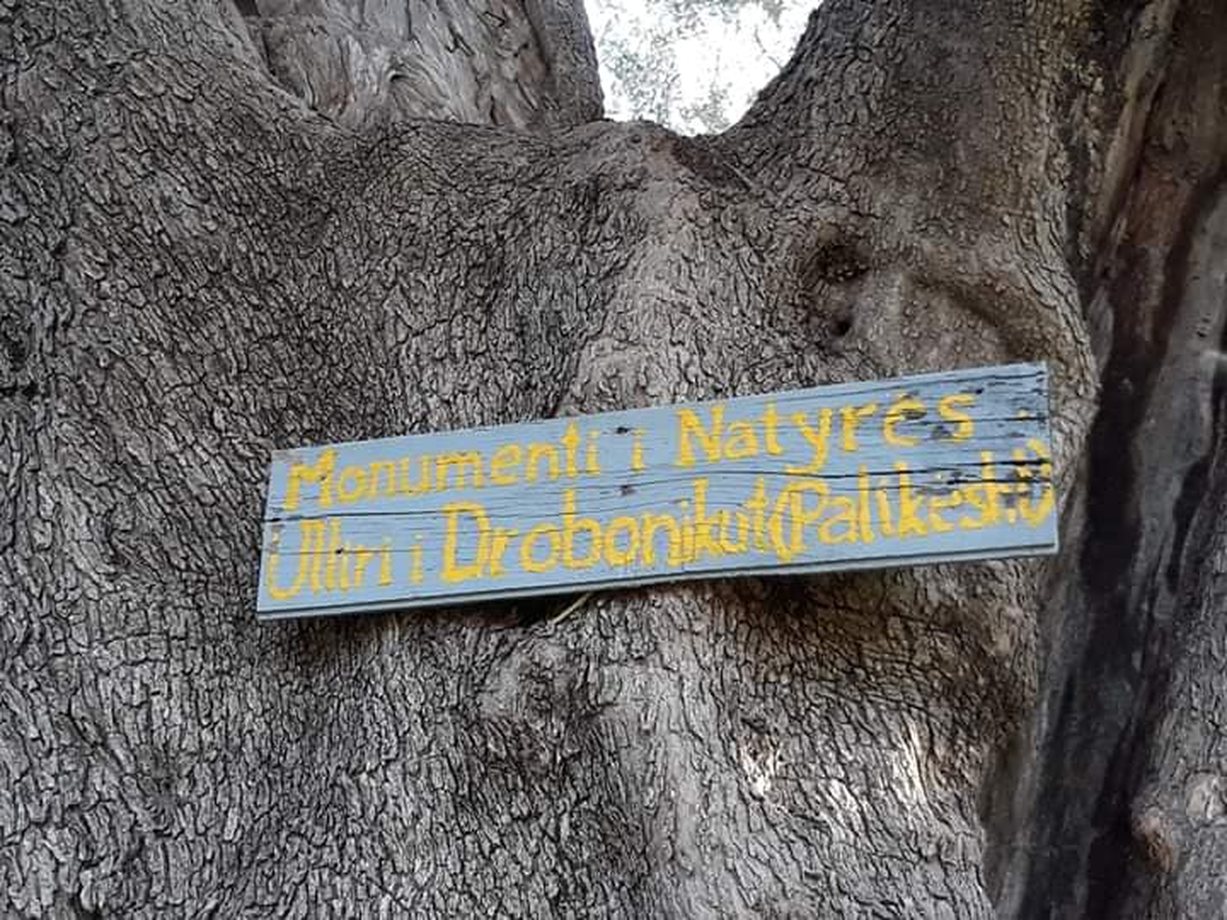
Beyond Tirana, Berat is another historic hearth of olives. Not coincidentally, the main indigenous variety is called the “Berat Olive”. In the village of Drobonik there is a monumental olive tree, which is known as the “Palikështit (Drobonikut) Olive”.
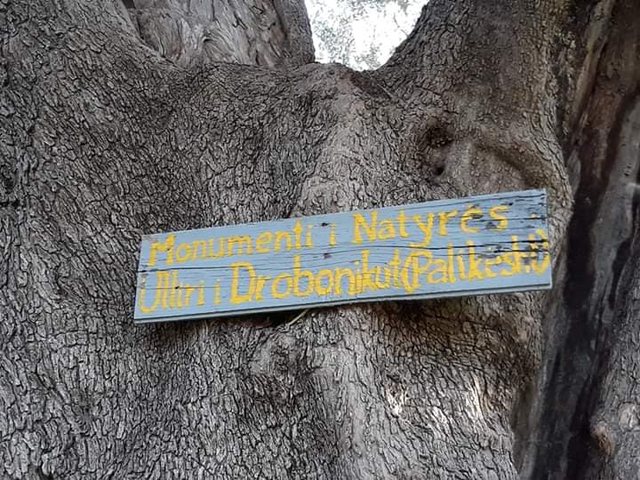
This tree has been declared a Natural Monument and is claimed to be over 2,000 years old. Local media has even called it “the oldest olive tree in the Balkans” (2,000 years old).
This may be debatable, but it certainly shows Berat's reputation for ancient olive trees. In and around Berat Castle, there are hundreds of ancient olive trees, some perhaps planted as far back as Byzantine times.
Gjithashtu, brigjet e Vlorës dhe Himarës janë të njohura për ullishta të stërlashta. Në Kaninë (fshat mbi qytetin e Vlorës) thuhet se ullishtat datojnë nga koha e Pirros së Epirit. Në Qeparo e Borsh, në bregdetin e Himarës, tarracat e gurta janë ende të mbuluara me ullinj shekullorë të trashëguar brez pas brezi.
Në Krujë e Lezhë, klima më e butë mesdhetare në shpatet kodrinore ka favorizuar po ashtu ullinj të vjetër. Në Kurbin (Laç) përmenden disa pemë ulliri me moshë të madhe, zona e Laçit mund të ketë ullinj mbi 2000-vjeçarë, ndonëse dhe kjo kërkon verifikim.
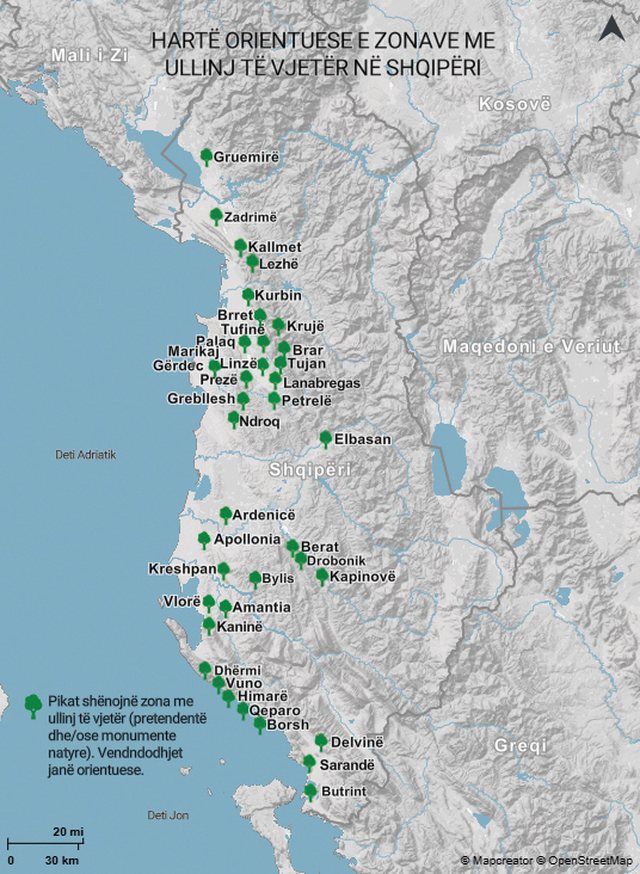
Disa guida dhe entuziastë pohojnë se në Shqipëri ka rreth 16 000 ullinj mbi 1500 vjeç; shpesh thuhet se shumë prej tyre kanë qenë tashmë të vjetër edhe në kohën e Skënderbeut (shek. XV).
Ndonëse kjo shifër duhet konfirmuar, fakti është që shumë ullinj të Shqipërisë i kanë rrënjët në antikitetin e vonë dhe mesjetën e hershme.
Këto pemë janë dëshmitarë të heshtur të historisë. Kanë përballuar luftërat osmane, kanë ushqyer kryengritësit me vajin e tyre dhe kanë vazhduar ciklin stinë pas stine, pavarësisht ndryshimeve të kufijve dhe popullsive.
Fisniku vë në dukje se publiku dhe turistët vuajnë nga mungesa e informacionit për këta ullinj monumentalë. Ai thekson se shumë prej këtyre pemëve gjenden në prona private ose komunitete të vogla dhe nuk kanë tabela apo të dhëna informuese.
“Vizitorët kalojnë pranë një ulliri 2000-vjeçar dhe nuk e marrin vesh kurrë”.
Po ashtu, Muça nënvizon se ndryshimet klimatike aktuale, thatësirat e zgjatura, verat më të nxehta, janë sfida të reja për këta “pleq të gjelbër”, por fakti që ata kanë mbijetuar ndryshime të mëdha klimatike në të kaluarën i bën relativisht të qëndrueshëm.
Këto pemë duket sikur kanë “imunitet historik”, por pa mbrojtje ligjore dhe pa kujdesin e duhur, edhe ato mund të pësojnë dëme nga aktiviteti njerëzor.
Nga ligjet te realiteti: sa funksionon mbrojtja?
Mbrojtja e ullinjve shekullorë në vendin tonë mbështetet kryesisht te koncepti “Monument Natyror”. Sipas ligjit për zonat e mbrojtura, një pemë me rëndësi të veçantë shkencore ose estetike mund të shpallet monument natyre me vendim të Këshillit të Ministrave.
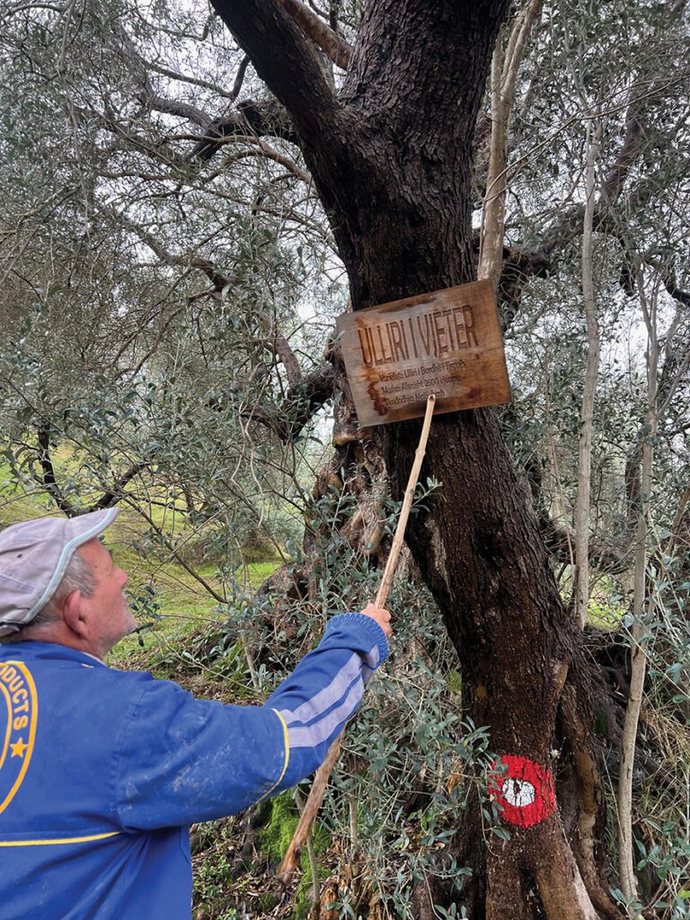
Aktualisht, disa ullinj individualë gëzojnë këtë status (p.sh. Ulliri i Qejfit në Elbasan, Ulliri i Drobonikut në Berat). Por listimi është i pjesshëm, udhëzimet teknike mungojnë dhe nuk ka ligj të posaçëm për drurë të vjetër (mbrojtje automatike sipas moshës/dimensionit).
Politikat bujqësore, përmes subvencioneve, nxisin mbjelljet e reja; megjithatë, nuk parashikohet kompensim kur hiqen ullinj të vjetër jo të listuar si “Monument Natyror”. Statistikat kombëtare raportojnë miliona rrënjë në prodhim pa dalluar mbjelljet e reja nga ekzemplarët shekullorë.
Në Greqi, tradita e ruajtjes është e thellë që nga antikiteti, ndërsa theksi është te ruajtja e pemëve ekzistuese dhe lejet strikte për ndërhyrje.
Ruajtja dhe menaxhimi i ullinjve vlerësohen si pjesë e identitetit kulturor dhe peizazhit në këtë shtet. Në ishullin e Kretës, disa pemë ulliri mijëravjeçare kanë status të ngjashëm me monumentet kulturore dhe mbrohen nga autoritetet vendore.
Ndërsa në Ulqin, Mal i Zi, ullishta e Valdanosit është simbol i trashëgimisë për Ulqinin, me rreth 18 mijë rrënjë ulliri.
Megjithëse zona ka statusin e peizazhit kulturor, shembujt e lejeve të kufizuara brenda ullishtës tregojnë se statusi formal nuk mjafton pa rregulla të qarta zbatimi dhe kontroll real në terren. Në Ulqin, reagimi i komunitetit lokal ka qenë thelbësor për të frenuar betonizimin.
Ekonomia dhe “Made in Albania”
Shqipëria ka miliona pemë ulliri në prodhim. Sipas INSTAT, prodhimi kombëtar ka pasur një trend rritës afatgjatë që prej fundviteve ’90, me nivel shumë të lartë në 2023 – 2024.
Kjo bazë prodhuese, e konsoliduar vitet e fundit, ka mbështetur një ritëm të ri zhvillimi në tregti.
Për shembull, në 2017, Shqipëria eksportoi vetëm 113 tonë vaj ulliri, ndërsa në 8-mujorin e parë 2023 u eksportuan rreth 4,400 tonë (kryesisht drejt Italisë).
Rritja e eksporteve po ecën krah për krah me përpjekjet për përmirësim cilësie. Prodhuesit shqiptarë historikisht kanë nxjerrë vaj të mirë (i përmendur që në kohët e Apolonisë), por shpesh u mungonte standardizimi dhe certifikimi.
Tani, falë kooperativave të grumbullimit dhe investimeve në minifabrika moderne (p.sh. në Zadrimë, Berat, Vlorë) që plotësojnë standardet e BE-së, shumë marka lokale kanë marrë certifikata BIO/organike, sidomos për varietete autoktone si Kalinjoti (Vlora) dhe Krypsi i Beratit.
Një hap i arsyeshëm përtej teknologjive të larta është krijimi i markave kolektive rajonale, p.sh. “Made in Berat” ose “Ulliri i Zadrimës”. Këto diferencime cilësore e gjeografike mund të rrisin çmimin mesatar të vajit shqiptar, historikisht i ulët për shkak të marketingut të dobët.
Edhe pse jo shumë produktivë, ullinjtë e moçëm kanë vlerë ekonomike përmes turizmit dhe markës. Në Maltë, vaji nga ullinjtë 2000-vjeçarë “Bidni” shitet si suvenir unik me çmim shumë të lartë dhe të ardhurat shkojnë pjesërisht për mirëmbajtjen e pemëve.
Shembull ky i një agroturizmi të qëndrueshëm. Në Greqi e Itali përdoret gjurmueshmëria “nga pema në shishe”. Një stampë “Made in Albania” me QR në etiketë mund të lidhë lotin me ullishtën, varietetin dhe parametrat e cilësisë.
Turizmi i ullirit
Turizmi i qëndrueshëm në Shqipëri ka nisur të diversifikohet. Përveç plazheve dhe alpeve, tani flitet edhe për turizmin agrar dhe kulturor.
Krahas vizitave në kantina vere dhe ferma, tani edhe ullishtat e vjetra po tërheqin vëmendjen. Në këtë kontekst, ulliri po shndërrohet në një atraksion më vete.
Shtegu tematik i Ndroqit, ngjitet drejt kalasë së Varoshit. Udhërrëfyesit (shpesh nga grupet e guidave malore) e kanë integruar historinë e ullinjve në tregimet e tyre. Vizitorët informohen se do t’i shoqërojnë pemë ulliri shumëshekullore gjatë ngjitjes.
Disa prej ullinjve këtu vlerësohen rreth 500–600-vjeçarë (bazuar në trashësinë dhe gojëdhënat lokale). Për shembull, pranë rrënojave të kalasë së Varoshit, gjendet një trio ullinjsh të mëdhenj, që sipas banorëve datojnë nga koha e princërve Topiaj (shek. XIV).
Krahas Ndroqit, në zonën e Tiranës, një tjetër shteg tematik është në fshatin Marikaj, ku ndodhet edhe ullishta shekullore e Subashëve. Në Marikaj, Fabrika e Vajit “Subashi” është një impiant modern që u lehtëson fshatarëve përpunimin e vajit.
Ajo funksionon gjithashtu edhe si qendër vizitore dhe edukative, ku vizitorët mund të informohen për ullinjtë e vjetër të zonës, të ndjekin procesin e nxjerrjes së vajit dhe të bëjnë degustim të vajit.
Po ashtu, mund të vizitohen fshatrat nën malin e Dajtit (p.sh. Tujan, Brar), ku gjenden disa nga ullinjtë më të lashtë pranë Tiranës, si dhe punishte tradicionale vaji.
Në Berat mund të vizitohen ullinjtë monumentalë të Palikështit/Drobonikut (5 km nga qyteti), ku turistët mund të shohin ullirin 2000-vjeçar dhe të mësojnë mbi legjendat lokale.
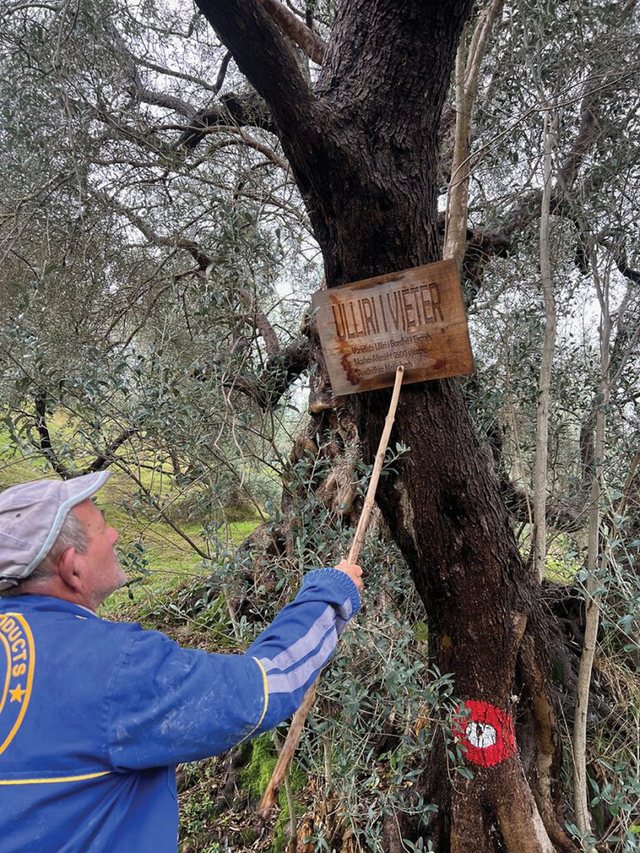
Gjithashtu, edhe ullishtat e vjetra në fshatin Kapinovë, janë tërheqës për vizitorët.
Një vizitë në një kooperativë vaji ku mund të shpjegohet procesi i përpunimit modern dhe historik shoqëruar me degustim “vaj ekstra i virgjër Berati” dhe produkte të tjera lokale, mund të plotësojë më së miri një tur tematik në këtë zonë.
Vlora dhe “Riviera e Ullirit” ofrojnë një itinerar tërheqës nga Kanina në Himarë. Duke filluar nga kalaja e Kaninës me ullishta të lashta përreth, vazhdohet më tej nëpër bregdetin e jugut, ku mund të përshkruhen shtigjet që kalojnë mes ullishtave të vjetra përmes fshatrave Dhërmi, Vuno, Himarë e Qeparo, me qindra ullinj të vjetër.
Ndërsa në Borsh mund të vizitohen punishtet e vajit. Edhe zona e Sarandës, nga Delvina e deri në Butrint, ofron një kombinim të ullinjve të moçëm me kulturën e lashtë.
Këto itinerare promovojnë idenë se Riviera Shqiptare krahas detit, ofron edhe kodrina ullinjsh mijëravjeçarë.
Në veri të Shqipërisë mund të vizitohen ullishtat e moçme rrëzë malit të Krujës, përreth kalasë, që zënë fill shumë kohë para periudhës së Skënderbeut. Shumëkush mendon se veriu i Shqipërisë nuk lidhet me ullirin.
Por zona e Kurbinit, Lezhës e deri në Zadrimë, ka një klimë mesdhetare përgjatë Drinit që e mundëson rritjen e tij. Dhe këtu ndodhen disa prej ullishtave më të vjetra të veriut, të cilat mund të vizitohen së bashku me agroturizmet e zonës.
“Ulliri më i vjetër në Shqipëri?”
With Fisnik, on the thematic olive trail in the Ndroq hills, as we pass by the village of Kërçukje, we visit a very old olive tree, owned by the Hasa family, which is thought to be 2000-2500 years old. It took 11 people from our group to surround its trunk, holding hands together.
And a curious question naturally arises. What are the oldest olive trees in our country? To declare a tree the "oldest", a combination of several criteria would be required, such as dendrochronological analysis, radiocarbon dating, trunk size (diameter/circumference), and historical documents/triangulation.
In local practice, orthogonal regression is often used, a statistical approximation that, based on the principle "the bigger the trunk, the older the tree", calibrates the size-age relationship by correcting for inaccuracies in both measurements.
Prof. Hairi Ismaili, one of the most renowned olive researchers in Albania, lists, among others, several candidate groups, such as the oldest olive trees in Albania.
(1) Olive trees in Brret (Gërdec–Palaq), estimated to be ~3,000 years old;
(2) The Tujani Olives (below Daj), ~2,500–3,000 years old;
(3) Tufina Olives, ~2,500–3,000 years old;
(4) Pulazeqini Olives (Vlora), ~1,500–2,000+ years old;
(5) Gruemirë (Malësia e Madhe), ~2,000+ years; (6) Kallmet (Lezha), ~1,200+ years.
Tree-by-tree dating, with a combination of these criteria and individual certification, would be necessary. Until then, we will continue to have some "older ones," and that's not a bad thing, because it keeps the debates and interest alive.
The "oldest olive tree", beyond statistics and records, is a symbol of our connection to the past. Identifying and confirming the age of these trees creates a direct bridge between us and antiquity.
Albania's ancient olive trees are a multiple asset: natural, cultural, historical, economic and spiritual, and can become pillars of sustainable development as destinations, as a national brand and as a treasure trove of traceable history.
*Taken from Monitor