Is this police force professional and capable of handling violen...
/ 2026-10-16 18:54:07Focus


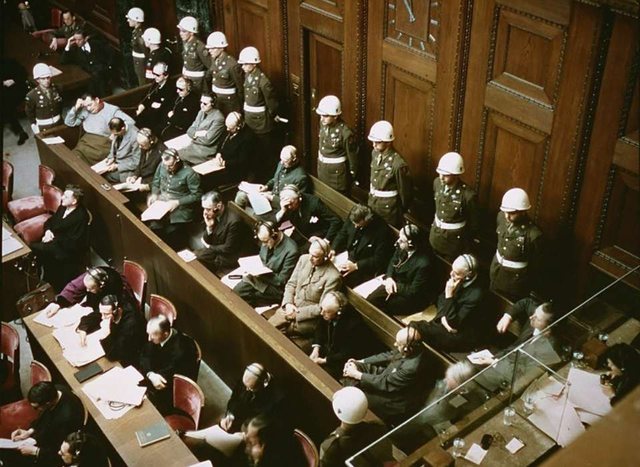
After World War II, the Allied powers put the National Socialists in the dock. For the first time, representatives of a state had to answer for their crimes before an international court.
For the first time in history, the first trial against representatives of an unjust regime began in Nuremberg on November 20, 1945, after World War II. The Allied powers that had defeated Nazi Germany brought 21 high-ranking war criminals to the dock, including Adolf Hitler's deputy Rudolf Hess and Field Marshal Hermann Göring.
The Nuremberg Trials, in which Nazi leaders were tried, had a profound impact on international law. The Nuremberg Trials were based on a landmark international law agreement (the Charter of London), which set out the rules of procedure for international and American military tribunals set up specifically for the Nuremberg Trials. The Charter of London was signed on 8 August 1945 – exactly 80 years ago.
On November 24, 1945, in Nuremberg, a city that a few months earlier had been declared "90 percent dead," 22 men entered the Palace of Justice. They had been brought to trial for crimes that had never been investigated before. The men were part of the ruling clique that remained of the Nazi leadership and had spent the previous months imprisoned in a castle in Luxembourg. They did not know what awaited them.
Chief among them was Hermann Göring, former President of the Reichstag, Commander-in-Chief of the German Air Force, and potential successor to Adolf Hitler. In July 1945, at a press conference, when asked if he knew he was on a list of war criminals, Göring replied: "No. This question surprises me, because I cannot imagine why I could be on such a list."
Göring had no idea of the extraordinary and complicated legal process he would be involved in. The legal process would require the drafting of the charges, the charges, and the sentences from scratch. Building them was a bit like building a power, water, and sewage network in Germany, a task that the Allies had to start from scratch. There had never been anything like these legal processes.
A giant step for international justice
The Charter of London was the result of six weeks of difficult and chaotic negotiations, which, after the Allied victory, took place at a square table in London. The square shape of the table was mandatory so that all four Allied powers could send an equal number of representatives to the delegation, write Ann and John Tusa about the Nuremberg trials in the book "The Nuremberg Trials."
The British were the hosts and led the negotiations, but there was no doubt which of the four powers was instigating them all - it was the US that had the idea to bring the Nazi leaders to trial. The American Robert Jackson was the lead prosecutor at the Nuremberg trials. He and his Russian counterpart, General Iona Nikitchenko, who was a judge at the trials, were often involved in legal disputes that escalated into feuds. Both sides accused the other of malicious intent.
Ideal and reality
At the end of the negotiations in London, four counts of indictment against 22 Nazi criminals were agreed upon: crimes against peace, common plan or conspiracy, war crimes, and crimes against humanity. Jackson also demanded that war be defined as a universal crime and that the principles laid down at Nuremberg be applied to all parties. But his dream was not fulfilled: Nuremberg remained a purely military trial, which was set up specifically to punish the Nazi regime.
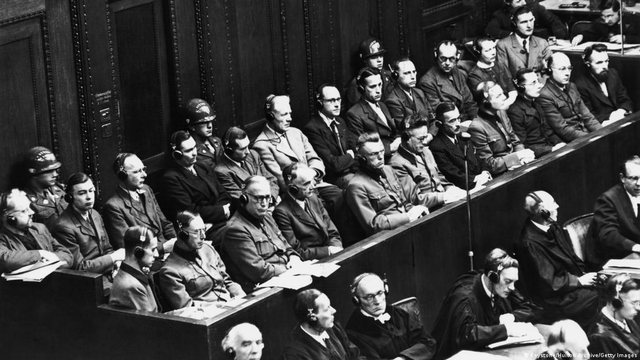
Twelve death sentences and seven prison sentences
The trial before the International Tribunal at Nuremberg lasted about a year and ended with twelve death sentences, seven prison sentences, and three acquittals.
The Nazi leaders expressed no remorse and blamed Hitler alone. The latter could no longer be held accountable because he had committed suicide in the final days of the war.
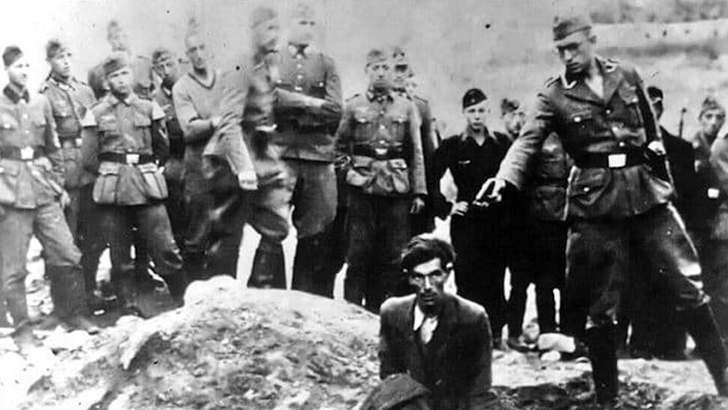
The evidence was shocking. Films from concentration camps. Testimonies from surviving witnesses. Letters and orders from the guards. For the first time, the world saw what atrocities had taken place in the camps of Auschwitz-Birkenau, Buchenwald or Bergen-Belsen.
Feelings of guilt and remorse
In 1945, most Germans were unwilling to admit their guilt during World War II. And despite the differentiated decisions made by the jury, most Germans considered this process to be "justice of the victors against the vanquished."
Germany continues to keep alive the memory of the atrocities of the Nazi period - especially in today's times, when anti-Semitism and right-wing extremism are once again on the rise in Europe./ DW