Is this police force professional and capable of handling violen...
/ 2026-10-16 18:54:07Focus


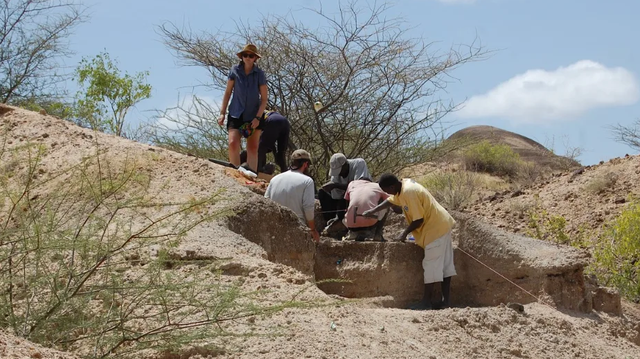
An archaeological discovery in northwestern Kenya has shocked the scientific world, suggesting that the first humans on Earth were far more intelligent and inventive than previously believed.
Researchers have discovered that the ancestors of humans who lived 2.75 million years ago at an archaeological site called Namorotukunan used stone tools continuously for 300,000 years, evidence that fundamentally changes the way we understand human evolution, reports the BBC.
Until now, scientists thought that tool use was random and temporary, an idea that this study completely overturns.
"We thought that tool use was like a spark that quickly went out. But when you look at a 300,000-year continuity, you realize that this is something stable and inherited," said Professor David Braun, from George Washington University in the US, who led the research.
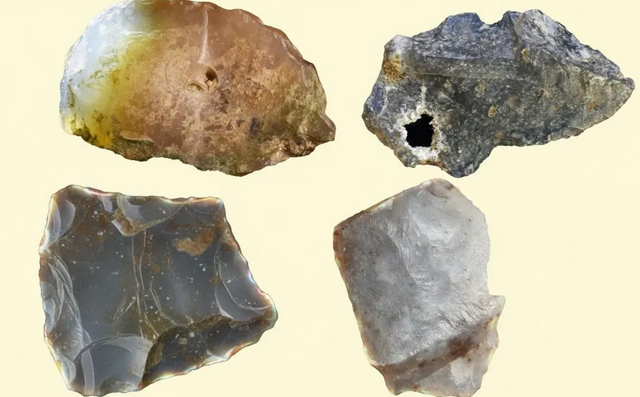
The international team of archaeologists, after ten years of research, found over 1,300 sharp stone fragments, stone hammers and cores, all carefully processed using a technique known as Oldowan, the first known method of making stone tools. According to Dr. Dan Palcu Rolier, a geoscientist from the University of Sao Paulo, these early people were “much more sophisticated than we might think.”
"These individuals were brilliant geologists. They knew exactly which stones to choose and how to work them. Some of the tools are so sharp they could cut our fingers even today," he told the BBC.
Technology versus biological evolution
The findings show that tool use helped these people survive in a rapidly changing environment. The Turkana region, where the site is located, transitioned from lush green swamps to dry savannas and semi-deserts, according to Rahab N. Kinyanjui, a scientist at the National Museums of Kenya.
Unlike animals that had to adapt through biological evolution or migrate, these early inhabitants used technology as a means of survival.
“They didn't change their bodies to adapt, but the way they found food,” explains Dr. Rolier.
Broken and cut animal bones have been found in various layers of excavation, indicating the use of tools to separate meat from bones and dig up plants. This ability allowed them to remain in the same place for hundreds of thousands of years, despite extreme climate changes.
The challenge to old theories of evolution
The discovery of Namorotukunan challenges the scientific community's previous beliefs, which linked the continued use of tools to the growth of the human brain around 2.4–2.2 million years ago.
But according to Prof. Braun, the tools were already in use long before the human brain became larger.
"We have grossly underestimated these early people," he said.
"The ability to use technology to adapt to environmental changes can be traced back much earlier than we thought, perhaps as far back as 2.75 million years ago, and perhaps even earlier."
This discovery is not just an archaeological detail, it is a rewriting of human history.
He shows that the roots of creativity and innovation, qualities that today define the human being, are much deeper in time than we can imagine. Rather than being simply survivors of nature, the first humans were inventors who began to control the world around them.