Is this police force professional and capable of handling violen...
/ 2026-10-16 18:54:07Focus


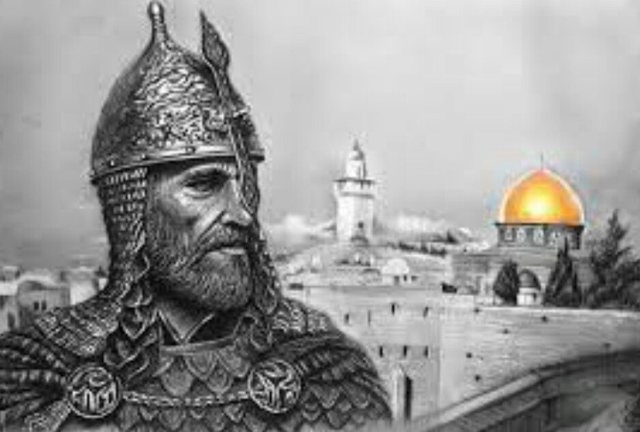
Salahudin Ayyubi, known in the West as Saladin, was not the typical leader of the 12th century, a time when the success of leadership was measured by the depth of bloodshed.
He is remembered by history as a courageous and brilliant leader of that century. His strong foundation stemming from moral principles made him committed to conquering lands that others once dreamed of.
His empire, the Ayyubid, extended over Egypt and Syria, and thanks to his skills he managed to protect territories from a centuries-old danger.
He played an important role in stopping the Crusades, successfully recapturing Jerusalem, and marking his name in Islamic and Western history.
Saladin was born in 1137 in Tikrit, Iraq, and studied the Quran and theology, and then astronomy, mathematics, and law.
He joined the army as a young man and was trained by his uncle, Asad-al-Din Shirkoh, a commander of the Zengid dynasty.
Saladin's impressive performance in his early battles enabled him to assume leadership responsibilities during the conquest campaigns.
He began to advance in position until he became a soldier of the king. That was enough for his superiors to smell his masterful tactics and offer him positions.
Syria, at that time, was ruled by the Zengids, but when its ruler died suddenly, leaving a minor heir, the way was opened for Saladin to seize Syria.
During his reign, Saladin built many schools, hospitals, and institutions in an effort to elevate the intellectual and civic spheres. He vowed to bring justice, peace, and prosperity to those within his realm.
Saladin saves Jerusalem from the Crusades
Saladin is known for defying the Crusaders and retaking Jerusalem. He defeated and destroyed a large number of them in the decisive Battle of Hattin, which took place on July 4, 1187.
On his way to Jerusalem, Saladin captured almost every Crusader city. After a long siege, Jerusalem surrendered to him on October 2 of the same year.
Subsequent attempts by the Crusaders to recapture Jerusalem failed, until they finally surrendered and retreated home.
Although one would expect Saladin to be hated by other ethnicities, he became one of the most respected figures due to the generosity he displayed towards Christians despite the brutality that Muslims had endured at the hands of the Crusaders.
When the Christians took Jerusalem during the First Crusade, they committed mass atrocities and murders, creating bloodbaths among the inhabitants of the holy city.
According to memoirs written by the chronicler of the Crusades, Raymond Agiles, the massacre was so extensive that "the blood reached the knees."
When Saladin recaptured Jerusalem, the Christians expected a similar attack. However, Saladin not only forbade his soldiers from harming the Christians, but treated them fairly, allowing those who wished to leave in peace and those who wished to stay to live in harmony. Truly, he was a living example of a tolerant, progressive, and inclusive faith.
The extremely manly behavior towards King Richard I and the mutual respect that followed despite their warlike relationship, gave Saladin an extremely important position in history.
"When King Richard I fell ill at the siege of Acre in 1192, Saladin not only sent his personal physician to treat him, but also sent him ice to beat his fever, as well as healing fruits.
When Richard's horse was killed during the battle and the English king found himself on foot facing the entire Muslim army, Saladin let him walk without attacking him.
"Once, Saladin sent two new generations so that he would not feel at a disadvantage," writes Michael Hamilton Morgan in the book "Lost History."
According to French historian Rene Grousset, "it is indisputable that Saladin's generosity, his piety, his lack of fanaticism, generosity and courtesy, were a model for the writers of war chronicles, who were accustomed only to horror and terror."
Salahudin Ayyubi died in 1193 at the age of 56.
Although he was at the head of a vast empire stretching from Egypt to Syria, he himself had very little wealth. At the time of his death, his property and wealth included a horse and money that was not even enough to bury him. He had devoted his entire life to the service of justice, avoiding the grandeur and personal splendor that rulers preferred.
It was precisely this that made him enter history with honor.