Is this police force professional and capable of handling violen...
/ 2026-10-16 18:54:07Focus


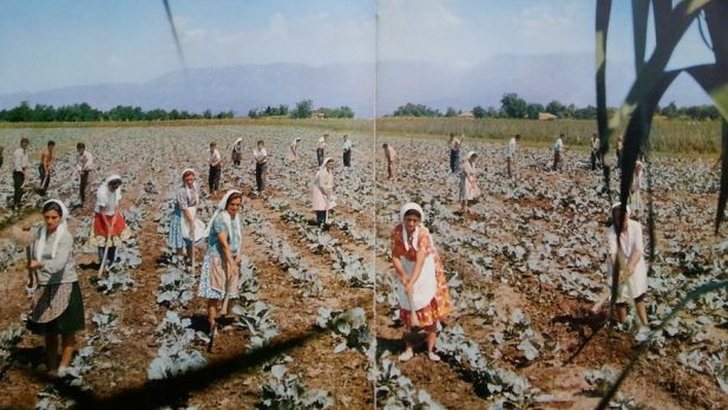
Albania was what it was. Reforming a typical oriental administration, corrupt to the core, seemed an impossible mission. On the streets of Tirana, where you had nowhere to throw your apple, you saw full of clerks, soldiers and officers behaving in vain, all paid by the state.
In the offices, a dozen clerks pounded water in a mortar for a job that required no more than two people. The cafes were the place where officials bargained, where the state's domestic and foreign policy was formulated.
Hatred, bribery and friendship solved every problem, private or official. Woe to him who had no friends! According to a description by Mid'hat Frashëri, in Parliament, in offices, in cafes, in meetings, among friends, one heard nothing but words and ideas that were always unsuccessful, always mixed with anger, passion, envy and jealousy, perhaps very rarely or never spoken with pure intention.
At that time, the Prime Minister's Office and the Ministry of Foreign Affairs were located in the same building as the Parliament, where the Academy of Sciences is today. A little further away was Zog's Ministry of the Interior. The buildings were guarded at the entrance by burly men with rifles at their sides. Within those walls sat the deputies and ministers, those who had to keep their minds and bodies focused on the interests of poor Albania.
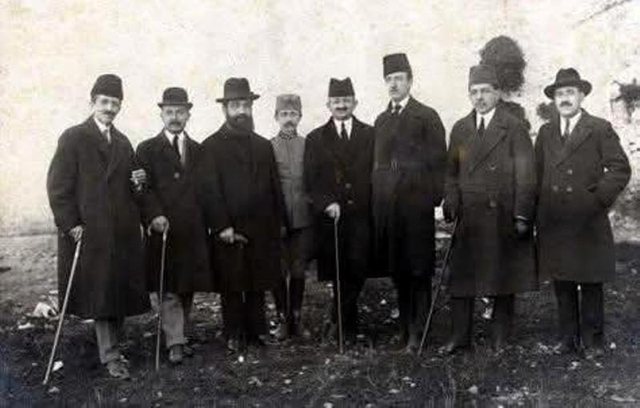
The six cabinet members and their leader, Xhafer Ypi, formed an exotic team that a foreigner would find difficult to characterize, because it was a strange mix of Oriental and Occidental.
With the exception of Tatzat, who was short and in military uniform, most of them were in suits and collars, carrying canes and wearing astrakhan caps, which had replaced the Turkish fez. Noli was distinguished by his country gentleman hat, which made him look even shorter.
Ypi, with his small, round head, with his beard shaved almost to his eyebrows, looked like a caricature behind his thick mustache and frameless glasses. Mid'hat Frashëri's description of Ypi was striking: The hat over his eyebrows, the eyebrows over his glasses, the glasses over his nose, and his nose mixed with his lips and chin, he looked as if a punch to the top of his head had crushed his cheeks and shortened him, condensed him.
Everyone dressed well, but no one surpassed Ahmet Bey in the care he paid to his appearance, which was in harmony with his slender and tall body, with his yellow hair, with his white and clean face and with his delicate hands. To drink coffee, the ministers usually sat in a small corner, in the middle of a neglected garden, opposite the Skanderbeg Barracks, while they ate lunch and dinner at the International Restaurant.
Before dusk, they would all go out together for their evening stroll. They would walk side by side, usually in silence and with their hands behind their backs. Behind them would come their attendants, also in a line. From the government residence, their excellencies would pass in front of the American Technical School (where the monument to Azem Hajdari stands today), continue towards the Et'hem Bey Mosque, enter the bazaar street between the small shops and head towards Durrës Street.
Then they would return from where they had come. They followed the same evening ritual as the large crowd of Tirana men, from whom they received the greeting "Long live you" every time they passed by.
It was intended that a small herd of cattle would follow them. For such occasions, Noli, who was known as the joker of the group, had a saying: "Tirana is a special city. Ministers, MPs, the people and the cattle walk together on its streets."
After dinner, since other entertainment was scarce, the ministers gambled, sometimes at Eshref Frashëri's, sometimes at Zija Toptani's, or at Tatzati's, Hysen Vrioni's and Sejfi Vllamasi's. Zogu was the only one who did not participate.
Meanwhile, the new foreign minister, Fan Noli, was not known to gamble. He was fond of the more important things in life, but he liked to eat well and sit down to a bottle of wine in the evening.
(From the book REBEL - Ilir Ikonomi)