Is this police force professional and capable of handling violen...
/ 2026-10-16 18:54:07Focus


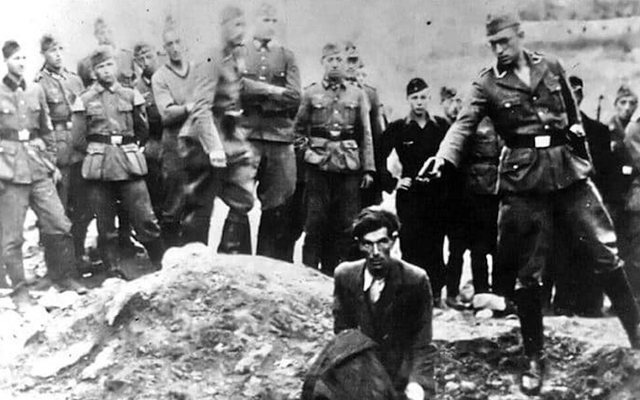
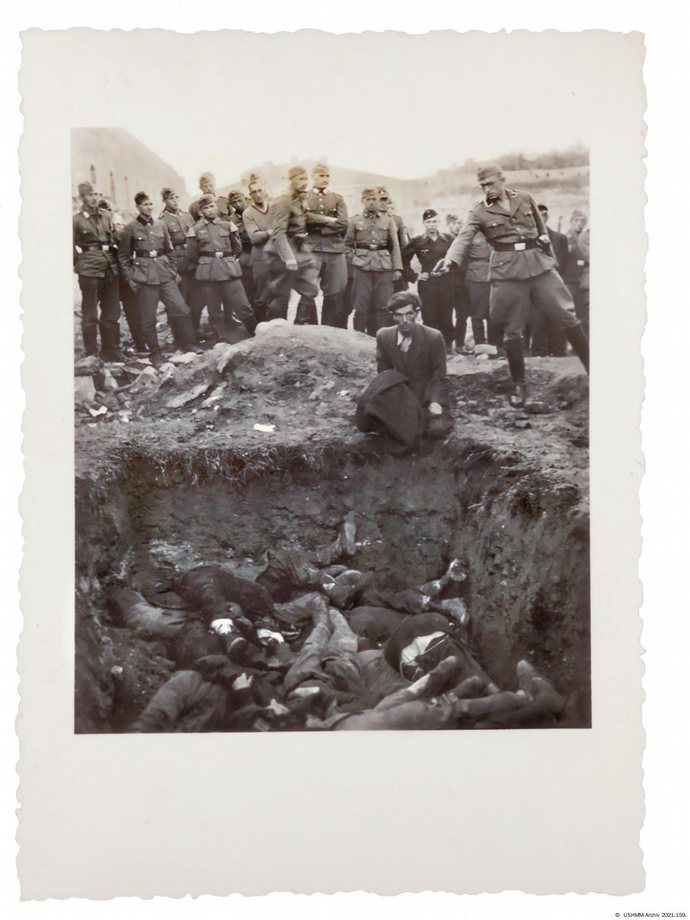
A man with a long coat, thick hair and sunken cheeks kneels at the edge of a mass grave, resigned to his fate. Dozens of corpses beside him and the armed Nazi pointing a gun at his head leave no room for doubt – the man knows his life is over. The identity of the victim remains unknown to this day – but the identity of the perpetrator is now considered 99% certain.
The cold-blooded man with the gun is most likely Nazi war criminal Jakob Ohnen, according to German historian Jürgen Mattheus.
The latest findings from the former head of the research department at the United States Holocaust Memorial Museum were recently published in the journal Zeitschrift für Geschichtswissenschaft (Journal for Historical Science), published by Metropol Verlag. "This is a major step towards understanding the historical reality of the Holocaust," Mattheus told DW.
One of the most famous photographs of the Holocaust
The photograph is one of the most famous images of the Holocaust, known as “The Last Jew in Vinnytsia.” The photo first came to light in 1961, during the trial of Nazi war criminal Adolf Eichmann in Israel. However, until now, we knew very little about it – and some of what we “knew” turned out to be untrue.
The United Press International (UPI) agency, which published the photo at the time, obtained it from Al Moss, a Holocaust survivor. Moss said he took it in Munich in 1945, shortly after its liberation by American troops, and gave it to UPI.
The last Jew of Berdichev
However, in 2023, Mateusz discovered that the photo was not taken in Vinnytsia, as previously believed, but in Berdichev, about 150 kilometers from Kiev.
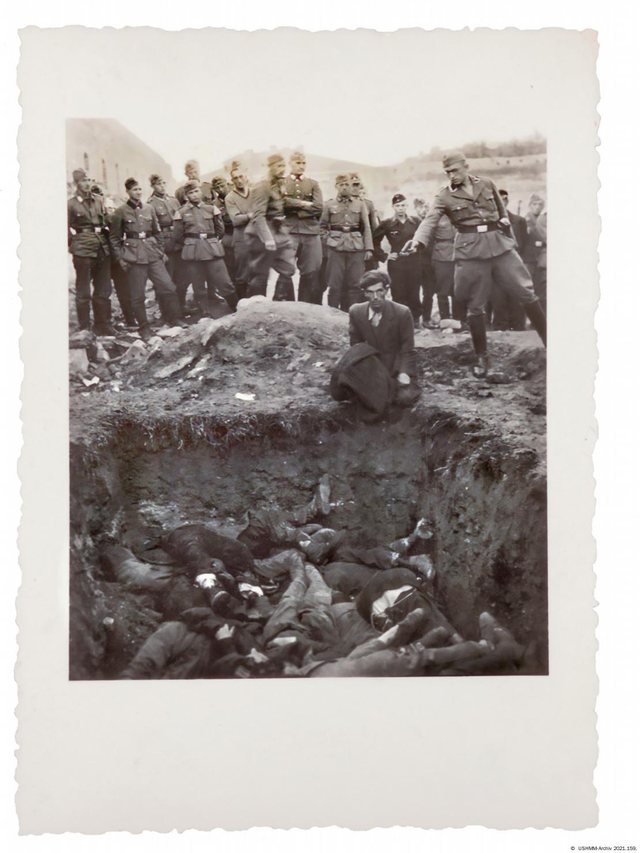
The discovery was quite a fortuitous one. A few years ago, the U.S. Holocaust Memorial Museum acquired the war diaries of Austrian Wehrmacht soldier Walter Materna, who served in Berdichev in 1941. The diaries also contained the same photo – and in much better quality. On the back it read: “Late July 1941. Execution of Jews by the SS in the Berdichev fortress. July 28, 1941.”
The search for the executor
In late 2023, Matheus published the findings of his research in the journal Holocaust and Genocide Studies.
After the magazine was published, the historian received many reports from readers claiming to have recognized the perpetrator. A retired professor wrote to him that this “terrible image” had haunted his family for decades, “because it shows an SS member who looks like my wife’s uncle, who was there as a member of Einsatzgruppe C at the time.”
This “uncle” was Jakobus Onen, born in 1906 in the village of Tichelwarf near the Dutch border. He studied French, English and sports in Göttingen, with the aim of becoming a teacher. In 1931 he joined the SA, the paramilitary organization of the Nazi party, and a year later transferred to the SS. In June 1941 he became a member of Einsatzgruppe C, a unit that carried out the mass murders of hundreds of thousands of Jews in Eastern Europe.
“His joining the SA and later the SS and his student career in Göttingen – where the Nazi student movement was extremely strong – clearly show the process of Nazism that Onen went through,” Matthaus notes.
Artificial intelligence confirmed Onen's identity
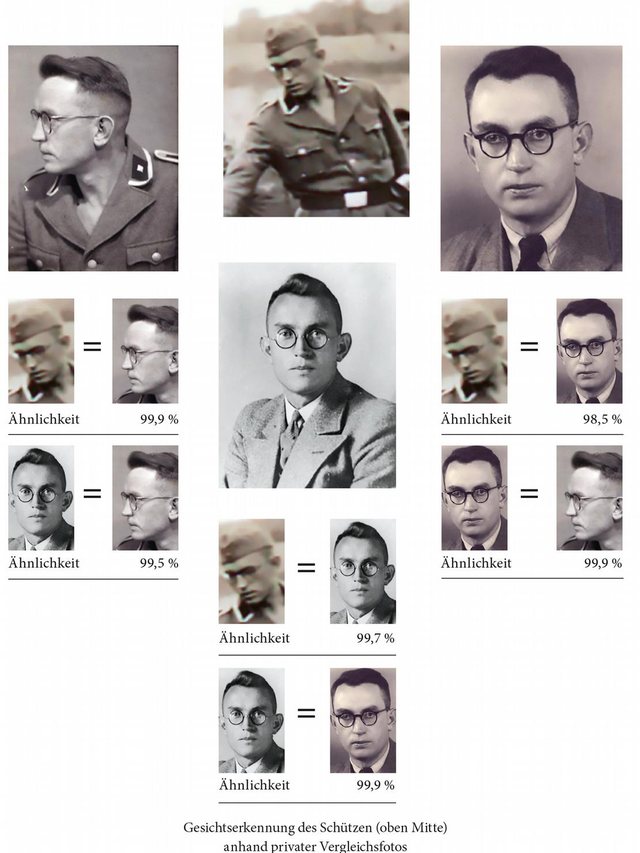
Onen was killed in battle in August 1943. And his sister had destroyed a collection of his letters so that the facts could not be compared with his testimony.
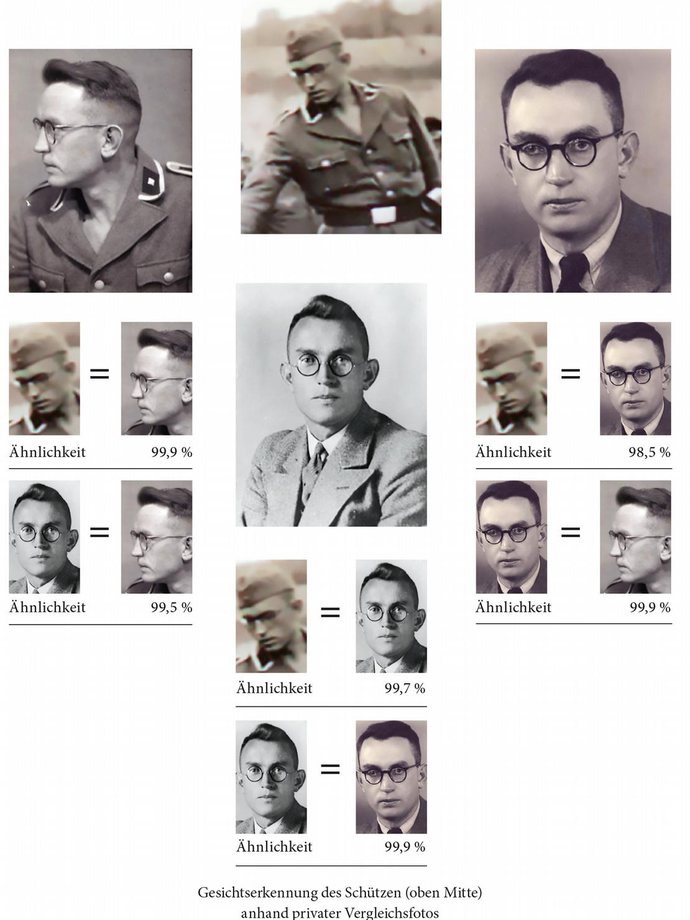
Despite the obstacles, artificial intelligence experts made a crucial contribution to his identification. Using facial recognition software based on artificial intelligence, they were able to identify the killer with a very high degree of certainty, thanks in large part to the professor who recognized his relative and sent his photos for comparison.
The victim remains unknown.
The name and biographical details of the executioner are now known. However, the victim remains unknown – as in many other cases – even though his face is clearly visible in the photograph. This is not surprising, explains Matthaus, given that the Nazis deliberately did not record the names of those they executed in Eastern Europe.
"In recent years, there has been a huge effort to identify the victims. Who were these people? Much of the research has been done thanks to the contributions of survivors, who recognize the faces from photographs, testimonies and archives," he says.
However, the historian is "cautiously optimistic" that artificial intelligence, collective research and interdisciplinary collaboration will one day be able to reveal the identity of the victim in the photograph, as well as help expand and deepen historical research on the Holocaust.
"A lot also depends on the will of society - not only of politicians, but also of the people and families themselves, who must confront their past," the historian concludes.