Is this police force professional and capable of handling violen...
/ 2026-10-16 18:54:07Focus


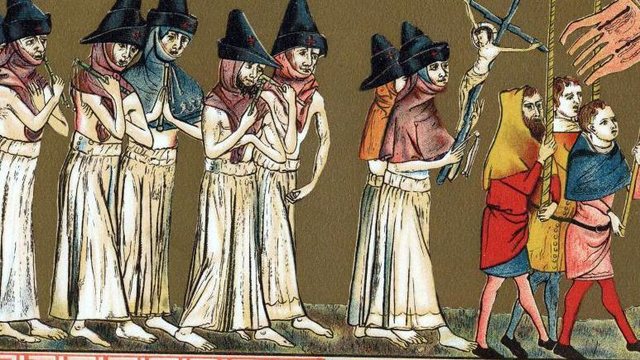
A volcanic eruption around 1345 may have been the initial cause of the chain of events that brought about the Black Death in Europe, the deadliest pandemic in the continent's history. This is the conclusion reached by researchers from the University of Cambridge and the Leibniz Institute for the History and Culture of Eastern Europe (GWZO), who analyzed data preserved in tree rings and ice cores.
According to researchers, the volcanic eruption caused a “climate shock” that significantly lowered temperatures for years, as a result of the release into the atmosphere of large amounts of ash and gases that blocked sunlight. The drop in temperatures led to crop failures in the Mediterranean, forcing Italian city-states to import grain from the Black Sea region.
It was through this forced trade movement that fleas carrying the bacterium Yersinia pestis are suspected of arriving in Europe, causing the pandemic that killed up to half of the continent's population in 1348–49. Researchers describe this situation as a "perfect storm" where climate change, food crises, and long-term trade movements all came together.
“The combination of factors that led to the Black Death seems rare, but the risk of diseases emerging under climate change and becoming pandemics is likely to increase in a globalised world,” says Dr Ulf Büntgen of the University of Cambridge. He says this is an important warning, especially after recent experiences with Covid-19.
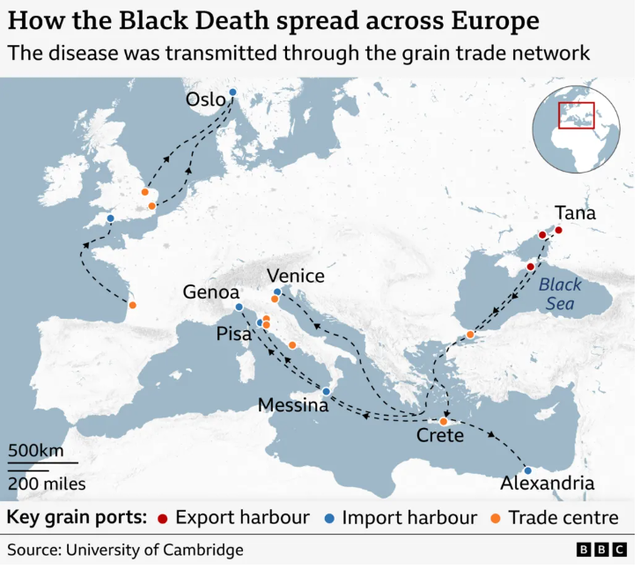
Medieval climate historian Dr. Martin Bauch of the GWZO points out that Italian cities had developed extensive trade networks between the Mediterranean and the Black Sea for more than a century to ensure food security. “But in the end, these networks inadvertently led to a much greater catastrophe,” he said.
According to researchers, these discoveries shed light on how natural and economic factors can combine to create favorable conditions for the spread of pandemics, a valuable warning for today's global reality.