Is this police force professional and capable of handling violen...
/ 2026-10-16 18:54:07Focus


Alasdair Fotheringham - Al Jazeera
Five decades have passed since Francisco Franco's dictatorship ended after his death, but even today some idealize his regime.
The remains of dozens of victims of Franco's dictatorship have recently been found in Granada, including Marina Roldán's grandfather, Fermin Roldán García. His body was identified this summer, ending a decades-long wait. It was found in a ravine in the village of Víznar, just a few kilometers from Granada.
Fermin Roldán García was among the thousands killed during the Franco dictatorship (1939–1975). He was a tax inspector, trade unionist and member of the Socialist Party, and had even run for parliament in the February 1936 elections. Marina, recalling the moment she received the news, says her mind immediately went to her father, who had been only 10 months old when his father was executed at the age of 41.
50 years since the end of the dictatorship
Spain marked the 50th anniversary of the end of the dictatorship on Thursday. However, a frightening nostalgia is being observed among young people for a regime they did not experience.
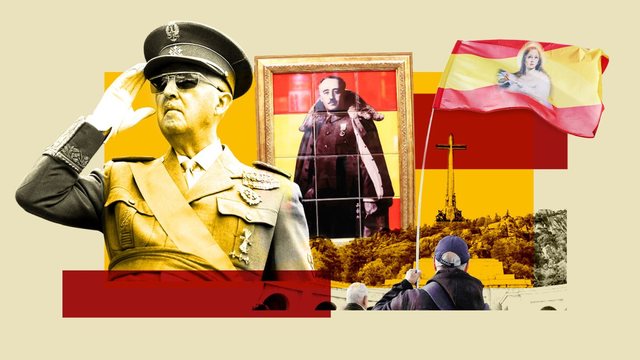
Franco's photo still stands in symbolic spaces of sympathetic organizations, while some young people speak with admiration for the dictatorship, fueled by social media content. According to high school teachers, many teenagers take up far-right narratives from TikTok, disillusioned by today's difficult living conditions, such as unemployment or the housing crisis.
A CIS survey showed that 20% of young people aged 18–24 consider the dictatorship “good” or “very good”.
How the "mythology" of Franco is being created
This nostalgia follows similar patterns in other European countries, where right-wing movements sell the idea of a “simpler past.” In Spain, the phenomenon is amplified by the far-right Vox party, which makes no secret of its open sympathies for the Franco era. Its deputies have even declared in parliament that the post-Civil War era was a period of “progress and reconciliation.”
Researcher Oriol Bartomeus explains that on social media there is a romanticization of the Franco period, which particularly attracts young men, because it offers them a narrative where "there were no problems", there were no feminists and there were no immigrants.
Meanwhile, the People's Party (PP), a center-right party, has never made a complete historical distancing from the dictatorship, which has allowed some of the "sociological Francoism" to survive even today.
Attempts to deal with the past
After the return of democracy, Spain chose for years to “look forward,” avoiding opening the wounds of the past. It was only in 2007 that the official process known as the “historical memory law” began, aimed at removing symbols of the dictatorship and encouraging the excavation of mass graves.
Today, there are an estimated 6,000 unidentified mass graves across Spain. Some are located in wells, forests, gardens, cemeteries and remote hills. There are fears that, if a radical right-wing government returns to power, the excavation process could be halted, as happened during Mariano Rajoy's government, when funding was cut to zero.
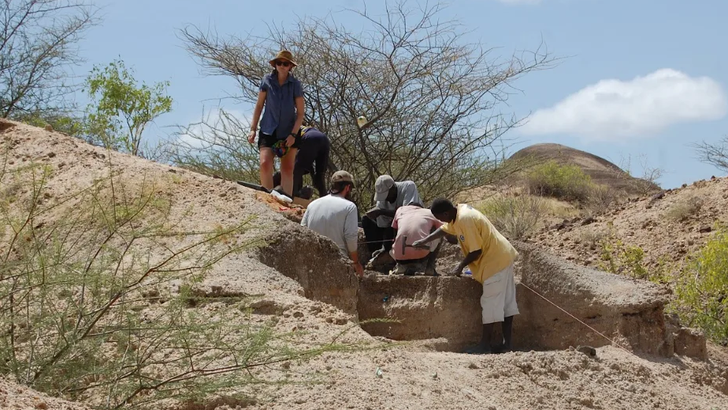
Archaeologists and forensic anthropologists working in the field describe the work as emotionally draining but deeply healing for the families. Some describe cases where even very elderly people, even those with Alzheimer's, have had clear moments of awareness as soon as they were handed the box containing their loved ones' remains.
In one of the latest finds in Viznar, the body of an 11–14-year-old child, a victim of the 1936 shootings, was discovered.
For Marina Roldán, finding her grandfather's body does not mark complete closure, but a belated sense of peace, a conviction that even her father, now deceased, "would be happy if he knew."