Is this police force professional and capable of handling violen...
/ 2026-10-16 18:54:07Focus


Enrica Roddolo – Corriere della Sera
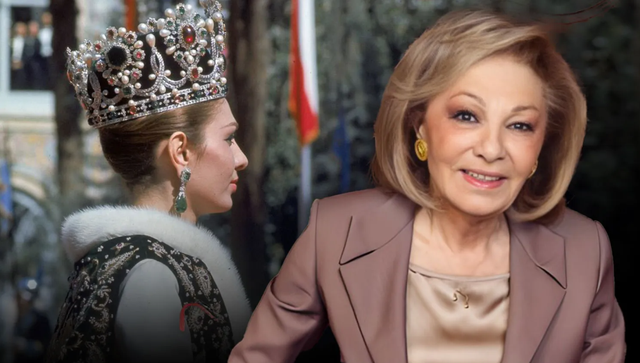
It was January 16, 1979, when the Shah and Farah Diba left Tehran. The crowd chanted: "The tyrant is gone, the people have won."
After escaping, that winter of violence that is so reminiscent of the dramatic moments of this January, Shah and Shahbanuja went into exile in Egypt, Morocco, the Bahamas, Mexico, and the USA, followed by a death sentence in absentia.
I asked the former empress years ago, when I met her in Paris: " Were you afraid?"
"Fear? No. I'm not afraid of dying. Years ago I wrote in The Guardian that they were going to kill me, then the French Interior Minister gave me an escort. Better to die like this, shot to death, than from cancer... in the hospital."
Farah Diba's eyes filled with sadness, perhaps from the memory of her last days with the cancer-stricken Shah. He would die in Egypt.
Shahbanouja, now 87, who in these dramatic hours has released a video in which she speaks of "the light that will triumph over darkness and Iran that will rise from its ashes ," was waiting for me in Paris. I had set off on the journey without a precise address, just one day for what was perhaps the most extraordinary encounter in so many years of journalism.
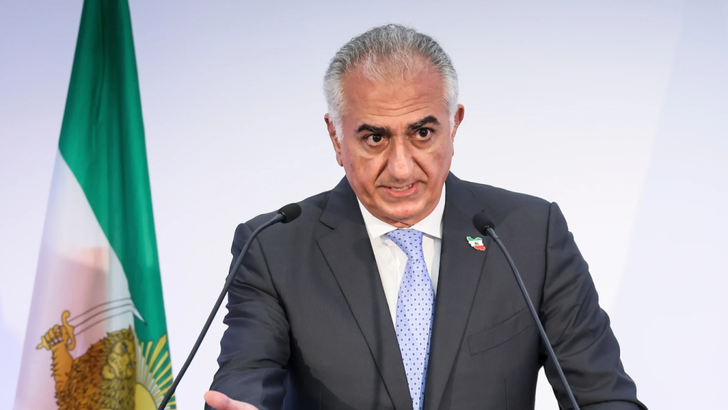
An interview with Corriere's La Lettura, which in these crucial hours for the future of Tehran helps to understand who the mother of Reza Ciro Pahlavi, 65, heir to the throne of the Pahlavi, who today some see as a candidate for the new leadership of Tehran, is. The meeting with the woman who was the empress of Persia was at 4:30 p.m., a rainy afternoon in early March.
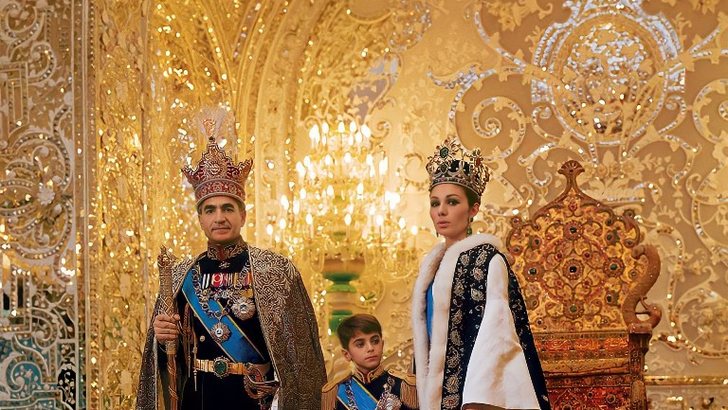
No ornaments for her, who once sat by the Shah's side on the legendary Peacock Throne, only a pin that reflected Iran's borders in the colors of the flag. The beloved wife of Mohammad Reza Pahlavi, who after the 1979 Islamic Revolution shared the Shah's fate, has still retained her former charm: tall, regal, her hair tied in a ponytail with a ribbon.
"Am I beautiful? If I look at images of myself when I was young, 16-17 years old, I was not beautiful at all, then over time I believe I became more refined... and this is what I always said to my daughter Leila, who unfortunately is no longer, who did not find herself beautiful enough."
The Empress stopped to look, as if she were catching the dreams of a lifetime. She bent down to pick up a block of asphalt from the Green Revolution from a table: “ They sent it to me from Iran, painted like this, it’s a work of art.” We talked about the situation in Tehran.
"It gives me hope, now the women of Tehran know what Iran used to be. And it is precisely the young, the women, who have suffered the most: insulted, imprisoned, with laws changed against them. When the king put the crown on my head in 1967, in my heart it was as if he had put it on the head of all Iranian women: I was crowned empress and then appointed regent. Now anyone can insult you in the street if you don't wear a headscarf. I dream of a secular democracy for my Iran."
The celebrations for the 2,500th anniversary of the Persian Empire, in 1971, were an extravagant display of wealth: a $200 million spending spree, toasts in Baccarat glasses, and banquets signed by Maxim's of Paris.
"We were criticized for many things… quail eggs with caviar… but the celebrations were the Shah's desire to show the world what Iran was, its wealth and history," she justified.
Then, the surprise of that meeting was to discover that Farah Diba had studied as a child in an Italian school.
"Yes, in Tehran, when I was very young, I attended an Italian school for several years, I believe run by Italian nuns and Jesuits, before going to the French Jeanne D'Ar c school," she told me, even though she no longer remembered anything from Dante's language.
"Oh no, I was little and in fact at school they taught French and Persian. In fact, my mother, Aridah, enrolled me there because they had a beautiful piano, she wanted to study music, but we didn't have a piano at home, and so I practiced on the college piano, in the basement. I was lucky, I grew up in a modern way: my mother, more than sixty years ago, made me a scout, to practice swimming, to play basketball, I was the captain of the team, number 10, like Maradona... and Baggio. My son Reza, who lives in the USA, is a big football fan."
I asked him about Reza, the heir to the throne who no longer exists.
“I try to spend two months in America in the spring and two more in the fall, to be close to my two children, Reza and Farahnaz… and my four grandchildren. This puppy was given to me by my niece Noor… the dog that accompanied me for seventeen years died a long time ago and I wouldn’t have had the courage to get another one. The rest of the time here, in Paris, I go to art galleries, cultivate my passions, I love painting, sculpture and music. I listened to Pavarotti in the theater, when I was young in Tehran I bought Caruso records. I am connected to the Venice Art Biennale.”
It was precisely art that connected him to fate, love, and history.
“I studied Architecture in Paris and lived in the Cité universitaire in the south of the capital, but not in the Iranian students’ pavilion, there was none, but in the Dutch one. I remember days always filled with lectures, drawings to be made, visits to museums… My first meeting with the Shah took place at the Iranian embassy: when he visited foreign countries, he always met some Iranian students abroad. It was a reception, I had hurriedly bought a new dress. I remember that I had learned to bow. He exchanged a few words with the guests and when he approached me he asked: “What are you studying in Paris?” He was surprised when I told him that I was studying Architecture. At that time there were very few women architects, not only in Tehran; it was not a common study for a girl.”
Farah Diba smiled, her eyes lit up, and continued: "Then they told me that he had followed me with his eyes as I left the room."
I asked him what had captivated him about Shah.
“The smile,” he replied without hesitation, “was very beautiful. But his eyes were sad. And one day, years after that first meeting and then marriage, I asked him: ‘Why me?’ He replied: ‘I liked you because you were real, authentic.’”
She "yes", on December 21, 1959, she made the world tour. She wore a silk dress designed by Yves Saint Laurent for Dior, and on her head a diamond crown weighing two kilograms.
And during the long years of exile, it was art that kept her connected to Tehran, the former empress told me.
“I started by buying Iranian art, at the first Tehran Biennial in 1962. There were few art galleries in Tehran. And before the project of the Tehran Museum of Contemporary Art, I worked on the idea of a carpet museum and a museum for Qajar painting, the dynasty (1796–1925) that preceded the Pahlavi dynasty (1925–1979). In those years we had created many cultural activities, libraries for children, free of charge, where they learned to read, to paint… Iran is a country with a great culture and history, I wanted to preserve all this heritage but also to broaden our horizons. Even today I receive emails and letters from Iranian artists secretly.”
I asked him if it was true that over the years he had collected 1,500 works... Degas, Picasso, Pollock, Bacon and Warhol? The Financial Times has estimated the collection at three billion dollars.
"I don't remember how much, a lot… yes. The price of oil had increased, and the prices of works in those years were very interesting. I organized a committee in my office, we contacted galleries, foundations: we started with the impressionists and continued with the moderns and contemporaries. I thought about a contemporary art museum in Tehran, I spoke with the architect Kamran Diba, my cousin, and I added: 'Why collect only Iranian works in a museum? Why not open it to the creativity of other countries? And to modern painting?"
Less than two years after the museum's inauguration, the Revolution came.
"I was very worried, but Mehdi Kowsar, who would later take care of the museum, compiled a list with the name and price of all the works stored in the basements ," she continued.
"He said he wanted to take care of the paintings as if they were his children, to take care of them. And when I found out they wanted to take away a De Kooning I had bought, I pretended to be an Iranian art student and called the museum, but it was Friday and they were closed. So I called again the next day and begged, 'Please don't exchange the painting.' They said they had to. They exchanged it for an Iranian work, the Book of Kings (Shah-nameh), with miniatures and paintings. They sold the De Kooning to David Geffen for $20 million. They said that the nude wasn't Islamic, but I also collected Francis Bacon, if that's what it's about."
I asked her about the feeling in Tehran towards the former Shah, towards her and her son.
"I believe that many in Iran regret what happened. I often receive letters and emails from Iran, even portraits of me and the Shah, made secretly, at some risk. Some want to talk to me and say: 'Thank you for this call, it makes me happy for three months'. But they are the ones who make me happy. And when I call and say: 'Hello, can I speak to the master...', they recognize my voice. I never say my name... And now my heart bleeds."